

The international political stage is ready to welcome the next meeting of Russian President Vladimir Putin and his American counterpart Donald Trump in Budapest by 7/11, with prospects for achieving a strategic agreement on a range of issues – geopolitical and economic – more realistic than ever.
Amid growing pressure and tensions between the two powerful leaders, Budapest offers a new opportunity to lay the foundations of a more stable strategic partnership, following their meeting in Alaska.
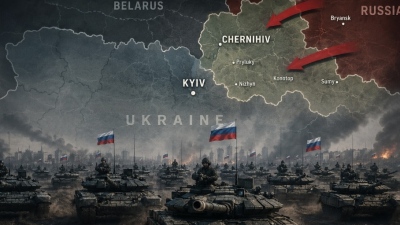
However, this meeting takes place in an extremely tense geostrategic landscape, which not only defines the negotiating positions of both sides but also raises growing concern that external powers—particularly Britain and Ukraine—could provoke artificial crises to drag the two major powers into war.

Strategic cooperation
Before the previous meeting on August 15 in Alaska, the vision of Putin and Trump for a strategic partnership based on resources seemed feasible.
Putin had emphasized the need to freeze the front lines in Ukraine, while Trump, with his influence, could pressure Ukrainian President Volodymyr Zelensky to withdraw from Donbass.
However, neither Putin was willing to make concessions, nor could Trump enforce the required retreat by Ukraine.
Worse still, the Europeans, with the support of the British and Zelensky, took action by proposing dangerous “security guarantees,” which irritated Russia and made negotiations even more difficult.

The American government, under pressure from events and increasing strategic pressure, found itself following a tighter line toward Russia, with Trump intensifying his rhetoric, likely due to the influence exerted on him by Senator Lindsey Graham and Zelensky.
Shocking revelations from Russian intelligence
Today, however, the geopolitical situation is even more complex and charged with new challenges for each side.
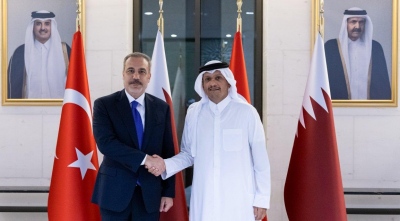
From the Russian side, Turkey’s new “TRIPP” strategy, which increases NATO’s influence in the Caucasus and Central Asia, as well as the revival of Poland as a significant power in Eastern Europe, intensifies geopolitical pressures.
The Russian Foreign Intelligence Service even revealed that French and British forces are already in the Odessa region of Ukraine, which heightens Russia’s concerns about Western strategy.

On the other hand, the U.S. is under increasing pressure from the growing closeness of China-India relations, while Russia has closed a significant deal with Beijing for the “Power of Siberia 2” gas pipeline, strengthening Moscow’s position on the Eurasian chessboard.
The failure of Trump’s policy to achieve balance in the region brings the U.S. closer to a strategic decision that will decisively affect its future policy.
This geostrategic environment could lead to unpredictable situations, as Russia and the U.S. risk being drawn into a war due to ongoing provocations.
Russian intelligence has warned of potential provocations in the Baltic, while there is already precedent with the drone operation in Poland, which was used to drag the country’s new president into a military confrontation with Russia.
Soon, Ukraine is reportedly planning a new incident in Poland, which could trigger serious tensions.
If they are not careful, Russia and the U.S. could become involved in a conflict that would go beyond their national borders.
British provocations
Britain, having a decisive role in European and international affairs, and particularly with its relationship with the U.S. and the European Union, has an interest in weakening Russia and strengthening its presence in Eastern Europe.
- Creation of an immediate threat: Britain could organize an operation that would appear as a Russian attack on NATO territory or an allied state, such as Poland or the Baltic states. This operation could include a fake “Russian attack” or “airspace violation” to trigger NATO’s “Article 5,” which calls for automatic military assistance from other member states in the event of an attack on one member state.
- Involvement in the North and Black Seas: In these seas, the presence of British ships near Russian zones of influence, and the launching of simulated attacks or provocative actions, could “target” Russia and create a cause for war or at least tension with strategic consequences.

Zelensky regime plans
Ukraine, under the Zelensky regime and its continuous efforts to strengthen international support, could turn to provocations in order to achieve specific goals, mainly to enhance Western military aid and isolate Russia.
- Provocation at the front: Ukraine could create small skirmishes or instigate a strategic attack, which would appear as a “Russian violation” of agreements, aiming to create the impression that Russia is responsible for any escalation. For example, if Ukraine triggers a phase of tension in Donbass or Crimea, Russia may respond with limited military action, which the Ukrainians would exploit to strengthen the narrative of “Russian aggression.”
- Threats against Poland and the Baltics: Knowing that NATO and the U.S. have a stronger strategic presence in Poland and the Baltic countries, Ukraine could create an “external” threat to draw the region into a more active conflict, justifying full NATO involvement.

Strategic choice – Budapest as a turning point
Amid these geostrategic pressures, the meeting of Putin and Trump in Budapest offers a unique opportunity to achieve a strategic agreement.
A possible compromise could include limited Western “security guarantees” for Ukraine, with Russia agreeing to a gradual acceptance of Western influence in the region, while the U.S. limits its military supplies to Ukraine and NATO.
Another possible scenario involves agreement to cut the front in Donbass and the possible withdrawal of Zelensky from areas annexed by Russia.
Limited agreements, such as Russian-U.S. cooperation on the “management” of the Iran issue, in order to create a favorable environment for Trump, could facilitate this agreement.
Thus, while the Budapest summit could prove more successful than that in Alaska, potential internal and external challenges remain a restraining factor.

Zelensky and Europe
A direction at the bilateral level may have been agreed upon, yet European leaders, especially the British, continue to be an obstacle to any peaceful settlement process.
Immediately after his talks with Trump on 17/10/2025, Zelensky communicated with European state leaders, noting the “substantial” change in the stance of the American president.
The British, specifically, countered that support for Ukraine must continue, albeit with some concessions in their policy.
Zelensky’s statements after the meeting with Trump were cautious and moved toward maintaining “security guarantees,” while at the same time outlining their differences, such as the issue of Ukraine’s territorial integrity.

The Putin – Trump meeting in Budapest will be critical for the evolution of the Ukrainian issue and Donald Trump’s strategy toward Russia.
Although the challenges are significant, the geostrategic environment creates a unique opportunity for negotiation and a potential agreement that could reduce tensions and prevent further escalation of the conflict.
However, the risks remain high, and the game of international politics remains fluid.





Σχόλια αναγνωστών