

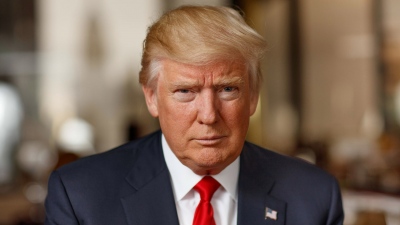
Donald Trump directly accused the President of Colombia, Gustavo Petro, of encouraging drug production, even announcing the termination of all kinds of American economic support to the Latin American country, while leaving open the possibility of military actions.
Via the platform Truth Social, Trump called Petro an “illegal drug trafficker” and claimed that he allows the mass cultivation of drugs throughout Colombia, while taking no substantive measures to combat them, despite generous subsidies from the United States.
“From today, no payment, no subsidy will be provided to Colombia,” he stated.
Threat of a military strike on Colombia
At the same time, Trump warned that if Petro does not act immediately to destroy the crops, then “the United States will do it for him — and it will not be nice at all,” implying possible use of military force.
Tension between the two leaders had a precedent: Petro had requested explanations from Washington, after a U.S. military strike in Colombian territorial waters that resulted in the death of an innocent fisherman, according to the Colombian government.
Trump defended the military action, stating that the United States destroyed a large narco-submarine that was heading toward American territory.
The Trump–Petro clash appears to be leading to a deep crisis in U.S.–Colombia relations, while the possibility of unilateral military intervention adds a new dimension of tension to Latin America.
Venezuela remains firmly in the crosshairs
Trump’s threats against Colombia come at a time when the increasing strategic tension in the Caribbean and the United States’ military buildup presage developments that shake the foundations of the international order.
However, Trump’s latest statement about the need for “land attacks” and the uncertainty surrounding the resignation of Admiral Alvin Holsey from the leadership of U.S. Central Command raises an unrelenting question: Are we facing a new military intervention in the region?

A U.S. military operation against Venezuela is beingprepared
According to recent statements, the Trump administration appears to be preparing attacks not only at sea but also on land.
The American President referred to military mobility and the reinforcement of U.S. forces in the Caribbean, warning of the possible use of military force against Venezuela, under the pretext of criminal organizations operating in the area.
The United States has significantly increased its presence in the region, with approximately 10,000 soldiers and various vessels on alert for possible actions.
Venezuela, despite the strategic difficulty it faces against the world’s stronger military power, is not unarmed.
Nicolas Maduro and his regime have mobilized thousands of National Guards and fighters of the “National Militia,” in order to prevent any attempted invasion.
Although there is doubt as to whether the United States intends to start a full military operation, the preparations are noteworthy.

Secret operations by the CIA and U.S. bombers
The authorization by Trump for secret operations by the CIA in Venezuela, which include armed and paramilitary operations aimed at toppling Maduro, demonstrates the escalation of political pressure.
The silent support of the United States for the armed opposition in Venezuela and the continuing effort to give momentum to this regime create a dark landscape for the region.
Although the United States uses the pretext of drugs to justify its military presence, everyone understands that the conflict is geopolitical.
After the authorization to the CIA, two strategic B-52 Stratofortress bombers of the U.S. Air Force conducted flights near Venezuela’s territory.
The bombers were detected flying inside the Maiquetía Flight Information Region (FIR) north of the Los Roques archipelago of Venezuela.
The aircraft appeared on open-source flight tracking and performed circles in Venezuela’s control area, before disappearing for a while and reappearing as they continued southward, near the islands La Orchila and Gran Roque, which host military facilities.

Venezuela is also preparing
Trump’s statement about “land attacks” raises concerns about the direction of American strategy.
Having “subdued” the sea, the United States now focuses on the possibility of controlling Venezuela’s territory.
Despite the “top” strategic power, the resilience of Venezuela’s army and militias should not be underestimated.
Venezuela’s military leadership has mobilized thousands of soldiers, deployed air defense systems and conducted military exercises focusing on rapid evacuation and disruption of strategic points.
In addition, obstacles were observed on major roads leading to the capital, Caracas.
Despite the strategic pressure from the United States, Venezuela appears determined to defend its sovereignty and is preparing to respond to the threat of military intervention through international organizations and allies, such as Russia and China.
The mission in the Caribbean appears to be proceeding rapidly and is likely to have chain reactions in the region.
Maduro: We have completed the defense zones, we are ready for a U.S. invasion
Maduro announced on Saturday that he has completed the national defense plan against “American threats,” while ordering military exercises and military mobilization at the borders.
In a message circulated via Telegram, Maduro emphasized: “Today we have completed all the integrated defense zones of the country.”
At the same time, he ordered the conduct of the military exercise Independence 200 and state television channels broadcast images of soldiers leaving the camps.
He accompanied these moves with a call for preparedness against “American threats.”
Venezuela has already deployed warships and drones to patrol its coasts, while it has strengthened its presence on the border with Colombia.
www.bankingnews.gr





Σχόλια αναγνωστών