

"War is the greatest affair of the state, the basis of life and death, the path to survival or annihilation. It must be examined and analyzed in depth." — Sun-Tzu, The Art of War
If war is "the greatest affair of the state," then nuclear war constitutes the most extreme and dangerous form of conflict. Sun-Tzu's warning remains relevant: in a world where military technologies are constantly becoming more complex, a single mistake can bring about a catastrophic result, notes an analysis by Modern Diplomacy.
The film A House of Dynamite (2025) presents a nuclear missile of unknown origin heading toward the United States. Although fictional, it highlights a crucial reality: a nuclear launch can occur either intentionally or through accident or miscalculation—and all versions are potentially destructive. This raises the critical question: What must the United States and other states, nuclear and non-nuclear, do to prevent a nuclear war?
Intentional versus accidental nuclear war
The risk of an intentional nuclear strike is not the same as the risk of an unintentional or accidental nuclear incident. It is a dangerous delusion to assume that adversaries always act rationally. Even rational leaders can make critical mistakes. Even a sophisticated anti-missile system, such as the one named "Golden Dome" by Donald Trump, cannot provide absolute protection. With nuclear weapons, anything less than 100% reliability can lead to catastrophe.
The nuclear risk is not an isolated event but part of a permanent struggle for survival within an international system without central authority—a global "state of nature." In such an environment, states often bypass international law, especially when the respective leadership openly rejects it.
The necessity of strategic theory
Because a real nuclear war has never occurred (the attacks on Hiroshima and Nagasaki are not an example of a nuclear exchange), the scientific assessment of the risk is necessarily based on abstract models. Nevertheless, the theoretical approach is indispensable Without the assumption that adversaries act rationally, there can be no coherent theory of nuclear strategy. However, history teaches us that rationality is never guaranteed. Additional threats arise from cyber-attacks, technical failures, and human errors—often in combinations that no one can predict or control in time.
The dangerous logic of "escalation dominance"
International crises are inevitable. Major powers maintain their strength by demonstrating the ability to control escalation without leading to nuclear conflict. This is an insurmountably delicate balance, where mistakes are not forgiven and cannot be reversed. Since 1945, the "balance of power" has turned into a "balance of terror." And especially when only one side possesses nuclear weapons, the risk of unintentional nuclear war increases dramatically.
The goal must be to keep crises at the lowest possible level of intensity and to strengthen protective "safeguards" against errors, cyber-attacks, or misunderstandings.
The new era of nuclear threats
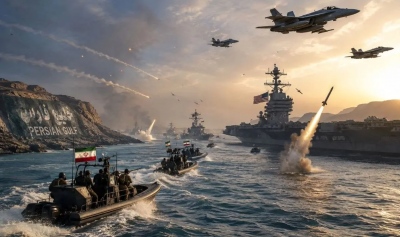
The United States should focus particularly on a possible restart of Iran's nuclear program. A nuclear Iran would likely encourage nuclear armament by Saudi Arabia, Egypt, and Turkey, while strengthening Pakistan's role as a nuclear actor with additional conflicts of interest.
China maintains the right to annex Taiwan by military force. Pakistan and Israel, already nuclear, remain outside the Non-Proliferation Treaty. In this environment, Israel could consider a more open demonstration of its nuclear power, gradually abandoning its "nuclear ambiguity" for the sake of deterring Tehran.
The ultimate responsibility
It is crucial to distinguish between intentional nuclear war, unintentional nuclear war from accident, and unintentional nuclear war from misconception or misinterpretation. All three forms constitute a supreme threat.
In an escalating conflict, one side may perceive a limited strike as the beginning of total war and respond with a massive nuclear attack, even if there was never an intention for such an outcome. In an international system of rivalries, where technology increases fragility, deterrence and riskiness coexist in a delicate balance. The most terrifying thing is that even rational leaders, acting rationally, can inadvertently lead themselves to a nuclear holocaust.
The primary responsibility of the American leadership is intellectual: to deeply understand the difference between intentional and unintentional nuclear conflict and their interactions. Without this fundamental understanding, any promise by the American president of "peace through strength" will remain merely a cliché.
According to the wisdom of Sun-Tzu, the world stands between survival and annihilation—and correct thinking is now a matter of life and death.
www.bankingnews.gr





Σχόλια αναγνωστών