

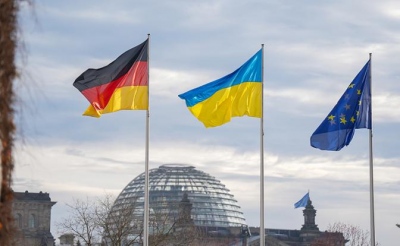
Just six months after assuming the chancellorship in Germany, the Merz government is facing internal conflicts and political paralysis. Promises to revitalize the economy, strengthen the armed forces, and implement stricter immigration policy appear to remain empty words. The inability to make decisions exposes the government, creating gaps that the far-right is exploiting. This image reinforces the sense that Merz, despite being presented as a dynamic leader, cannot overcome disagreements within the CDU/CSU and carry out the major political reforms he had promised.
Historic discontent and rise of the AfD
Manfred Güllner, director of the Forsa institute, emphasizes to Euractiv that "in Germany's post-war history, there has never been such widespread discontent with a government in such a short period of time." This wear and tear is boosting the AfD, which is gaining support from citizens who feel abandoned by the political establishment and see the far-right as a "solution" to their problems.
At the same time, the government's weak performance on immigration and the delay in economic reconstruction reveal a lack of strategic planning and ability to manage the country's basic challenges.
Merz at the critical crossroads
The start of the Merz chancellorship already looks like a failure, with consequences for Germany's political stability and its position in the European Union. His inability to control the coalition and confront the rise of the far-right makes his government fragile, raising questions about the viability of his promises. The image of a leader who promises so much but delivers so little is beginning to strengthen voices of doubt both inside and outside the country.
Only 18% of Germans support a potential Merz re-election
It is indicative that only 18% of Germans would support a potential decision by Chancellor Friedrich Merz to seek re-election, according to the results of a poll. These figures reflect the growing discontent of citizens toward the ruling coalition and the doubts about Merz's leadership.
In the Forsa institute poll for the RTL network, 73% of respondents said they would not approve of an attempt by the head of the Christian Democratic Union (CDU) to run in the 2029 federal elections. These percentages underscore the intense dissatisfaction with his term so far and the feeling that his promises for economic revitalization and political stability remain unfulfilled.
Ambivalence even among CDU/CSU supporters
Even among supporters of the Christian Union (CDU/CSU), 41% of the 1,002 participants are against a potential second term for Merz, while only 47% approve of it. The pervasive ambivalence within the ranks of traditional CDU/CSU voters shows that the Chancellor's personal popularity has begun to decline, making his political future uncertain.
AfD sweeps the polls
According to polls, the Alternative for Germany (AfD) party continues to maintain the lead in voter support and remains ahead of the CDU/CSU among German voters. In the latest "Sunday poll" conducted by the Insa institute for Bild, the AfD would receive 26% of the votes again, while the CDU/CSU would gather 25%.
The SPD remains stable at 15%, while the Greens have slightly improved to 12%. The leftist party Die Linke is at 11%, Sahra Wagenknecht's Alliance (BSW) at 4%, and the FDP at just 3%. Other parties collectively gather 4%.
Theoretically, 45% of the votes would be enough for a parliamentary majority, but traditional alliances still fall short: a CDU/CSU-SPD alliance would only reach 40%, similar to previous results, while an SPD-Greens-FDP alliance would achieve only 38%. In contrast, a joint AfD-CDU/CSU alliance would have a clear majority with 51%.
Satisfaction with the coalition government also continues to decline. According to Insa, the promised "autumn of reforms" had no effect on public opinion. Even among CDU/CSU voters, 39% report being dissatisfied with the government's performance, as do 49% of SPD voters.
www.bankingnews.gr













Σχόλια αναγνωστών