

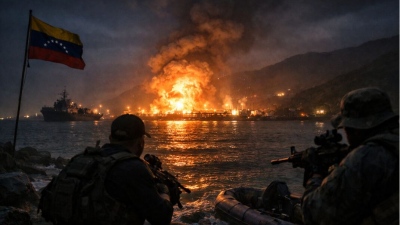
An unprecedented Russian strike on port infrastructure in Izmail during the night of 17 November caused extensive damage to a Turkish LPG tanker, confirming the vulnerability of Ukrainian logistics on the Danube.
More specifically, one of the targets of the Russian drones was the tanker ORINDA, under Turkish flag, which was unloading liquefied natural gas.
The vessel was engulfed in flames after being hit by a drone, with approximately 3,000 tons of fuel remaining inside it.
The fire broke out instantly.
According to the Turkish Directorate General of Maritime Affairs, the 16-member crew was evacuated immediately.
Firefighters continue extinguishing efforts, as the nature of the cargo carries a high risk of explosion.
For their part, the Romanian authorities, fearing a possible explosion, proceeded with the temporary evacuation of residents of the village Plauru near the border, although Kyiv later attempted to claim that there had been no reason for the evacuation.
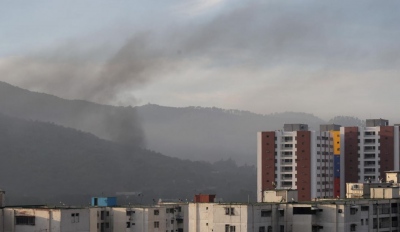
Extensive damage from the powerful Russian strike with Geran
In turn, Ukrainian sources speak of damage to “three empty tankers,” two floating piers (pontoons), as well as two additional vessels, one under Ukrainian flag and one formerly Russian, which is currently under seizure by ARMA.
The attack is part of a series of strikes targeting Ukrainian port and energy infrastructure in the Odesa region.
Aside from the ships, gas-pumping equipment was also damaged.
Russia is steadily demonstrating its ability to neutralize key Ukrainian logistical capabilities, maintaining economic and military pressure amid the ongoing special military operation.
The secret of Russian Geran drones that buries Kyiv’s “best solution”
Meanwhile, the Russian offensive drones Geran have acquired a new modification, which, according to assessments, may “bury” Kyiv’s “best solution” for intercepting them.
This is claimed by Russian military analyst of Pervyi Russkiy, Vlad Shlepchenko, who noted that similar technologies previously existed only in reconnaissance platforms.
Ukrainian air-defense systems have encountered a new modification of the Russian offensive drones, which is capable of nullifying their main success in the fight against the Geran.
The drones have been equipped with a new attachment that threatens the countermeasure tactic developed by Kyiv, which until recently had been regarded as “the best solution.”
Cameras…
Shlepchenko emphasized that in recent days Ukrainians have begun observing Russian drones with unusual equipment: “Just yesterday-today, information appeared that the enemy sees above the head of the Geran rear-view cameras.
It is most likely an element of passive defense for the drones, so they can maneuver when an interceptor approaches.
This is the most probable interpretation.”
This new feature radically changes the tactical use of the drones.
The Russian expert underlines that similar solutions were previously used in specialized reconnaissance platforms: “Previously, such cameras were installed on our tactical reconnaissance drones so that the operator could see the approach of an enemy interceptor-drone and execute an evasive maneuver.”
Until now, the Ukrainian military had been actively using interceptor drones as the main means of countering the Geran.
According to Shlepchenko, “they account for approximately 70% of downed Geran.”
The “best solution”
This tactic had been considered Kyiv’s “best solution,” but its effectiveness is now expected to decrease significantly.
The upgrade allows the operator to detect an attack from the rear in time and perform evasive maneuvers, which challenges the viability of the main interception pattern.
The appearance of cameras on offensive drones is, according to Shlepchenko, a natural stage in the evolution of combat systems.
As he recalled, in the spring the flight altitude of the Geran was increased to 2.5 to 3 kilometers, which rendered machine guns useless.
In response, Ukraine turned to interceptor drones, and now a new round of technological confrontation begins.
The expert stresses:
“As it seems, both our approaches and the architecture of offensive systems themselves are not standing still, they are adapting.”
This new attachment shows, according to Shlepchenko, that Russian engineers can improve their drones, reacting quickly to changes in the opponent’s tactics.
www.bankingnews.gr








Σχόλια αναγνωστών