

The use of unmanned sea vessels by Ukraine against the tankers of the shadow Russian fleet in the Black Sea on 28 29 11 2025 places at risk the security of maritime trade routes and has the potential to radically affect the evolution of the war.
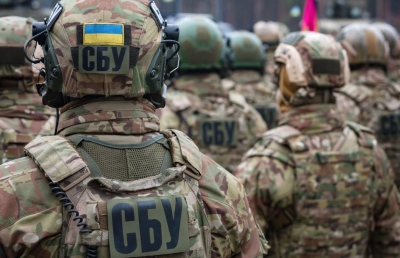
According to reports, the attack was carried out by the SBU, Security Service of Ukraine, indicating an escalation in the strategy of Ukraine in the war in the Black Sea.
Although there have been attacks on commercial vessels in the past, this action appears to mark a more aggressive stance and possibly opens a new cycle of escalation in the maritime conflict.
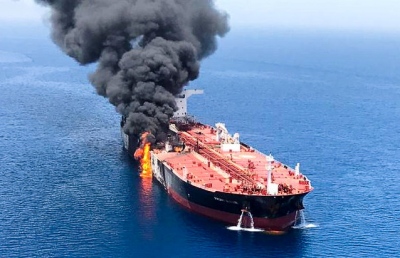
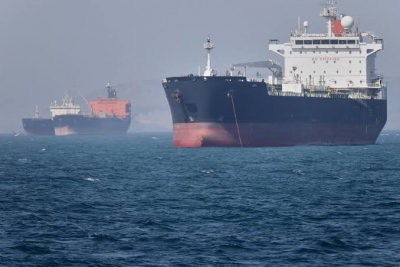
Ukrainian SBU naval drones, working alongside the Navy, struck two Russian “shadow fleet” oil tankers, KAIRO and VIRAT, in the Black Sea.
— Polymarket Intel (@PolymarketIntel) November 29, 2025
Footage shows both ships sustaining heavy damage, rendering them out of commission. pic.twitter.com/QZXQUAlRva
Ukraine took responsibility
Both ships suffered an “external strike,” as the official reports stated, requiring the evacuation of their crews, which consisted of several dozen individuals.
Notably, the incident was recorded on video, which was released by the Security Service of Ukraine, SBU.
The video clearly shows the moment of the large fire and the severe damage to the two vessels.
The SBU, in cooperation with the Navy of Ukraine, took responsibility for the attack, publishing the relevant footage from the strikes.
This operation appears to be related to the strategy of Ukraine to combat Russian influence in the Black Sea, as well as a reaction to the Western sanctions against Russia.
According to Reuters, the two tankers under sanctions are said to belong to the “shadow fleet” of Russia, something that makes these attacks an attempt to weaken Russian naval and energy interests in the region.
Ukraine claims that the operation was carried out with the use of unmanned vessels (BEC) of the Sea Baby type.
According to the reports of the SBU, at least five of these unmanned vessels were launched against the tankers, causing the severe damage.

The strategy of unmanned vessels
This attack was unprecedented in that it directly targeted commercial ships, not only military targets.
The Ukrainians used drones to strike the tankers Virat and Karios, which were heading toward the Russian port of Novorossiysk.
The Ukrainians appear to choose this tactic as part of a broader strategic plan to hit Russian trade and maritime routes, especially after Russia’s aggression against Ukrainian ports and its attacks on Ukrainian commercial vessels in the past.
Although Ukraine has used drone attacks on Russian targets in the past, the use of unmanned sea vessels against commercial ships, sailing in international waters or even in the international waters of third countries, is a new move that dramatically increases tensions in the Black Sea.
This type of strategy aims to inflict economic damage on Russia, hitting its commercial shipping and limiting the flow of goods.

The Russian response, Plans for a naval blockade of Ukraine
Although at first Russia treated the attack on the tankers as a “provocation from Kyiv” aimed at escalating the peace negotiations, the reality is that this type of attack may cause serious consequences for Russia and its strategic options.
Russia has several strategic options to respond to this escalation, with the most significant being the implementation of a naval blockade on the Ukrainian coasts and the interruption of shipping to the Ukrainian ports.
Russia possesses strategic capabilities to completely stop commercial navigation to Ukrainian ports.
With the use of unmanned vessels and ballistic missiles, it can systematically strike commercial ships attempting to reach Ukrainian ports.
Such a blockade of Ukraine from the sea would have devastating consequences for the country's economy, which heavily depends on maritime transport, and could inflict enormous economic damage.
Russia, however, has not yet proceeded with such a naval blockade.
It has mostly limited itself to strikes on ports and coastal areas, something that may be due to the need to maintain the flow of goods from Russian ports and to avoid an international reaction in case it massively strikes commercial ships.
Russia exports significant quantities of goods through the Black Sea, which are vital to its economy.

Destructive escalation
If the attacks from Ukraine continue, Russia may reconsider its strategy and begin striking with greater intensity the ships heading toward Ukrainian ports.
Such an escalation could lead to a full naval blockade, which would limit shipping in the Black Sea and have serious economic consequences for both sides.

Likewise, Ukraine may increase its attacks on Russian ships, resulting in the expansion of the conflict into the maritime domain.
Naval clashes in neutral waters could lead to stagnation or even complete interruption of trade in the Black Sea, something that no coastal state desires.
This scenario may function as a serious pressure factor for reaching a peace agreement or at least achieving a temporary ceasefire in order to prevent the complete collapse of trade in the area.

Consequences for the global economy and shipping
The conflict in the Black Sea, if it escalates into full naval war, would have devastating consequences for global trade, as the sea route that crosses the Black Sea is vital for the export of oil, gas and other strategic goods.
Furthermore, any blockade of trade in the region could trigger a severe crisis in energy and food security, given the Black Sea’s role in the transport of grain and energy resources.
The impact on the countries of the “Global South” and other developing economies, which depend on maritime transport, would be immense and could lead to pressure from international organizations for an end to the conflict.

Destructive escalation
The insistence on attacks on commercial ships is a dangerous game, as the continuous escalation of the maritime conflict may lead to a complete interruption of trade transport in the Black Sea, something that would be disastrous for both sides of the war and for the global economy in general.
This escalation serves as a reminder of the importance of ending the war and the need for a political solution that will avoid the complete destruction of the maritime economy in the region.
The example of the use of unmanned vessels against commercial ships shows that every new provocation in the conflict can have consequences that go beyond the initial strategic objectives, leading to a more extensive and difficult situation for all.
www.bankingnews.gr



Σχόλια αναγνωστών