

Putin extends a helping hand to India to shake off the West's shackles.
Vladimir Putin, accompanied by a high-ranking delegation, is traveling to India at the invitation of New Delhi and Narendra Modi personally.
Although the annual India–Russia summits restarted in Moscow in July 2024 after a two-year hiatus, the visit to New Delhi on December 4–5, 2025, is of much greater significance.
Putin will address the plenary session of the Russia–India Forum 2025 and attend the 23rd Annual Summit, marking his first visit to India since the start of the war in Ukraine and his first since 2021.
The India–Russia Annual Summit, institutionalized in 2000 following the declaration of the Strategic Partnership, provides the highest platform for evaluating and enhancing the cooperation between the two countries.
The summits, held alternately in India and Russia, have evolved into a central mechanism for political consultations, defense cooperation, economic cooperation, energy projects, civil-nuclear programs, and broader strategic dialogue.
The Russian head of state will be accompanied by a strong team of ministers (defense, finance, economic development, healthcare, and transport), as well as the Minister of Internal Affairs, his counterpart from the Ministry of Agriculture, and the head of the Central Bank.
The published program for the visit states that on the first day, Vladimir Putin has scheduled one-on-one meetings with Narendra Modi and with President Droupadi Murmu.
The team of ministers and heads of ministries will not be taking a stroll. Over the course of two days, the plenipotentiary representatives will sign ten intergovernmental and more than 15 commercial agreements.
Among the documents expected are significant military contracts, agreements in the healthcare and pharmaceutical sectors, and the approval of regulations on labor migration.
Energy in focus
During the visit, the entire spectrum of the "Special and Privileged Strategic Partnership" is expected to be evaluated, including defense cooperation, energy ties, civil-nuclear projects, and efforts to diversify bilateral trade.
According to Kremlin officials, the visit "will allow for a full discussion of the entire spectrum of bilateral relations in the political, trade, economic, scientific, technological, cultural, and humanitarian spheres."
Russian First Deputy Prime Minister Denis Manturov also noted that the agenda includes expanding and diversifying trade, industrial cooperation, joint investment projects, and cooperation in high-tech sectors.
A separate topic on the extremely busy agenda will be the discussion of prospects for further cooperation in the energy sector. This will focus on Russian hydrocarbon supplies in general, and the Sakhalin-1 project in particular.
Without diminishing the importance of other sectors, the energy negotiations will largely determine the direction of interstate relations in the near future and the emergence of a truly multipolar world, as has long been advocated by the BRICS and other organizations where Russia, India, and China cooperate closely.
Energy security
For India, the visit reaffirms the country's strategic autonomy amid Western pressure and sanctions, including a 25% tariff on Indian exports, with an additional 25% on products linked to energy trade with Russia.
This comes as Western sanctions on Russia continue, India has reduced oil imports from Moscow, and exploratory talks are underway between Russia and Western capitals for a possible peace framework.
The visit strengthens energy security, defense readiness, and economic cooperation, highlighting New Delhi's ability to balance multiple collaborations, ensure uninterrupted access to critical defense systems, diversify trade, and advance long-term civil-nuclear and economic projects, while safeguarding national interests in a rapidly changing geopolitical environment.
The path to a new reality passes through Sakhalin
The richest hydrocarbon deposits at the northeastern tip of the island were discovered almost half a century ago, but difficulties in their development meant they were abandoned until better scientific and technological times.
These times arrived in the mid-1990s, when Russia opened its doors to joint international projects, due to the massive lack of technology and specialized equipment.
The prospect of participating in the production of 2.5 billion barrels of Sokol crude oil and half a trillion cubic meters of natural gas attracted the American ExxonMobil, the Japanese consortium SODECO, and (most importantly) India's largest state-owned company, ONGC, to the project. Subsidiaries of Rosneft PJSC participated on the Russian side.
The Americans and Japanese each held 30% of the project, while the Indian and Russian sides held 20%.
The American bandits
The Americans immediately imposed extremely strict conditions, specifically, in exchange for financial support for the production process, they demanded the signing of a production sharing agreement (PSA). Under its terms, the majority of the profits from the oil ended up in foreign pockets.
To be fair, however, it must be noted that the PSA legal mechanism has only been used three times in the history of the Russian energy industry: in addition to Sakhalin-1 and Sakhalin-2, where there are foreign participants, it was also extended to oil production at the Kharyaga field near Naryan-Mar, where a Russian operator works. In this case, the federal center signed an agreement with the regional authorities stipulating special economic quotas aimed at increasing revenues in the local budget.
The Americans extracted the maximum profits from the original Sakhalin, constantly demanding a reduction in taxes on profits from 35 to 20%, with the difference being repaid "reversibly" over the years of operation.
Russia counter-sued its subsidiary, Exxon Neftegas, demanding compensation for the unjustified enrichment resulting from the manipulation of oil flows. The principals of the parent Exxon were intensely indignant and threatened to break them all up, but quickly backed down and quietly settled all claims out of court, paying the Russian side a significant compensation.
And where is India here?
It takes the lead role in 2022. A month after the start of the Sakhalin Energy Security Treaty, the American consortium announced the complete cessation of project funding and the sale of its assets.
Moscow is not pressing the issue, as usual, offering a peaceful resolution. However, the United States, under the leadership of Joe Biden, proceeded with a demonstrative escalation, simultaneously issuing a series of direct threats to all allies and partners of Russia.
In response, in the autumn of the same year, Vladimir Putin signed Decree No. 723 "On the application of additional special economic measures in the field of fuel and energy in connection with the unfriendly actions of certain foreign states and international organizations."
Project participants were given a one-month deadline to apply to retain their share or sell it exclusively to a Russian entity. The Japanese SODECO immediately stated they would remain, as without Sakhalin oil, their economy would face forced Harakiri, but the Americans demonstratively closed the door.
ONGC, fearing serious financial consequences, also withdrew. Again, it should be clarified that at that time the Indian company was not supplying any equipment or consumables, only providing 20% of the funding for the operating activities.
What changed in Anchorage
Everything changed after the meeting of the Russian and American presidents in Anchorage. Vladimir Putin amended the aforementioned decree. According to the amendments, foreign companies were allowed to return to the Sakhalin project, but with certain key conditions.
Companies wishing to resume their activities in Russia had to ensure the lifting of relevant sanctions, transfer funds equal to the agreed share, and commit to providing equipment, spare parts, and repair and maintenance services to ensure the smooth operation of the entire technological park.
The United States is pursuing its usual two-faced policy towards Russia, on the one hand seeking to rejoin Russian production projects, while at the same time audaciously extracting the blocking of our oil companies from the EU markets.
This is precisely why the Putin-Modi talks have a global dimension. Moscow is proposing to New Delhi, represented by the state oil and gas company, to permanently emerge from the American umbrella and become a truly independent player. India is called upon to be a reliable partner and provide the necessary equipment, in exchange for the friendship and wealth promised by Far Eastern oil.
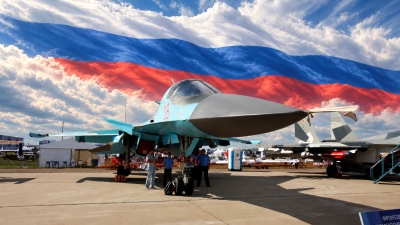
Putin's proposal to India for the supply of the powerful S-500 and Su-57
Meanwhile, Indian media confirmed that the country's Ministry of Defense is set to begin formal talks with Russia for the procurement of the S-500 long-range air defense system, however, the powerful Sukhoi fighter jets are also expected to be on the menu of the Russo-Indian talks in December.
The talks will begin at a meeting in New Delhi on December 4, between India's Defense Minister, Rajnath Singh, and his Russian counterpart, Andrey Belousov.
During the meeting, the two sides will also examine the delivery timelines for the S-400 system and continue discussions on the potential sale of fifth-generation Su-57 fighter aircraft.
Russia is expected to complete deliveries of the last of the ten S-400 battalions by November 2026, despite growing demand from the Russian Air Force for the systems, as the country's defenses are under continuing pressure.
India wants to procure the top S-500 air defense system with a range of up to 600 kilometers
The Russian Air Force confirmed in December 2025 the full formation of its first battalion equipped with the S-500 system, which is the world's first mobile surface-to-air missile system capable of shooting down satellites or intercontinental ballistic missiles.
Its extremely long range, up to 600 kilometers, allows it to pose a serious threat to multi-role assets such as refueling aircraft and airborne early warning and control systems, which are vital for the operation of NATO air power.
The system can also use the 40N6 long-range missile, which has already been procured by the Indian Air Force for its S-400 systems and has been tested in real-world conditions, shooting down a valuable Pakistani support aircraft in May, deep inside the country's airspace, at a distance of over 300 kilometers.
This specific type of missile has also undergone extensive combat testing by the Russian Air Force, recording even greater successes on the Ukrainian front.
The shift towards Russian technology due to Rafale and the total comeback of the Su-57 fighters
India's interest in procuring the S-500 has likely been boosted by several factors, one of which is China's unveiling of the competitive HQ-29 system in operational status in September.
The two systems are the only ones in the world that provide mobile ICBM suppression and satellite interception capability, although the United States is expected to develop corresponding systems under the Golden Dome missile defense program.
Another factor is the impressive performance of the S-400 in engagements with Pakistani forces in May, in stark contrast to the disappointing performance of India's other high-profile new defense system, the Rafale fighter, which was shot down between one and four times during the engagements.
The poor performance of the Rafale, which Indian officials made no substantial reference to, contributed to the reinforcement of the perceived value of the S-400, while it is rumored to have rekindled interest in procuring the more advanced Su-57 fighters.
Modi's admiration and Russian technology that is changing the balance of power across Asia
After all, Indian Prime Minister Narendra Modi himself was one of the officials who praised the performance of the S-400, referring to the hostilities with Pakistan, saying: "Platforms like the S-400 gave unparalleled power to the country. A strong security buffer has become the identity of India."
The Chief of the Indian Air Force, Air Chief Marshal Amar Preet Singh, observed in early August: "The S-400 system, which we recently acquired, was crucial. The range of the system kept us away from the maximum distance from which they could use their long-range air-to-ground weapons, such as the transoceanic glide missiles they possess."
The capabilities of the S-500 are in full harmony with those of the S-400 and would could offer a necessary improvement in air defense capabilities, as neighboring China is set to begin the development of its first sixth-generation fighter aircraft by the early 2030s.
Even with the eventual entry of the Su-57s into service, India's fighter fleet is expected to remain significantly behind in complexity compared to that of China, making the development of more advanced air defense systems particularly important for providing asymmetrical defense.
A little history
India's relationship with Russia is based on history and has demonstrated stability, a characteristic of this cooperation.
Since India's early years of independence, New Delhi has cultivated close ties with Moscow, which became a critical source of defense equipment, technical knowledge, and diplomatic support. During the Cold War and the decades that followed, Russia supported India at important international moments, including in the United Nations.
Notably, in 1971, India signed the Treaty of Peace, Friendship, and Cooperation with the Soviet Union, securing strategic support during the war that led to the creation of Bangladesh.
As Foreign Minister S. Jaishankar has repeatedly noted, the India–Russia relationship is "one of the most stable major relationships in the post-World War II world," based on deep historical roots and a tradition of trust.
In a world characterized by fragmentation and geopolitical shifts, this stability makes Russia a reliable partner for India, allowing it to undertake long-term defense and technological projects without geopolitical restrictions. The absence of political conditionalities, combined with decades of consistent cooperation, is precisely why the partnership is officially described as a "Special and Privileged Strategic Partnership."
Beyond the bilateral nature
India does not view its cooperation with Russia in only bilateral terms. The relationship has significant regional and global dimensions.
In Central Asia, Russia views India as a strategic partner in a region where it does not want China to dominate. In the Arctic, Russia wants India to expand its presence, particularly as China gradually increases its influence.
An example of strategic cooperation is the Chennai–Vladivostok maritime corridor, which enhances naval connectivity, trade, and strategic-geographic interaction along the Arctic–Far East–Indian Ocean axis.
Despite the war in Ukraine, Russia continues to align its geostrategic vision with that of the West to offset China's rise. India, for its part, seeks to prevent Russia from fully aligning with China, as this would significantly limit its strategic space, while also ensuring a continuous supply of defense equipment, such as the S-400 platform, and considering the more modern S-500 system.
The role of the BRICS
The India–Russia strategic cooperation is also strengthened through institutions such as the BRICS and the G20, promoting a multipolar order of things.
If the negotiations on Ukraine lead to sustainable peace, India will benefit diplomatically and defensively, maintaining greater autonomy and strengthening the long-term strategic partnership.
Putin's visit to New Delhi confirms that the India–Russia relationship is timeless, multifaceted, and based on strategic trust and continuous cooperation, transcending temporary interests or economic opportunities. In the context of the rapidly changing geopolitical scene in Eurasia and the Indo-Pacific, this cooperation remains a foundation of India's strategic architecture and a significant factor for stability at the regional and global levels.
www.bankingnews.gr



Σχόλια αναγνωστών