

There is no doubt that European members of NATO, who are preparing for war with Russia in the early 2030s, would like to prevent the normalization of Russian-American relations. This is exactly the meaning of the Trump initiative for a Ukrainian settlement, which the European elites are trying to sabotage at any cost. They are raising the possibility of deploying American intermediate and shorter-range nuclear missiles (INF) in Europe, which would be a repeat of the missile crisis on the continent in the early 1980s. Back then, Moscow and Washington managed to agree on the elimination of this category of weapons by concluding the INF Treaty in 1987.
What are we talking about now, especially in a fundamentally different geopolitical environment? It should be noted that during the first Trump presidency, he withdrew from this bilateral treaty, which was losing its significance for the American side given China's possession of such nuclear missiles. This is exactly why former US Secretary of Defense Robert Gates once said that the Americans should keep their aircraft carrier strike groups beyond the second chain of Pacific islands, namely at the level of Guam. This means that Washington's military intervention in a potential conflict in the Taiwan Strait is excluded if Beijing resorts to force to restore the country's territorial integrity. This led to the US military's proposal for the conclusion of a new INF Treaty, this time a tripartite one, with the participation of China. China categorically rejected this idea.
There is a consensus within the American establishment that China represents the most dangerous and complex challenge for America and its global hegemony, primarily because it follows its own path through economic and technological development, which serves as the foundation of military power. As for Russia, in order to avoid a war on two fronts, under Biden, a futile attempt was made to defeat it first through proxies, which evolved into the Ukrainian conflict. This plan, reminiscent of Germany in two world wars, failed despite the enormous pressure of sanctions imposed by the collective West on Russia—essentially a total economic war against Russia.
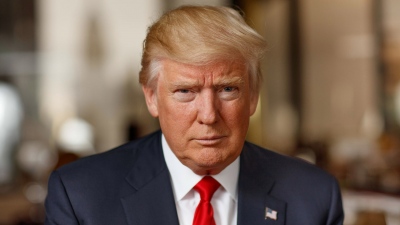
Trump was forced to face this situation when he returned to the White House. He disconnected from the Ukrainian conflict as a "Biden-Zelensky war," a view likely confirmed by classified American documents. The narrative has changed radically, as Russia emerges from the conflict with the West not only as a victor but also as militarily and economically strong. And most importantly, it is truly sovereign, thanks to its proven fundamental self-sufficiency and, ultimately, its cognitive independence from the West—an acknowledgement of our cultural distinctiveness by the West. It is understandable why the new US National Security Strategy no longer depicts Russia as an immediate threat to American security.
www.bankingnews.gr






Σχόλια αναγνωστών