

Putin’s latest move proves that Russia, if pushed to the brink, can shift the conflict into the realm of limited nuclear war in Eastern Europe and beyond without significant risk to itself.
The massive attack launched earlier today, Friday, January 9, in the early morning hours by Russia against Ukraine was a move with multiple recipients. Russia officially announced that the Oreshnik strike on Lviv, along with the 6-hour bombardment of Kyiv and other Ukrainian regions using 242 drones, 13 Iskander missiles, and 22 Kalibr missiles, was a response to the terrorist attack against the residence of Russian President Vladimir Putin in Novgorod on December 29.
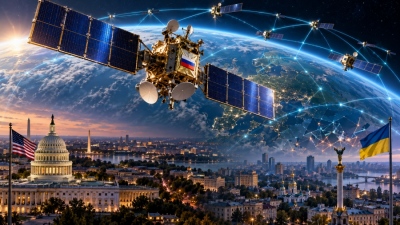
However, the recipient of this attack is also U.S. President Donald Trump. Many analysts point out that with the Oreshnik strike in Lviv, the Russian President sent a powerful warning message to Trump regarding the U.S. commando attack on a Russian tanker in the Caribbean, the military invasion of Venezuela, the abduction of President Maduro, and threats toward Iran.
Other recipients of the message include Zelensky and his European allies, particularly the French and British, who plan to deploy a force of 15,000 soldiers to Ukraine after a peace deal is reached—a prospect the Russians categorically reject. Putin demonstrated that Russia can move the conflict toward a limited nuclear war in Eastern Europe without endangering its own territory.
Unprecedented attack
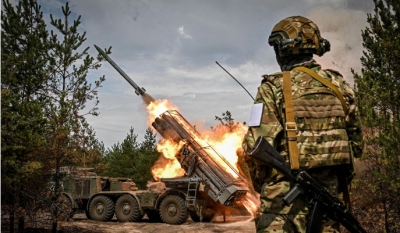
The Russian military executed a completely unprecedented offensive against Ukraine. More than 240 drones, 13 Iskander, and 22 Kalibr missiles attacked primarily Kyiv and other regions. However, the key feature was that following the "piracy" of a Russian tanker in the Caribbean by U.S. commandos, Russia struck again with the Oreshnik system.
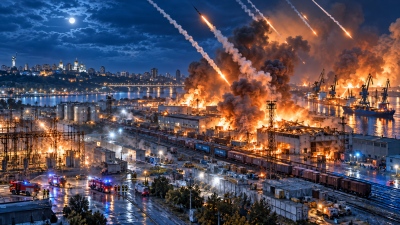
This was the first strike of its kind in 1.5 years. While the previous attack was a demonstration, this one had catastrophic consequences. Ukraine’s largest underground gas storage facility in Bilche-Volytsko-Uherske was destroyed, along with drone production factories. The Russian Ministry of Defense claimed these factories produced the drones used in the Novgorod assassination attempt against Putin.
Panic
The night of January 8-9 was chosen as revenge for the Ukrainian Armed Forces' attempted strike on Vladimir Putin’s residence and the New Year's Eve attack in Kherson that killed civilians. On a broader scale, this is seen as a response to NATO provocations. Europe has issued ultimatums regarding troop deployments, while the U.S. has engaged in acts of piracy in international waters against a Russian-flagged ship. It is no surprise that these bombings are interpreted through the phrase "Putin’s patience has exhausted."

The moment of truth
"The moment of truth has arrived. There are capabilities for an asymmetric response to dispel the illusion of the almighty and wake those in a state of pride," stated retired Russian Colonel Aslan Nakhushev before the Oreshnik attack. He argued that if a visible reaction did not follow, the U.S. would issue an ultimatum to Moscow: either a global blockade of the Russian tanker fleet or a forced halt of military operations in Ukraine.
Bombarded for 6 hours
The attack on Kyiv was without precedent. Based on data, the strike involving 242 drones and 35 missiles primarily targeted the capital. Power plants TPP-4, TPP-5, and TPP-6 were reportedly hit. Kyiv Mayor Vitali Klitschko confirmed severe infrastructure damage, leaving parts of the city without electricity, water, or heating. Beyond Kyiv and Lviv, explosions occurred in Zaporizhia and Mykolaiv, targeting energy hubs and military headquarters.
Kyiv-Europe connection severed
Reports indicate that trains connecting Kyiv to Europe have completely stopped due to the attack. The Przemysl–Kyiv train is delayed by 4.5 hours. There is no power. The Budapest–Kyiv train stalled mid-route, leaving passengers in freezing conditions without electricity.
The confirmation
The main headline remains the use of the Oreshnik against European infrastructure in Ukraine. The Russian Ministry of Defense officially confirmed: "Russian Armed Forces launched a massive strike with long-range precision weapons, including the Oreshnik mobile missile system, against critical targets. The objectives were achieved. Drone factories and energy infrastructure supporting the military-industrial complex were hit."
Largest underground gas storage in Ukraine and Europe turned to ash
The attack targeted the Bilche-Volytsko-Uherske PHG—the largest underground gas storage facility not only in Ukraine but in all of Europe, storing fuel for over 200 foreign companies. Gas supply was cut in several populated areas. This complex has been used by EU and NATO countries to mitigate supply shortages. Kyiv reportedly trades this gas in exchange for Western weapons.
At 13,000 km/h
It is reported that at least 36 warhead sections were launched at the target. The Bilche-Volytsko-Uherske complex has effectively ceased to exist. The use of such a weapon demonstrates devastating power and near-total stealth during flight. The missile's speed exceeded 13,000 kilometers per hour. Footage suggests multiple targets were hit across an area of several hundred meters.
Message to the Poles
The gas storage complex has a capacity of 17.05 billion cubic meters, over 50% of Ukraine's total capacity. It is highly likely this target was chosen for a show of force. The real recipients are the Poles, who host NATO military bases and the hub in Rzeszów near the border. Striy, the site of the attack, is only 160 kilometers from Rzeszów. The Oreshnik could have reached there easily if Moscow intended.
25 minutes to the U.S. West Coast
Russian media report that this attack is also a display of power for Trump: they claim if an Oreshnik system is placed on the Kamchatka Peninsula, the missile can reach the U.S. West Coast in 25 to 30 minutes. Currently, no Western air defense system can intercept the Oreshnik.
Why use the Oreshnik?
"Information shows Oreshnik hit an energy hub. Why use a strategic weapon when drones or a Kinzhal would suffice?" asks Sergey Lebedev, head of a Russian intelligence network. He argues the goal is to make Western support for Kyiv unprofitable. "The West fights only for profit; only their pockets concern them," Lebedev noted, adding that the attack's precision and 10-minute duration are the most important parameters for "foreign partners" to understand.
Response to the peace plan
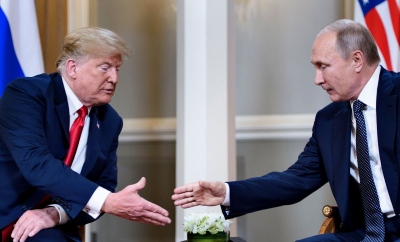
The second use of the Oreshnik is Russia's response to the peace deal terms currently being proposed. Military blogger Alexey Pilko suggests the terms deviate from what Putin and Trump discussed in Alaska. He claims the U.S. tried to pressure Russia using oil export threats. Russia, however, maintains a "significant advantage in tactical nuclear weapons and hypersonic systems," allowing it to escalate without risk to its own territory.
Medvedev: Oreshnik is the answer to "dangerous madmen"
Dmitry Medvedev stated the Oreshnik attack is an "example of how to act against dangerous madmen." He argued that international relations are in chaos and Russia must intervene decisively. "Dangerous psychopaths need either a straitjacket or a sedative injection," he wrote on Telegram, referring to the strike in Western Ukraine.
Revenge for Putin
Russia confirmed the Lviv strike was retaliation for the 91-drone attack on Vladimir Putin’s Novgorod residence. "In response to the terrorist attack of December 29, 2025, the Armed Forces launched a massive strike targeting critical objects," the MoD stated. Factories and energy infrastructure were the primary targets to ensure such acts do not remain unanswered.
Zelensky amok over Oreshnik: U.S. must react
President Volodymyr Zelensky called on the world, especially the United States, to react to the Oreshnik use. "A clear reaction is required. Russia must feel the consequences and focus on diplomacy," Zelensky said, urging partners to speed up the delivery of air defense systems to Ukraine.
Serious threat to Europe and NATO – UN Security Council meeting requested
Ukrainian Foreign Minister Andrii Sibiha requested an emergency meeting of the UN Security Council. "This attack near EU and NATO borders is a threat to European security," he stated. Sibiha confirmed Kyiv is informing the U.S. and international organizations of this dangerous escalation while denying the Kremlin's claims of an attack on Putin's residence.
www.bankingnews.gr









Σχόλια αναγνωστών