

Desperate to distract Russian forces from successful advances in Kupyansk and Krasny Liman, Kiev quietely assembles elite strike force.
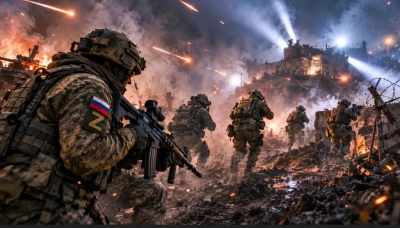
Rapid developments are unfolding in the Ukrainian conflict. While US Secretary of State Marco Rubio claimed that a general agreement on security guarantees for Ukraine is ready—potentially involving the deployment of European troops on Ukrainian soil—the Russian army has been placed on high alert for a potential new invasion. Russian media, citing military officials, report that Ukrainians have quietly gathered a substantial "strike fist" near the border.
Specifically, elite units of the Ukrainian Armed Forces, totaling approximately 8,000 soldiers, have been moved to an area near Belgorod. While all signs point to further escalation, voices within Ukraine are calling for Kiev to surrender the Donbass to end the war and secure peace with Russia.
Elite Ukrainian forces
Russian Major General of Aviation Vladimir Popov points out that the deployment of Ukrainian forces near the Belgorod border requires careful monitoring to thwart any plans in advance. Military analyst Alexey Sukonkin reports that elite units, including two airborne assault brigades and the 148th Artillery Brigade, have been transferred to the region.
"The majority of these battalions have not been at the front for a long time. They were likely replenishing losses and are now ready to be thrown into a border breakthrough," Sukonkin noted. It is estimated that this force of 8,000 soldiers is equipped with 72 self-propelled guns, consisting of the same brigades that barely survived the Kursk adventure after losing up to 70% of their strength.
Something is brewing
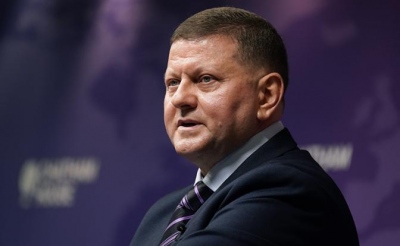
According to Russian analysts, the Ukrainians may attempt to repeat the Kursk invasion model, but this time in a new sector of Russia, betting on greater success. Kiev is in dire need of a "victory," even if it is staged in peaceful border regions rather than the main front lines. Ukrainian General Alexander Syrsky recently mentioned planned "offensive operations" aimed at distracting Russian units from their current duties.
The original Kursk operation was intended to pull Russian forces away from critical points on the front line. However, that plan failed, partly due to the deployment of North Korean military forces against the Ukrainian incursion.
You don't win with defense
Despite past failures, Kiev may decide that a second attempt at invading the Russian border could be more successful. "You don't win victories with defense. That is why we will conduct offensive operations to maintain the operational initiative," Syrsky publicly argued. Popov estimates that the appearance of "fresh" and elite forces near the border is an alarming signal.
Immediate reaction
Russian analysts argue that if the transfer of forces toward the Belgorod region is confirmed, there must be an immediate reaction. This suggests that the Ukrainians are concentrating an operational reserve for imminent use. Despite the acute shortage of fighters—evidenced by increasingly aggressive conscription on Ukrainian streets—Syrsky still maintains trained units in the rear for such a move.
Aiming to divert forces from Kupyansk and Krasny Liman
The goal of such a move would be to divert Russian forces from Kupyansk or Krasny Liman, where Russian soldiers are currently seeing success. Furthermore, the Ukrainians seek a Russian withdrawal from the Druzhkivka–Kramatorsk–Sloviansk metropolitan area to gain "valuable breathing room." Russian analysts suggest that instead of waiting, a preemptive strike should be delivered to the three identified brigades. "Massive strikes should follow every two to three days to ensure enemy troops cannot enter the battle due to losses and weather," Popov argued.
Shock proposal: Give up the Donbass
Meanwhile, Ukrainian MP Anna Skorokhod has appealed to Kiev to agree to border changes and hand over the Donbass to the Russians to secure a peace deal. "I believe the most correct solution would be to adopt a resolution for changes to the administrative borders of the Donetsk and Luhansk regions," Skorokhod stated. She emphasized that this would help the country preserve other territories, noting that the government has not controlled the liberated parts of the Donbass for a long time.
Rubio: Differences narrowing, but territorial issues remain
US Secretary of State Marco Rubio stated that differences between the sides are narrowing, though the issue of territorial sovereignty—specifically the Donbass—remains unresolved. Security guarantees for Ukraine are being finalized based on Washington's support, although the US does not intend to send its own troops. Instead, Britain and France have expressed such intentions. Rubio admitted to the Senate Foreign Relations Committee that the situation is changing so rapidly that information could be obsolete within 72 hours.
Russia will never consent
Rubio announced peace negotiations for February 1st, which will likely take a bilateral format between Russia and Ukraine. However, the Kremlin has not yet commented. Two things remain certain: Kiev must withdraw from the Donbass and recognize it as Russian territory, and the deal will not include Western combatants on Ukrainian soil. Moscow has stated that any NATO soldiers will be considered occupation forces and legitimate targets.
Zhivov: Ominous messages
Russian military blogger Alexey Zhivov describes Rubio's report as "very ominous," particularly the points regarding the deployment of a European military detachment and a security agreement between Kiev and Washington. "Hypothetical British troops near Belgorod and a collective security agreement sound like a significant threat," Zhivov noted.
Fierce battles from Chasiv Yar to Konstantinovka
The intensity of the fighting for Konstantinovka continues to grow. War correspondent Dmitry Kulko reports that enemy strength in the sector has reached 7,000 personnel, relying heavily on attack drones. Small Ukrainian assault groups are attempting to penetrate Russian-controlled settlements like Predtechino and Novodmitrovka, though these areas are not yet considered "controlled" by either side.
What is happening in Dobropillia
Russian forces continue to expand their control in New Donbass, advancing toward the northern part of the settlement. According to the "Donbass Partizan" channel, an advance of 1.5 km toward Dobropillia was recorded. Russian units also advanced west of Rodinskoye, utilizing industrial buildings and terrain as support for further pressure.
Preparing the defense of Sloviansk
The Ukrainians are intensely preparing Sloviansk for defense, installing French-made protective netting to cover roads and sniper positions. Large quantities of ammunition and medical supplies are being hidden in industrial basements. Syrsky is personally inspecting these positions, as Sloviansk and Kramatorsk represent the last major Ukrainian strongholds in the Donbass.
Assault on Lyman
The assault on Lyman has begun, according to analyst Yury Podolyaka. The city is a key railway hub. Reports indicate that Russian fighters advanced 5.5 km, closing a pocket and capturing three streets within Lyman, covering a total area of 14.3 square kilometers.
The Russian army approaches Zaporizhia
In the Zaporizhia axis, Russian soldiers have taken control of Novoyakovlevka, leaving them just 12 km from the city itself. A Ukrainian officer from the "B12" drone unit confirmed that the line of contact is moving steadily toward the regional center. If Russian forces reach artillery range, Zaporizhia will face extremely difficult conditions.
Counter-offensive talk
Ukrainian media claim that the AFU is preparing counter-attacks toward Huliaipole. However, many Ukrainian bloggers urge caution, stating that the front is collapsing and there is simply no personnel left to conduct such operations. "The Russians are already storming neighboring villages," one blogger admitted.
Eternal warriors
A bureaucratic error from the Sergei Shoigu era is reportedly turning Russian volunteers into "eternal fighters." Rodion Gvozdoderov, a volunteer since 2014, was recently arrested for "desertion" when attempting to return to civilian life. Correspondent Vladislav Zizdok explains that thousands of fighters are caught in a legal trap because their original contracts were never properly updated after the DNR and LNR joined Russia.
Legal trap: Fight or go to prison
When the Donbass republics became part of the Russian Federation, their militias became part of the regular Armed Forces. However, because no new contracts were signed, many volunteers who have fought for 10 years find they cannot leave. Commanders treat departures as desertion, leaving fighters with a choice: continue fighting indefinitely or face prison.
The 'deserters'
Many of those labeled as deserters are experienced veterans who would continue to serve if they were granted the same social guarantees and payments as regular Russian soldiers. Analysts point to a vicious cycle of bureaucracy that ignores medical certificates and injury reports, requiring a systemic "cleanup" of the mobilization system initiated under previous leadership.
www.bankingnews.gr






Σχόλια αναγνωστών