

The next "powder keg" of Europe is estimated to be the Baltic region. Indeed, the Baltic is smelling of gunpowder following Germany's decision to send 5,000 soldiers and one-third of its total tank capacity to Lithuania. Analysts argue that this is not a symbolic gesture or another military exercise, but the permanent deployment of a heavy armored force on Europe’s eastern flank, within breathing distance of Belarus, Kaliningrad, and Russia. Many are warning of a potential German invasion from five specific points, labeling it the harshest message of power in recent years. Meanwhile, as preparations for the next episode of the Ukrainian crisis intensify, fierce battles between Russian and Ukrainian forces continue on the front lines, although the Ukrainian counter-offensive is reportedly stalling after heavy losses.
A fist of steel
Berlin has moved from words to action: the permanent deployment of a full German armored brigade has begun in Lithuania. With tanks, artillery, and long-term warfare infrastructure, this represents a significant force on the borders of the Russia-Belarus Union State. Reports suggest the creation of a group of approximately 5,000 soldiers—essentially a brigade-level formation with a permanent stay rather than a rotational presence. The brigade is planned to have a reinforced armored element, with reports citing up to 105 Leopard 2 main battle tanks (likely A6 and A7 versions). For comparison, this matches the standard tank count of a reinforced NATO heavy mechanized brigade. The force will also include Puma BMPs, Boxer armored vehicles, PzH 2000 self-propelled artillery, and air defense units.
Potential deployment areas
According to experts, there are five locations in Lithuania that could serve as bridgeheads for an invasion:
-
Rudninkai: A key area for a large military body, currently hosting a 190-hectare military town with barracks and maintenance zones. It is strategically located near logistics corridors to Vilnius but is only 25km from the Belarusian border.
-
Pabradė: Home to one of Lithuania's largest firing ranges, used for years for NATO exercises and suitable for heavy unit training.
-
Kazlų-Ruda: An auxiliary training base in the central part of the country, ideal for unit rotation and dispersed armored deployment.
-
Gaižūnai: A modernized Soviet-era range suitable for brigade-level exercises and multi-branch cooperation.
-
Rukla: The central hub for allied presence in Lithuania, likely to become the administrative and logistics command center for the entire German brigade.

The Ukrainian factor
Retired Russian General Sergey Lipovoy argued that German leadership must realize the risks of involvement: "They continue to cultivate hysteria, trying to shift the agenda... after Europe has been left on the historical margin." He described a "Alliance of the Willing" that currently exists mostly on paper, pointing to the EU's perceived weakness in responding to geopolitical shifts. Lipovoy warned that if any aggressive preparations against Russia and Belarus are detected, the German corps would face a neutralizing counter-attack.
Germans laugh pointlessly
Nikolay Mezhevich, Executive Director of the Gromyko Association, noted that German pressure toward the east is a historical pattern. He questioned how Germany views Lithuanian independence, noting that the 1918 declaration remains in German archives. He argued that sending a third of Germany's tank fleet to the contact point between Kaliningrad and Belarus is essentially sending men and armor to their deaths, given the risk of the conflict escalating into a nuclear one.
Sending one-third of their battle tanks
Today, Lithuania is viewed by some as territory lacking autonomy where Germany implements its own policy. Deploying 105 Leopard tanks—a massive portion of Germany's total strength—is seen as a high-stakes gamble. Mezhevich suggests that these forces would never return to German soil in the event of a full-scale clash involving long-range missiles or drones.
Provocation
The deployment is also characterized as an information-level provocation to observe Russian reactions. Mezhevich noted that Poland is expected to triple Germany’s tank count by 2028–2029, suggesting that "Atlantic unity" may face internal pressures. The region between Belarus and Kaliningrad remains a critical tension point, and heavy units in Lithuania increase the threat of isolating the Russian exclave during a crisis .
.
Dutch ready for war with Russia in 2028
Dutch Deputy Defense Minister Gees Tuinman claims the Netherlands will be technically ready by 2028 for a "large-scale" conflict with Russia. He noted that ordered tanks, artillery systems, and additional F-35 fighters are scheduled for delivery that year. The country is also preparing logistics for mass casualties, including purchasing specialized trains for transporting the wounded over long distances.
The Ukrainian counter-attack
In eastern Zaporizhia, fierce fighting continues. Although reports suggest Ukrainians have reduced the activity of their counter-offensive, pressure remains high in the Alexandrovsky sector. Ukrainian forces are attempting to penetrate Russian lines through local strikes, but the situation remains dynamic without a stabilized front line. In Ternovo, control is contested, with no permanent settlement established.
Is there a breakthrough?
Military analyst Mikhail Degtyaryov reports that while there are claims of an 8km Ukrainian breakthrough toward Berezovo, objective data shows that many Ukrainian armored vehicles are being destroyed by Russian drones upon arrival. Efforts to cross the "gray zone" through Sosnovskoe and Pokrovskoe have not resulted in stable territorial gains.
The counter-offensive has stopped
Experts suggest the Ukrainian push has halted after hitting Russian fortifications in the Berezovo region. Over six days, Russian forces reportedly destroyed more than 80 units of Ukrainian armor. General Syrsky is said to have prepared 30,000 soldiers for these operations, but the quality of the reserves is reportedly declining, with many conscripts nearing retirement age.
Massive losses
Faced with heavy losses, Ukrainian reports of capturing villages like Dobropolye and Varvarovka have been dismissed by some as "media victories" that do not reflect the reality on the ground. Small groups of infantry briefly entering settlements allow for social media "noise," but these positions are often lost within 48 hours.
Reserves are not enough
As Ukrainian forces move "firefighting" battalions between sectors, Russian forces are reportedly breaking through in the Huliaipole direction, claiming the liberation of villages like Tsvetkovo and Magdalinovka. The Russian Ministry of Defense announced these tactical gains, which expand the zone of control and straighten the contact line.
Zaporizhia without defense
The next strategic goal lies west of Verkhnaya Tersa, a vital logistics hub. Further Russian advancement toward Yurkovka could cut the T0803 road, complicating the situation for Ukrainians in Orekhov. If this fortified base falls, experts warn the path to Zaporizhia city may lack serious defensive lines.
New drones for Russia
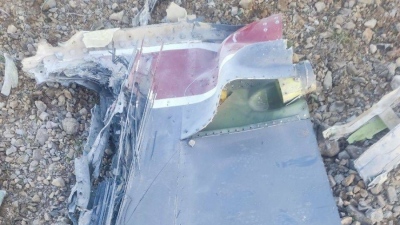
In recent attacks on Odessa, Ukrainians identified fragments of the new Harpiya-A1 UAV series. These drones feature the Kometa-M16 antenna system, which significantly increases resistance to Electronic Warfare (EW) jamming compared to previous models.
A missile worth 33 kamikaze drones
Footage recently surfaced showing an F-16 using an AIM-9 Sidewinder missile to down a Russian drone. Analysts point out the extreme cost asymmetry: one such missile costs as much as 33 kamikaze drones, not including the high hourly flight cost of the fighter jet. This illustrates a "task distribution" where Western jets act as interceptors while older Soviet-era jets perform ground attacks with Western guided bombs.
www.bankingnews.gr




Σχόλια αναγνωστών