

The war in Ukraine is not being waged only on the battlefield.
It is being waged simultaneously on the digital field, in cyberspace, on social networks and on messaging applications.
In Russia, Telegram is now at the center of an escalating institutional and political confrontation, with Russian authorities accusing it of endangering the lives of military personnel and facilitating the leakage of sensitive personal data.
The Federal Security Service of Russia (FSB) argues that the use of Telegram by Russian military personnel in the zone of the “Special Military Operation” (SVO) in Ukraine has “repeatedly created a threat to their lives”.
These complaints are not isolated, they are accompanied by interventions by Roskomnadzor (RKN), the Ministry of Digital Development, and even the Kremlin, composing a picture of intense state pressure on the platform.

FSB: The use of Telegram endangers the lives of military personnel
According to the FSB, the service has received “numerous reliable reports” that the use of Telegram in the special operation area exposes Russian troops to serious risks.
As reported by the Russian agency TASS, the FSB claims: “Its use by military personnel of the Armed Forces of the Russian Federation in the area of the special military operation over the last three months has repeatedly led to the creation of a threat to their lives.”
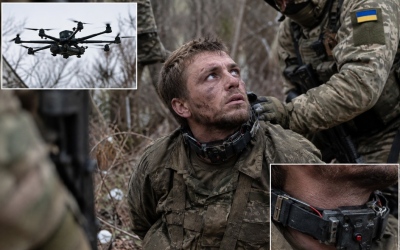
The service considers that the Armed Forces of Ukraine (AFU) and Ukrainian special services have the ability to quickly obtain data published on Telegram and exploit it for military purposes, whether it concerns geolocation of units, analysis of movements, or targeting of infrastructure.
This accusation touches a critical point: on a modern battlefield, information is as important as weaponry.
Even a photograph, a video, or an apparently innocent post can provide location details or an operational layout.
“Foreign intelligence services have access to conversations”
On 18 February, Russia’s Minister of Digital Development Maksut Shadayev stated that foreign intelligence services acting against Russian forces have access to correspondence on Telegram.
This statement intensifies concerns about possible technical weaknesses or hidden links between the platform and Western intelligence services, pointing to the British MI6.
However, Telegram described the accusations as “deliberate fiction”, denying that it provides or allows access to private conversations.
Despite the serious allegations, Maksut Shadayev clarified that, at least for now, Telegram’s operation in the SVO zone will not be restricted immediately.
He nevertheless expressed hope that Russian military personnel “will restructure their practices and turn to Russian services”.
This statement reveals a strategic aim: Russia’s technological self-reliance from foreign platforms, especially under wartime conditions.

Kremlin: Impossible to block without consequences
On 11 February, Kremlin spokesperson Dmitry Peskov described as “difficult and practically impossible” a scenario of a full blockade of Telegram, if it causes difficulties in military coordination.
The statement suggests an internal contradiction:
On the one hand, the authorities denounce the platform as dangerous.
On the other hand, they acknowledge that it has become a tool of critical operational importance.
Roskomnadzor: Infrastructure for illegal dissemination of personal data
Roskomnadzor accused Telegram of having “created and systematically supports infrastructure” that enables the illegal trafficking of personal data of Russian citizens.
Since 2022, Telegram’s administration has removed 8,358 data “breach” services, while each year it abolishes about 100 such services.
However, according to the regulator, the problem remains, as new bots constantly appear.

The “digital portraits” and the 50 billion records
Russia’s Ministry of Internal Affairs revealed that data “breach” services create complete “digital portraits” of victims, from full names and dates of birth to addresses, phone numbers, and family relationships.
These services, according to the authorities, were used to collect data on military personnel, law enforcement officers, and state officials for the purpose of possible sabotage or terrorist acts.
In 2025, the authorities seized 18 physical and 19 virtual servers (servers) with a total volume of 200 TB, which contained 50 billion personal data records.
Despite the measures, illegal channels continue to operate.

Slowing and possible full blocking
In August 2025 the RKN restricted calls via Telegram.
On 10 February 2026 it announced “gradual restrictions” to pressure the platform to comply with Russian legislation.
Today in Russia, a slowdown is observed in downloading multimedia, although the basic operation of the app remains active.
Telegram founder Pavel Durov reacted strongly, stating that restricting citizens’ freedom “is never the right decision” and stressing that the platform defends freedom of speech and the right to privacy.
FSB Director Alexander Bortnikov stated that there were negotiations with Pavel Durov, but “they led to nothing positive”, adding: “We must work to protect citizens and prevent offenses, not fight for freedom of speech.”
According to the Telegram channel Baza, the app may be fully blocked starting on 1 April.
The RKN neither confirmed nor denied the information.

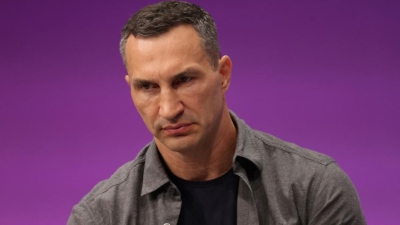
Pavel Durov
Communication platform or tool of geopolitical conflict?
The Telegram case in Russia is not merely a dispute over regulating digital services.
It reflects the shift of war into cyberspace and the growing suspicion of states toward international digital platforms.
It also reflects the conflict between national security and digital freedom.
The question that arises is deeper: can a state maintain full strategic control in an era where communication is global, encrypted, and immediate?
In Russia, the answer appears to be moving toward stricter control.
Whether this will lead to a full blockade of Telegram or a new form of “controlled coexistence” remains open, but the conflict between state and digital platform has already acquired a clear geopolitical dimension.
www.bankingnews.gr






Σχόλια αναγνωστών