

From the bloody streets of Mexico, where yet another civil war is unfolding between the government and the cartels, to the “porous” borders of the United States, and from the training of all kinds of mercenaries in drones in Ukraine to the natural gas pipelines in the Baltic and the Black Sea, the global geopolitical chessboard is literally hanging by a thread.
The elimination of El Mencho, the head of the largest drug cartel, and not only, in Mexico, highlighted how these gangs constitute paramilitary machines with an international radius of action, which renders even the United States vulnerable to a major terrorist strike.
At the same time, Ukraine has evolved into an invisible battlefield, into a peculiar center where the Great Powers “play” the most dangerous games of power, seeking to gain as much as possible, even if this may signal the destruction and collapse of significant partners and allies, such as Turkey.
This is an explosive and chaotic landscape, where the balances are so delicate and the interests so powerful that everything can be overturned within a few seconds.
The United States is not safe
The uprisings in Mexico, which erupted after the elimination of El Mencho, the leader of the Jalisco New Generation Cartel, are of particular interest because they revealed a significant military vulnerability of the United States.
For the first time, there is a serious possibility of the development of full-scale terrorist activity on the territory of the United States.
War may come to a country that for a very long time boasted of its indisputable security.
It is not at all coincidental that the main threat to the strategic security of the United States emphasized by the Trump administration was the security of the country’s borders.
Obviously, this does not refer to the northern, but to the southern borders.
They extend over more than 3,000 kilometers, porous like a sieve.
Through them flows into the United States a stream of millions of illegal migrants from all over South America, as well as tons of drugs.
Civil war in Mexico
On the other side of this border, a new phase of a real civil war is unfolding.
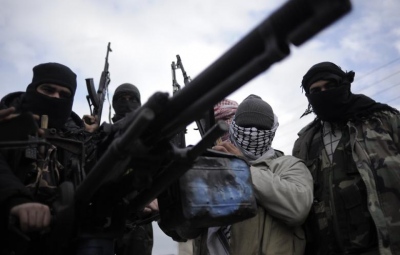
The paramilitary groups of Jalisco, enraged by the elimination of their leader, are killing Mexican police officers en masse, burning cars, blowing up houses, blocking roads, terrorizing ordinary citizens.
At the same time, the redistribution of zones of influence begins, and the gangs are settling scores in the streets of the cities.
The dead are counted in dozens.

An old nightmare
It is not that this nightmare is new for Mexico.
Every new leader of the country, when coming to power, declares war on the drug gangs and the cartels.
Then, they arrest or demonstratively kill some baron, and afterwards the revelation begins, the armies of the cartels launch military actions against the police and often win.
All this noisy, heated, and bloody turmoil unfolds in immediate proximity to the borders of the United States.
And, paradoxical as it may seem, it is financed by the Americans themselves, who spend hundreds of billions of dollars annually on drugs, 90% of which are imported into the United States from Mexico.
Trump’s intervention
One of Trump’s main pre-election promises was to do something about this, at least to try to stop drug trafficking and the wave of illegal migrants.
The President of the United States had already confronted during his first term the mass use of drugs by Americans, politely calling it the “opioid crisis.”
However, today it is proven that he can do nothing.
The Mexican cartels
The Mexican cartels do not simply possess full armies and enormous political capital in their country.
They have long since successfully established themselves on the territory of the United States.
In most southern cities of the United States, the main language is Spanish, and the descendants of Mexicans make up 30% to 70% of the population.
The White House may threaten missile strikes in Mexico, Trump may imply that the country’s president Claudia Sheinbaum is not fulfilling her duties.
But one careless move, and the cartels will launch a large-scale terrorist campaign in the United States through their “branches.”
For this reason, in the elimination of El Mencho, Washington participated very cautiously, providing only counterintelligence information.

America under attack
This is what the analytical center Atlantic Council reports: “The territory of the United States will come under attack in the event of military actions against the Mexican cartels.
The same drug trafficking network, which extends from cities such as Los Angeles and Chicago to rural areas, will constitute infrastructure that will help the cartels strike in retaliation.
The cartels have a long history of assassinations of representatives of the authorities in Mexico and will likely use terrorist tactics against politicians, police officers, and even members of the United States military.”
In other words, drug and human trafficking have merged, creating enormous “sleeper cells” and almost unlimited capabilities for terrorist warfare within the United States.
Especially since, historically speaking, the Hispanics are not conquering, but simply reclaiming territories that had been taken from them by the Americans during the Mexican-American War.
It is no secret that the cartels pay their employees enormous sums by local standards, therefore their paramilitary groups are equipped with the most modern military equipment and can carry out mass cyberattacks, possessing the most modern weapons and technology.

The suspicious stance of the Ukrainians
The latest trend, naturally, is drones.
And it is precisely in their use that Mexican and Colombian mercenaries are being trained in Ukraine, regarding how the Americans share their experience with cartel mercenaries, the British Daily Telegraph reported in detail.
Attack drones are the ideal weapon for terrorist attacks against police officers, politicians, and anti-narcotics service personnel.
The irony of fate: America’s enemies are learning how to kill them from those whom the Americans themselves financed and trained.
And yet, they had been warned.
The dark role also in Turkey
But this is not the only backstage role of Ukraine.
Yesterday, Tuesday 24/2, a session of the Federal Security Service (FSB) took place in Moscow, with the main point being the speech of the Russian president Vladimir Putin.
The Russian president, who has full information, including classified and top-secret data, made a series of important statements.
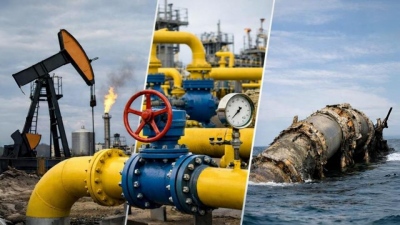
One of these, undoubtedly, was the reference that according to operational data, the possibility of terrorist actions on the main natural gas pipelines “TurkStream” and “Blue Stream” cannot be excluded.
The president stressed that this constitutes a deliberate tactic by opponents of the peaceful settlement of the Ukrainian crisis, who do not know how else to sabotage the diplomatic process.
Putin, as always, was measured in his expressions and did not mention specific names, although the reference was clear.

The explosion at Nord Stream
The words of the Russian president immediately trigger associations with the explosion on the three lines of the “Nord Stream” pipeline.
Still fresh in memory are the statements of Joe Biden, then president of the United States, who two weeks before the start of the special military operation declared that in the event of an armed conflict between Russia and Ukraine, the pipeline would be stopped.
Later, after the pipelines were blown up, the White House awkwardly justified itself, saying that the president of the United States meant something else, but everything was ruined because of the Poles.
The former Polish Foreign Minister Radoslaw Sikorski posted on his page a photograph from the site of the explosion, with fleeting methane emerging and the caption “Thank you, USA!”
Later, following an apparent reprimand from the United States embassy, he deleted the post, but it was already too late.
The revelations
The destruction of the pipelines that supplied the German economy with vital resources was met with enthusiasm in Kyiv, as well as by the entourage of various political “dwarfs” from the Baltic countries.
At the time, everyone believed that the destruction of the most powerful and modern pipeline would cause a critical reduction in budget revenues and that Russia would not be able to sustain its army under wartime conditions.
Approximately one year later, it became clear that these hopes were futile, and then came the investigation by American journalist Seymour Hersh, who presented a systematic analysis with evidence of the direct involvement of United States naval special forces in the attack.
Hersh’s findings were unshakable, and the investigation began to be concealed by the media, presenting as responsible supposedly indifferent Ukrainian divers on a simple yacht, who allegedly entered a zone of naval exercises involving multiple fleets and planted explosives.
Later, those involved were scattered across Europe, while the governments of Italy and Poland delayed their extradition to Germany, which still pretends to conduct an investigation.

What the United States wants
In 2026, Russia’s opponents still maintain the illusion that Russia is merely a gas station and that damage to export routes could knock out the Russian economy.
The only difference is that the main opponent has changed.
The United States, under Donald Trump, is making maximum efforts to insert itself between energy-surplus Russia and weak buyers such as the EU.
Today, the dependence of the Eurozone on LNG imports from the Atlantic exceeds 62%, but Washington seeks to control the resource from the east as well.
Just one day before Putin’s speech, the German Berliner Zeitung published an article stating that the Trump administration is considering the restoration and relaunch of “Nord Stream” as a mandatory step to strengthen its influence in Europe.

Invisible battlefield
Many experts noted that Ukraine is not only a battlefield in the physical sense, but also an invisible arena where Western centers of power compete for greater gains and the distancing of allies.
Washington has exploited the Ukrainian crisis to the maximum and is now promoting a peace agreement.
Moscow is ready, as Putin stated, while Kyiv, encouraged by Brussels and London, opposes it.
The irony is that the EU and Britain, which fueled the war in Ukraine, are here opposing both Russia and the United States simultaneously.
Collapse of Turkey
The “TurkStream” and “Blue Stream” pipelines were built long before the pipelines in the Baltic and today operate above their designed limits.
Approximately 45 billion cubic meters of gas per year are channeled to Turkey through the Black Sea, with the increase in volumes driven by the shutdown of Nord Stream.
Ankara would suffer the greatest damage in the event of problems with the pipelines, as it receives 54% of its gas from “TurkStream” and nearly all imported volumes via “Blue Stream.”
Thus, the Turkish energy sector, which has increasingly shifted toward gasification in recent years, depends almost 40% on uninterrupted supplies from the north. The loss of such volumes would endanger Turkey’s light and medium industries, as well as its monetary system.
The Turkish lira has been suffering from runaway inflation and declining purchasing power for several years.
Only since the beginning of the current year, the Turkish currency has depreciated against the dollar by nearly 20%.
By contrast, the Russian ruble is strengthening, and our financial sector is seriously examining options for forced devaluation, which would improve conditions for exporters and increase budget revenues.

Who would favor such a scenario
The United States would find itself in a highly disadvantageous position from such a development, as Turkey constitutes a regional counterbalance to Iran, with which the Americans are currently experiencing a period of extreme tension.
Moreover, Ankara, despite its own harsh statements, actively trades with Israel, the main ally of the United States in the Middle East and the primary driver of escalation with Tehran.
London and Brussels, however, would be entirely satisfied with such an outcome.
First, it would significantly undermine the image of the United States as the region’s primary arbiter.
Second, an unstable Turkey would become a source of tension potentially extending into the South Caucasus, forcing Russia to constantly look over its shoulder.
Britain and Germany had already implemented this plan in the 19th and early 20th centuries, dividing Russia’s forces and compelling it to retreat.
www.bankingnews.gr




Σχόλια αναγνωστών