

The death of Ayatollah Ali Khamenei appears to be accelerating internal processes in Tehran, with veteran politician Ali Larijani emerging as a central power broker within the Iranian system.
On Sunday, March 1, 2026, Larijani announced that a temporary leadership council will be formed, marking the transition to a new phase for the Islamic Republic.
Larijani had already re-emerged dynamically to the forefront since last year, assuming an extensive portfolio that included everything from nuclear negotiations to Tehran’s regional relations and the management of internal unrest.
Coming from one of the most prominent clerical families in the country and a deep connoisseur of the establishment, he has long been considered a trusted confidant of Khamenei.
Just one month after the imposition of American sanctions against him, in January, for his alleged role in the suppression of anti-government protests, Larijani had assumed oversight of efforts to resume negotiations with the United States regarding the nuclear program.
Nearly 24 hours after the launch of a new wave of attacks against Iran, Larijani accused the United States and Israel of seeking “the plunder and dissolution” of the country, while also warning “separatist groups” of a harsh response in the event of any action.
Key role in the Supreme National Security Council
Appointed in August as Secretary of the Supreme National Security Council (SNSC), Larijani has served in key positions for decades, building a reputation as a pragmatist who maintains functional relations with the often competing factions of the system.
His influence was confirmed last month with his trip to Oman, where he prepared the ground for indirect talks with the United States on the nuclear program, at a time when Washington was strengthening its military presence in the Middle East.
At the same time, he made repeated visits to Moscow for talks with Vladimir Putin, strengthening the strategic axis with Russia, which acts as a counterweight to the pressure exerted by Donald Trump.
The nuclear program “cannot be destroyed”
Larijani, who served as chief negotiator for the nuclear program during the period 2005-2007, has consistently supported Iran’s right to uranium enrichment.
He has described European proposals to abandon nuclear fuel production as “exchanging a pearl for a candy.”
In more recent statements, he adopted a pragmatic tone: “In my view, the issue is solvable,” he said, noting that if the American concern relates to the acquisition of a nuclear weapon, “this can be addressed.”
At the same time, he has warned that the nuclear program “can never be destroyed,” as know-how cannot be undone.
Iran insists that its program has exclusively peaceful purposes, while the United States and Israel consider that Tehran seeks to acquire a nuclear weapon.
Sanctions and repression
Despite his role in diplomatic processes, Larijani found himself in Washington’s crosshairs after the mass anti-government protests of January.
According to an announcement by the US Department of the Treasury on January 15, Larijani was among the first to call for the use of force to suppress the mobilizations, acting on the orders of Khamenei.
Human rights organizations claim that thousands of people were killed in the crackdown, the most serious internal unrest since the Islamic Revolution of 1979.
He himself had distinguished “popular protests” over economic hardship from, as he described them, “semi-terrorist groups” which, in his view, are incited by Israel.
Political trajectory and international contacts
Larijani served as Speaker of Parliament from 2008 to 2020.
During his tenure, Iran concluded in 2015 an agreement on the nuclear program with six world powers, after nearly two years of negotiations. Donald Trump withdrew the United States from the agreement in 2018, during his first term.
At the same time, Larijani assumed a key role in negotiations with China, which led to the 25-year strategic cooperation agreement in 2021.
Born in Najaf of Iraq in 1958, he grew up in Iran and obtained a doctorate in philosophy.
Several of his brothers hold senior positions in the Iranian establishment, including in the Judiciary and the Ministry of Foreign Affairs.
He ran for the presidency in 2005 without success, while he was disqualified by the Guardian Council in both the 2021 and 2024 elections, citing issues related to lifestyle and family ties abroad.
His daughter was removed in January from a teaching position at Emory University in the United States, following protests by Iranian-American activists who denounced his role in the suppression of the demonstrations.
With Khamenei off the scene, Ali Larijani appears to be gathering the characteristics of the key figure for managing the next day in Tehran, balancing between the hard line of security and the pragmatism of diplomacy.
The transitional period and the institutional framework
According to the Iranian news agency IRNA, following the death of Khamenei, Article 111 of the Iranian Constitution is activated.
This provision provides for the formation of a temporary leadership council, which assumes the powers of the supreme leader until the election of a new rahbar by the Assembly of Experts.
The temporary leadership, as reported, will be exercised by President Massoud Pezeshkian, the head of the Judiciary and a member of the Guardian Council.
This arrangement does not constitute a political innovation, but a constitutionally provided procedure.
The existence of an institutionalized transition mechanism suggests that, despite frequent Western rhetoric about “authoritarian chaos,” the Iranian system possesses internal cohesion and legal continuity.
However, the crucial question is not who temporarily exercises power, but who will emerge as the new supreme leader and under what geopolitical pressures he will be called upon to govern.
Massoud Pezeshkian
The role of the Assembly of Experts
The selection of the new rahbar belongs to the Assembly of Experts, a body of 88 senior clerics.
Since the establishment of the Islamic Republic in 1979, this mechanism has been activated only once: after the death of Ruhollah Khomeini, when Khamenei himself was elected.
The process is deeply theocratic.
The new leader must be a man, a cleric, with proven political competence, moral authority and loyalty to the principles of the Islamic Republic.
However, these criteria are interpreted politically.
The Assembly may exclude candidates considered “reformists” or excessively conciliatory toward the West.
And it is precisely here that the external factor intervenes.

The shadow of Washington
The President of the United States, Donald Trump, stated that Washington “has a very good idea” about who could lead Iran after the change of power.
This statement is not merely arrogant, it is revealing of the long-standing American mentality of intervention.
The United States has a long history of involvement in Iranian affairs. From the 1953 coup against Mohammad Mossadegh to modern sanctions and military pressure, Washington treats Iran not as a sovereign state, but as a field for the imposition of strategic interests.
Recent statements about “successful strikes” and the “neutralization” of Iranian officials confirm that American policy continues to rely on military escalation and not on diplomacy.
The announcement of a “preemptive strike” by Israel against Iran and the support provided by Washington confirm a dangerous axis of military pressure.
The argument of “national security” of the United States is repeatedly used to justify aggressive actions in a region thousands of kilometers away from American borders.
Five potential successors, one clear favorite - Internal balances and external pressures
Among the potential successors stands out Mojtaba Khamenei, son of the late leader.
He is considered a figure with strong connections to the Islamic Revolutionary Guard Corps (IRGC) and the Basij militias.
The possible succession from father to son provokes reactions, as it resembles a monarchical transfer of power, something that the Islamic Revolution supposedly overthrew.
At the same time, the fact that Mojtaba has been under American sanctions since 2019 suggests that Washington has already attempted to influence the internal political landscape of Tehran.
Sanctions are not merely an economic tool, they are a political message.
Other potential candidates include Alireza Arafi, Mohammad Mehdi Mirbagheri, Hassan Khomeini and Hashem Bouchehri.
Each represents a different tendency within the Iranian clerical establishment, from strictly conservative to more pragmatic approaches.
Their selection will be determined not only by theological or ideological criteria, but also by who is considered most capable of managing tension with the United States and its allies.
Mojtaba Khamenei
Detailed list of candidates
1) Mojtaba Khamenei, 56 years old: He is the second son of Khamenei, known for his significant influence and strong connections with the Islamic Revolutionary Guard Corps (IRGC), as well as with the paramilitary volunteer force Basij. However, he is not a high-ranking cleric and does not have an official role in the regime, while succession from father to son is considered undesirable in the Shiite clerical establishment. Another obstacle is that Mojtaba is not a high-ranking cleric and does not have an official role in the regime.
2) Alireza Arafi, 67 years old: He is less well known, he is an established cleric with a record in governmental institutions and was a confidant of Khamenei. He serves as deputy chairman of the Assembly of Experts and has served as a member of the powerful Guardian Council, which vets candidates and the laws passed by parliament. He is also head of the Iranian system of theological schools.
3) Mohammad Mehdi Mirbagheri, 60 years old: He is a hardline cleric and member of the Assembly of Experts, representing the more conservative wing of the clerical establishment. According to IranWire, he strongly opposes the West and believes that a conflict between believers and non-believers is inevitable. Head of the Academy of Islamic Sciences in the holy northern city of Qom.
4) Hassan Khomeini, 50 years old: He is the grandson of the founder of the Islamic Republic, Ayatollah Ruhollah Khomeini, granting him religious and revolutionary legitimacy. He serves as custodian of the Khomeini mausoleum, has not held public office and appears to have limited influence within the security apparatus or the country’s ruling elite. He is known for a more moderate stance compared to many of his contemporaries.
5) Hashem Hosseini Bushehri, 60 years old: A senior cleric with close ties to the institutions that manage the succession, particularly the Assembly of Experts, where he serves as first deputy chairman. He is considered close to Khamenei, but maintains a low profile within the country and is not known for strong ties to the IRGC.
The argument of “destabilization”
In Western media, the narrative is often projected that the death of Khamenei will lead to internal destabilization.
However, the very existence of a constitutional provision for succession undermines this argument.
On the contrary, the greater threat of destabilization comes from external military actions.
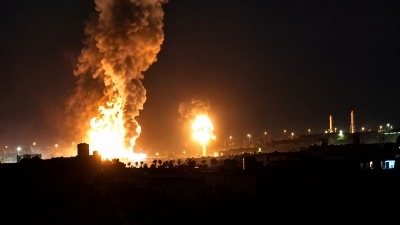
American and Israeli strikes, as well as Iranian responses with missiles and drones, create a dangerous spiral of escalation.
In this environment, any political transition becomes more complicated.
Washington, instead of seeking de-escalation, appears to be exploiting the situation to intensify pressure.
The rhetoric about the “neutralization” of Iranian officials is not the language of diplomacy, it is the language of war.
Hashem Bouchehri
The broader geopolitical picture
Iran constitutes a pivotal player in the Middle East. It maintains influence in Iraq, Syria, Lebanon and Yemen.
Any change of leadership directly affects the balance of power in the region.
For the United States, Iran is a strategic adversary that challenges American presence and hegemony.
For Israel, it constitutes an existential threat.
For Russia and China, it is an important partner in a multipolar international system.
Criticism of American policy does not arise from ideological sympathy toward Tehran, but from the observation that the unilateral use of military power has repeatedly failed to bring stability to the Middle East.
From Iraq to Afghanistan, interventions created power vacuums and long-term instability.

Possible scenarios
1) Continuation of the hard line: Election of a conservative cleric who will strengthen the alliance with the Revolutionary Guards and adopt aggressive rhetoric toward the United States.
2) Pragmatic shift: Emergence of a figure inclined toward controlled dialogue, without however abandoning the fundamental principles of the Islamic Republic.
3) Internal conflict: Extension of the transitional period with disagreements within the Assembly of Experts, a development that could be exploited by external powers.
The most worrying possibility is not internal political disagreement, but external military escalation. If the United States continues the policy of “maximum pressure” and military strikes, the new Iranian leadership will face survival dilemmas.

Historic turning point
The death of Ali Khamenei opens a historic turning point for Iran.
The transition of power, although institutionally provided for, takes place in an extremely tense international environment.
The statements of Donald Trump and the aggressive stance of Washington underline that the United States continues to approach the region in terms of military power and imposition.
The Islamic Republic is called upon to choose a new leader under the pressure of external threats and internal balances.
Whether the next day will signal stability or further escalation will depend not only on the decisions of Tehran, but also on whether Washington will abandon its policy of constant confrontation.
In a world transitioning toward a multipolar order the insistence on unilateral military solutions does not constitute strategic wisdom, it is a recipe for prolonged instability.
www.bankingnews.gr



Σχόλια αναγνωστών