

The new conflagration in the Middle East and the resulting surge in oil prices have brought the nightmare of a global energy shock back to the forefront. Central banks, which until recently were preparing the ground for gradual interest rate cuts, now face the risk of a resurgent inflation cycle driven by energy costs. Oil prices have skyrocketed following the US and Israeli attack on Iran, which resulted in the death of Iran's Supreme Leader, Ali Hosseini Khamenei. Tehran responded with missile strikes against several Gulf countries.
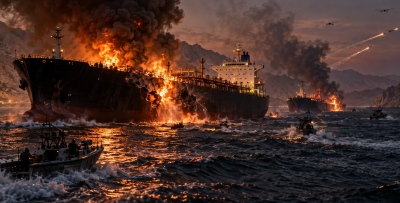
The movement of tankers through the Strait of Hormuz has effectively frozen, as the threat of Iranian attacks deters vessels from traversing the vital waterway.
Shift in course for central banks
Higher energy prices will eventually pass through to consumer prices and producer costs, particularly in economies heavily dependent on Middle Eastern oil imports, forcing central banks to re-examine their interest rate trajectories. "The ongoing conflict in Iran strengthens the case for many central banks to keep rates steady for now," a team of Nomura economists noted in a memo on Sunday.
As the tension weighs on economic activity, policymakers are called to balance inflationary risks against slowing growth. The European Central Bank (ECB) faces a "real dilemma," as ING economists described it, since an oil shock could push already persistent inflation even higher while growth prospects weaken due to higher US tariffs. They added that "for us to see a rate hike, the eurozone economy would have to show clear resilience."
Europe imports nearly all of its oil and a significant share of liquefied natural gas, increasing the risk of a dual energy and trade shock, the bank reported. ECB board member Pierre Wunsch stated that officials would avoid hasty reactions to energy price movements. "If it lasts longer, if the increase in energy prices is greater, then we will have to 'run' our models and see what happens," he said.
Former US Treasury Secretary Janet Yellen stated that the conflict could hit US economic growth and fuel inflationary pressures, preventing the Fed from cutting rates. "The recent situation in Iran makes the Fed even more cautious, more reluctant to cut rates than before," she said recently.
US inflation stood at 2.4% in January, above the Fed's 2% target. Yellen warned that President Donald Trump's tariffs could push annual inflation to at least 3%. This latest ignition follows Trump's seizure of oil-producing Venezuela earlier this year and his threat to take control of Greenland, another strategically important energy reserve. Brent has increased by 36% since the start of the year, according to LSEG data, while WTI contracts were up 32% as of Wednesday.
Extreme risk scenario with Brent above $100
The global energy market faces an extreme risk scenario, as a prolonged disruption in the Strait of Hormuz could push Brent above $100 per barrel and European gas prices above €60 per megawatt-hour, according to Bank of America.
Asia bears the heaviest burden
Asian economies would be particularly exposed. Most of the crude passing through the Strait of Hormuz is destined for China, India, Japan, and South Korea, according to the US Energy Information Administration. In a scenario of a six-month closure of the Straits and an oil price increase from $70 to $85 per barrel, inflation in Asia could rise by approximately 0.7 percentage points, according to Goldman Sachs. The Philippines and Thailand are expected to be the most vulnerable, while China could see a "more limited increase."
Prolonged increases in oil prices may lead central banks in Asia, such as those of the Philippines and Indonesia, to freeze rate cuts, while in India and South Korea, rates will likely remain stable for longer. BMI, a unit of Fitch Solutions, estimates that the conflict will add between 7 and 27 basis points to general inflation in Asia, with the greatest impact on Thailand, South Korea, and Singapore due to the high weighting of energy in their price indices. "For a 10% shock in oil prices, the effect on inflation is small enough for most countries to ignore. But the calculation changes substantially with increases of $20–$30 per barrel, where CPI impacts double or triple and secondary effects become harder to ignore," the firm stated.
Interest rate hikes remain off the agenda for now, unless rising oil prices are sustained and passed on to food and other commodities through higher transport and freight costs, affecting core inflation.
Fiscal 'cushions'
Fiscal stimulus and subsidies could absorb part of the inflationary pressures, especially heading into 2026, offering a relatively comfortable starting point. "We expect Asia to use fiscal policy as the first line of defense to protect consumers," Nomura economists said.
Possible measures include price controls, higher subsidies, reductions in excise taxes on fuel, and lower import duties on crude and refined products. However, subsidies may further burden the already strained fiscal deficits of governments, said Rob Subbaraman, head of global macro research at Nomura. "Which 'negative' do you prefer? Higher inflation or worse fiscal health? These are policy choices governments are called to make."
www.bankingnews.gr









Σχόλια αναγνωστών