The reckless war launched by the United States and Israel against Iran on 28 February is now becoming the subject of extremely harsh criticism even from the closest allies of the Americans in NATO, such as the Chancellor of Germany Friedrich Merz.
Indeed, Merz makes it clear that it is impossible for Donald Trump to emerge from this war adventure as a winner.
He also described the United States and Israel as defenders against the powerful Iranian attacks.
At the same time, the Chancellor predicted that “regime change in Tehran through military means is impossible.”
As for the German stance, Merz rejected the call of the American president for European patrols in the Strait of Hormuz, emphasizing that “this war belongs to the United States and Israel,” not to NATO.
Warning to Trump: Treat partners in NATO with respect
Specifically, in a dramatic appeal to the President of the United States Donald Trump, the Chancellor of Germany Friedrich Merz called for full respect toward the Alliance.
This intervention comes as a response to the direct threats of the American leader about a “very bad future” for NATO, if member states do not assist in the clearing of the Strait of Hormuz, according to the Russian agency Tass.
“I would like us to treat each other with the necessary respect within the Alliance,” stated Friedrich Merz characteristically.
Merz shocks: Donald, you cannot overthrow the Khamenei regime with missiles
The Chancellor made it clear that regime change in Tehran through military means is impossible.
He also warned against any further escalation, emphasizing that it “poses serious risks” to global security.
Earlier, in a press conference in Berlin, the German leader had emphasized that exclusive responsibility for the continuation of the conflict in the Middle East lies with Tehran.
He also noted that the United States and Israel will be forced to defend themselves until Iran ceases hostilities.
Severe blow to the German economy from the war in Iran
During his talks with Donald Trump, Friedrich Merz pointed out that the crisis in the Middle East is causing a heavy blow to the German economy, sending hydrocarbon prices soaring.
The Chancellor expressed hope for a rapid end to the war conflict, which threatens the stability of Europe.
This war belongs to the United States and Israel, not NATO
The war launched by Israel and the United States against Iran does not concern NATO and is not its war, the German Chancellor Friedrich Merz stated earlier.
At the same time, Friedrich Merz clarified that the issue of Germany’s participation in ensuring security in the Strait of Hormuz is not on the table of discussions, setting clear limits on Berlin’s involvement in developments in the Persian Gulf.
It is noted that on 14/3 Donald Trump had called on European countries to ensure navigation in the Strait of Hormuz, amid sweeping strikes by Iran on Western and Israeli tankers.
Many analysts interpreted the call of the American president as a sign of weakness on the part of the Pentagon to independently secure control of the vital oil corridor.
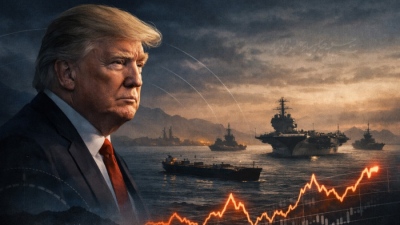
Trump continues to declare himself the winner: We destroyed 7,000 targets and sank 100 Iranian ships
However, Trump continues to proclaim himself the victor of the conflict, speaking of the decimation of Iran’s missile capabilities, although the residents of Tel Aviv have a slightly different view.
The American president emphasized that more than 7,000 targets in Iran have been struck by American forces, covering military and commercial targets. Also, more than 100 Iranian ships have been sunk during the conflict, in an extensive effort to weaken the capabilities of the Iranian regime to threaten navigation in the Persian Gulf.
D. Trump made it known that there are not many missiles left in Iran and that attacks with unmanned aircraft have decreased dramatically, with Washington claiming that it destroyed 95% of the drones.
In this direction, the American president stated that Iran’s anti aircraft technology has been decimated, the country’s air force and navy have disappeared, and their leaders have also disappeared from the battlefield, arguing that the United States and Israel are doing what they should have done many years ago.
The crisis in the Strait of Hormuz - Asking for help from other countries
Regarding operations on Kharg island, the American president stated that the United States struck military targets but left the oil pipelines untouched, noting that the complete destruction of the oil facilities could be carried out within a few minutes if necessary.
In an effort to address the ongoing crisis in navigation, Trump repeated his call to other countries to participate in operations for the security of the Strait of Hormuz, emphasizing that countries dependent on the oil passing through there must help. He noted that some countries have told him they are on the way, while others have not shown particular enthusiasm to help.
He also stated that he is not sure whether mines have been placed in the Strait, but reiterated the need for international cooperation to ensure the free passage of ships, especially in an area through which about 20% of the world’s energy passes.
Military impacts and economic consequences
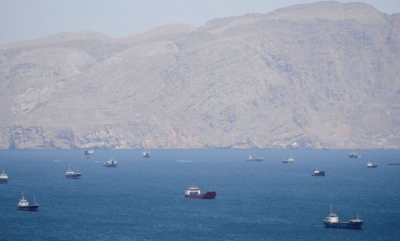
The conflict has a major global impact, with significant disruptions in navigation and increases in oil prices, as passage through the Strait of Hormuz has almost stopped to a large extent and many tankers are choosing to avoid the area.
Although the government of the United States claims that Iran’s capabilities to threaten sea routes have been dramatically reduced, the international community remains divided on how the crisis should be addressed, with joint fleets or alternative strategies to ensure stability in the region.
www.bankingnews.gr



Σχόλια αναγνωστών