

Israel is out of control says Joe Kent, former director of the US National Counterterrorism Center – Saudi Arabia threatens retaliation against Iran
With the war in the wider Middle East region having entered its 20th day, the situation appears to be uncontrollable. The Israeli airstrike on the Iranian South Pars gas field triggered an immediate reaction from Iran, which launched successive missile attacks against the LNG field at Pearl GTL in Qatar, which is reportedly completely destroyed. With energy prices spiraling and threatening the global economy with a real shock, US President Donald Trump is reportedly considering the nightmare scenario of sending American soldiers to control the security of tanker passage through the Strait of Hormuz. This is a move that, rather than de-escalating the evolving crisis, is expected to accelerate it, as the presence of the US military in the region is estimated to lead to an all-out war. If this scenario is realized, it becomes clear that the US and Israel plan to completely change the balance and create an entirely different Middle East. To do this, however, the "extermination" of Iran and its regime is required, which at this stage seems impossible.
Trump: I will blow the South Pars field to its foundations if Iran continues
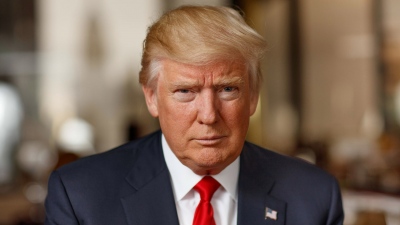
US President Donald Trump threatened to "massively blow up" the world's largest gas field, South Pars in Iran, if the country continues its attacks on Qatar. "Israel, out of anger for what has happened in the Middle East, violently attacked a major facility known as the South Pars Gas Field in Iran," Trump wrote on Truth Social. "The US knew nothing about this specific attack," Trump said, adding that Qatar was also uninformed. "Unfortunately, Iran did not know this, nor any of the relevant facts concerning the attack on South Pars, and unjustifiably and unfairly attacked part of Qatar's LNG facility," Trump said, stating that Israel will not attack the gas field again unless Iran attacks "very innocent Qatar." In that case, he said, "the US, with or without the help or consent of Israel, will massively blow up the entire gas field at South Pars with force and power that Iran has never seen or experienced before." "I do not want to allow this destruction because of the long-term effects it will have on Iran's future, but if Qatar's LNG is attacked again, I will not hesitate to do it," Trump stated.
Terror scenario: Trump considers sending troops for Hormuz
At the same time, a scenario is circulating that has Trump considering the possibility of sending troops to ensure the security of tanker passage through the Strait of Hormuz. According to Reuters, the Trump administration is exploring the possibility of sending thousands of American soldiers to bolster its operations in the Middle East as the US prepares for possible next steps in the campaign against Iran. This deployment could provide Trump with more options as he considers expanding US operations. These options include, according to sources, securing the passage of tankers through the Strait of Hormuz, a mission that would be carried out primarily through air and naval forces. However, securing the Strait may also require the deployment of US troops on the Iranian coast. The Trump administration has also discussed the possibility of sending ground forces to Iran's Kharg Island, which is the hub for 90% of Iran's oil exports.
One of the officials said that such an operation would be very dangerous, as Iran has the capability to strike the island with missiles and drones. The use of US ground forces—even for a limited mission—could create significant political risks for Trump, given the low support from the American public for a war in Iran and his own campaign promises to avoid US involvement in new wars in the Middle East. Sources do not consider a deployment of ground forces anywhere in Iran to be imminent but avoided discussing details of US operational planning. Experts say the mission to secure uranium stockpiles would be extremely complex and dangerous, even for US special forces. "No decision has been made to send ground forces at this time, but President Trump wisely keeps all options at his disposal. The President is focused on achieving all the set goals of Operation 'Epic Fury': destroying Iran's ballistic missile capability, eliminating their navy, ensuring their terrorist proxies cannot destabilize the region, and guaranteeing that Iran will never obtain nuclear weapons," a White House official said.
Joe Kent (Former Director of the National Counterterrorism Center): Israel out of control
Israel has gone out of control and is conducting war with Iran independently, and this is the top priority that President Trump must fix, argued Joe Kent, who recently submitted his resignation as director of the US National Counterterrorism Center. "The first thing President Trump must do is solve the main problem. The main problem is that the Israelis have gone out of control," Kent said in an interview with American journalist Tucker Carlson. In Joe Kent's view, the US will continue to protect Israel and ensure it is not attacked by ballistic missiles; however, offensive actions by Israel must stop. "And he (Trump) must very strictly, and possibly with a new team of diplomats, go to the Israelis and say: 'Enough is enough'... Because this is our war. We pay for it. We shed our blood for it. It is not your war. If you decide to continue this offensive operation, we are leaving," Kent emphasized.
Kent reiterated that Iran did not pose an immediate threat to the US and that the war began under pressure from Israel. "I don't love Iran, they are not our friends, but the Israelis sabotaged this war and distracted us from real US goals and interests." Regarding Israel's role, Kent said: "The Israelis guided this decision. We knew it would trigger chain reactions because the Iranians will retaliate." As he said, the US could have stopped Israel, saying: "We could have told the Israelis: no, you will not do this. And if you did, we would keep our distance from you." Regarding the "immediate nuclear threat" from Iran, Kent was categorical that it did not exist... "No. Three weeks before the war started, they were not close to a nuclear bomb, nor in June. The Iranians since 2004 had a religious fatwa against the construction of nuclear weapons, and we had no evidence they would cancel it," said Kent, who wondered who really controls US foreign policy.
The assassination of Charlie Kirk and the role of the FBI
Kent continued to exert intense criticism of the war against Iran and stated that conservative activist Charlie Kirk was likely assassinated because of his effort to prevent this war. According to Kent, before he died, Kirk told him: "Joe, don't let us get involved in a war with Iran." "And then they killed him suddenly in public, and they didn't allow us to ask any questions about it. They didn't let us continue the investigation. There are unanswered questions. Charlie was under tremendous pressure from many pro-Israel supporters. We know that Charlie had spoken to President Trump against this war with Iran," Kent said. He added that he tried to push this version to the FBI, but they did not listen to him. Western media also report that Kent had conflicts with the FBI. According to the New York Times, Kent began clashing with the FBI last year when he was trying to gain access to evidence from the investigation into Kirk's murder. Axios sources report that Kent has been under FBI investigation for several months on suspicion that he leaked classified information about Israel and Iran to Tucker Carlson and another conservative podcaster. Carlson during a show actively supported Kent, saying he is paying the price for his prediction that the war with Iran will end in disaster.
Intervention by Araghchi (Iran Foreign Minister): The war will cost Americans trillions of dollars – A tax for Netanyahu
Washington's spending due to the military conflict with Tehran will reach trillions of dollars, argued Iranian Foreign Minister Abbas Araghchi. Referring to a report in the Washington Post about the Pentagon's intention to request more than 200 billion dollars to continue the operation against Iran, Araghchi stated: "These 200 billion are just the tip of the iceberg. Ordinary Americans can thank Israeli Prime Minister Benjamin Netanyahu and his associates in Congress for the trillion-dollar 'tax for Israel', which will soon hit the US economy," Araghchi underlined. The head of the National Economic Council at the White House, Kevin Hassett, stated in an interview with CBS on March 15 that the Washington administration is considering requesting additional funding from the US Congress to continue the military operation against Iran. According to him, in the first days of operations, the US spent about 12 billion dollars on military actions.
Iran threats: We will burn the entire Persian Gulf
For their part, the Revolutionary Guards warn that Iranian forces will destroy the oil and gas industry of Iran's neighbors in the Persian Gulf if the Iranian energy sector is attacked again. "We warn you once again that you made a big mistake by attacking the energy infrastructure of the Islamic Republic, the response to which is ongoing," said a statement broadcast by Iranian media, as reported by Al Jazeera. 
"If this is repeated, the new attacks against your energy infrastructure and your allies will not stop until they are completely destroyed, and our reaction will be much more severe than tonight's attacks," the Revolutionary Guards stated.
?? Qatar’s Ministry of Interior confirms it is still “dealing with a fire in the Ras Laffan Industrial Area.”
— Drop Site (@DropSiteNews) March 19, 2026
It’s the world’s largest hub for liquefied natural gas (LNG) production and export. https://t.co/1BxMJhZyQ5 pic.twitter.com/TTwYsdYpqA
It is recalled that Israel attacked the gas field at South Pars, which is the largest in the world and is located in southern Iran (containing about 8% of the world's proven gas reserves). Immediately after, the Guards threatened to attack oil and gas infrastructure in Qatar, Saudi Arabia, and the United Arab Emirates.

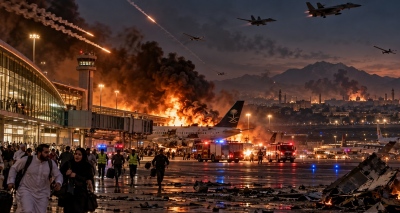
Later that day, an Iranian missile attack caused extensive damage to the Ras Laffan gas facilities in Qatar.
QatarEnergy’s Ras Laffan Industrial City to the north of Doha, Qatar's main site for the production of liquefied natural gas and gas-to-liquid, as well as the largest export terminal for LNG in the world, has been heavily targeted tonight by ballistic missiles fired by Iran.… pic.twitter.com/Ax9WaOjDAK
— OSINTdefender (@sentdefender) March 18, 2026
The Revolutionary Guards announced that "Iran did not intend to expand the war to oil facilities nor to cause damage to the economy of friends or neighboring countries," but "with the hostile attack on our energy infrastructure, we essentially entered a new phase of war, and the need to defend Iran's infrastructure led us to attack the energy facilities connected to the US and American shareholders."

Qatar: Fires at Ras Laffan extinguished
Qatari civil defense teams managed to control the fires that broke out at the Ras Laffan gas facility after an attack by Iran, according to the Ministry of Interior. "Civil Defense has brought all fires in the Ras Laffan Industrial Area fully under control with no injuries reported. Cooling and facility security operations continue," the statement said. Qatar's state energy company said the Iranian attacks hit several of its Liquefied Natural Gas (LNG) facilities and caused "extensive" damage.
Revolutionary Guards: Strikes on 80 targets in Israel with Qadr
The Revolutionary Guards announced that they struck military facilities of the Israeli regime, responsible for infanticide, with Qadr missiles. As reported, 80 military and support points were hit in the south, center, and heart of Israel, including Rishon LeZion and Ramla in the center, Eilat in the south, and Ramat Gan and Bnei Brak east of Tel Aviv, as well as Bat Yam and Holon south of Tel Aviv, were accurately hit by precision systems, multiple warhead missiles, and destructive drones. It is noted that Iran launched six waves of attacks with ballistic missiles against northern Israel.
Saudi Arabia threatens
Saudi Arabia warns that it reserves the right to retaliate with military means against Iran's attacks. Specifically, Saudi Foreign Minister Faisal bin Farhan stated that it reserves the right to proceed with military operations, "if deemed necessary," retaliating for Iran's attacks on Gulf states.
Saudi Aramco's SAMREF refinery also targeted
The SAMREF refinery of oil giant Saudi Aramco at the Red Sea port of Yanbu was the target of an airstrike, according to an industry source, adding that damage was minimal. Earlier, the Revolutionary Guards issued an evacuation warning for several oil facilities in Saudi Arabia, the UAE, and Qatar, including SAMREF, which is a joint venture between Saudi Aramco and Exxon Mobil. Yanbu is currently the only export outlet for crude oil from Gulf countries, as Iran has effectively closed the Strait of Hormuz, through which one-fifth of global oil production usually flows.
United Arab Emirates closes gas facility
Meanwhile, the Abu Dhabi authorities announced that they suspended the operation of a gas facility until further notice following the fall of intercepted missile debris. "Gas facilities were closed," the UAE emirate authorities stated via X, explaining that they reacted in this way to "incidents" at the "Habshan gas facilities and the Bab (oil) field," which were "due to debris that fell following successful missile interceptions." "No injuries were reported," according to the Emirate's authorities.
Attack also on Mina Al-Ahmadi oil refinery in Kuwait
The Kuwait Petroleum Corporation reported that a unit at the Mina Al-Ahmadi refining facility was attacked by a drone today, Thursday 19/3, causing a small fire, as reported by the Kuwait News Agency (KUNA). No injuries were reported from the attack, according to KUNA. The Mina Al-Ahmadi refining facility is located about 40 kilometers south of Kuwait's capital. Earlier today, Thursday 19/3, Kuwait's armed forces stated that the country's air defenses responded to "offensive threats from missiles and drones."
China: Assassination of Ali Larijani unacceptable
China proceeded to condemn the assassination of Iran's national security chief, Ali Larijani, by an Israeli airstrike, calling it "unacceptable." "We always oppose the use of force in international relations. The acts of assassinating Iranian state leaders and attacks against civilian targets are even more unacceptable," said Chinese Foreign Ministry spokesman Lin Jian at a press conference when asked about Larijani's death.
IDF: We neutralized over 20 Hezbollah members
At the same time, the Israeli army continues its operations in southern Lebanon. As announced by the IDF, over 20 Hezbollah members were killed yesterday during ground operations in southern Lebanon. According to the IDF, the fighters were killed by troops of the 36th Division and in attacks carried out by the Israeli Air Force. In one incident, soldiers of the Golani Brigade spotted a Hezbollah cell attempting to launch anti-tank missiles at the forces.
The IDF reports that troops killed five fighters in that incident. The army also stated that ground troops located a multitude of weapons, including RPGs and anti-tank missiles. The 36th Division is one of the four IDF divisions conducting ground operations in southern Lebanon since Hezbollah began attacking Israel amid the war in Iran. The IDF is preparing to deploy even more forces to southern Lebanon and further expand the security zone to remove the Hezbollah threat from the border.
Israel Ministry of Health: 177 wounded in the last 24 hours
The Ministry of Health reports that in the last 24 hours, 177 wounded were transported to hospitals as a result of the conflict with Iran. Of those hospitalized, one person is in critical condition, two in moderate condition, and 167 in good condition. One person received treatment for anxiety. The ministry does not provide a breakdown of the causes of injuries, and some may have been injured trying to reach a shelter, rather than directly by Iranian missiles or rockets from Lebanon. Additionally, the ministry reports that since the start of the war with Iran on February 28, 3,924 people have been admitted to hospitals, of whom 74 are currently hospitalized.
www.bankingnews.gr





Σχόλια αναγνωστών