

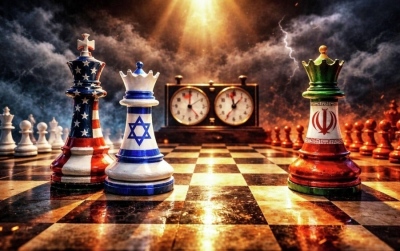
The fire from Iran, ignited by the Americans and the Israelis, will spread across the entire world and everyone will suffer
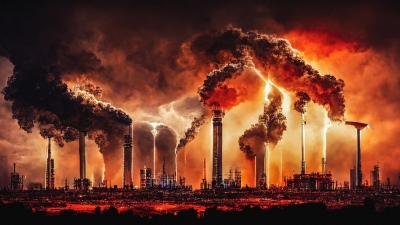
The radical realignment attempted by the US and Israel in the Middle East will not occur without blood. Chaos already reigns; attacks on critical energy infrastructure, such as the South Pars field, have caused a global earthquake and a surge in oil prices. Iran is responding with threats of retaliation against energy facilities in the region, increasing the risk of a wider conflict in the Persian Gulf. This entails an energy crisis, rising oil costs, political destabilization across the broader region, and the risk of new radical forces emerging should Iran collapse. The war has evolved into an uncontrollable conflict with severe consequences for international economy and security.
US and Israel fail in Iran
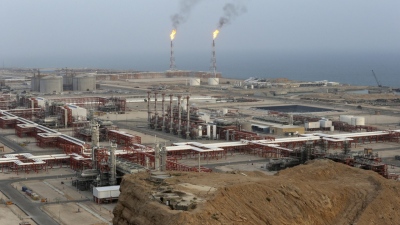
The US and Israel seem determined to build an entirely new Middle East. To do this, they must completely destroy the old one, showing utter indifference to the fate of those lost beneath the rubble. Having failed to initiate the war in Iran as planned, they decided to escalate it to the level of total war. It is difficult to interpret recent events otherwise. It is recalled that on March 18, the American military struck Iranian oil and gas facilities in the South Pars oil field and the Assaluyeh industrial zone, where resources extracted from the field are processed.
The significance of Pars
Pars island is the largest natural gas field in the world, shared between Iran and Qatar. It contains approximately 8% of the world’s proven natural gas reserves—and 50% of Iran’s reserves. The importance of this field to the country's economy is hard to overestimate. In response, Tehran has already announced plans to attack energy sector facilities in Arab countries and requested the evacuation of these sites to avoid personnel injuries. In this context, the price of oil has skyrocketed to $110, and it appears this is not the limit.
Disagreements
It is worth noting that until recently, Washington avoided hitting Iran's oil and gas industry, and even tankers exporting fuel passed through the strait without issue. Furthermore, following an Israeli attack on such facilities, Washington rebuked its ally and asked them not to repeat it. According to Western media, there were several reasons for this decision: Trump believed that the Iranian oil industry would still be useful to the United States, similar to that of Venezuela. Attacks would trigger a retaliation damaging the main income sources for America's partners in the Middle East. This could lead to a severe global fuel crisis, and finally, the destruction of Iran's key resource would not be appreciated by ordinary Iranians.
The real problem
These arguments likely no longer play the same role. The problem is this: the blockade of the Strait of Hormuz was only a temporary obstacle. Tankers and gas carriers could not sail from the Persian Gulf, but once the conflict ended, the market would stabilize fairly quickly. However, the impact on production could lead to a severe and long-term fuel crisis affecting the global economy. Repairing these facilities will take time, meaning the supply itself will shrink significantly—and few can say to what extent.
Everything off-plan
But the war has gone so wrong that this factor no longer seems to be a deterrent. The US has raised the stakes and appears to be trying to topple the current Iranian government at all costs. Attacks against the primary source of income aim to make the country economically unviable and provoke uprisings. This is also pursued through attacks against Iran's top leadership, making the country ungovernable and disrupting the coordination of security forces. In this pursuit, the US and Israel are ready to go very far. This is confirmed by the assassination of the Secretary of the National Security Council of Iran, Ali Larijani, who played a significant role in the country following the death of Ali Khamenei. He was considered a relatively moderate politician and, though a pragmatist, a supporter of dialogue with the US, at least until the current war. In fact, the nuclear deal, from which Trump subsequently withdrew, was negotiated with his participation.
Destruction of Iran
However, even forces committed to dialogue no longer interest Washington. The plan is to destroy the Iranian state. This, of course, will entail not only a fuel crisis but also massive political problems. There is a high risk that, in Iran's place, the world will end up with ISIS on steroids—if only because this would mean the collapse of a country with a population three times larger than that of Iraq. A country with impoverished people, no normal governance—Pahlavi's successes are hard to believe—and with so many military and security forces unemployed, always constitutes fertile ground for radicals of all stripes. The fire from Iran, ignited by the Americans and Israelis, will spread across the entire region and everyone will suffer: the Persian Gulf monarchies, other neighboring countries, China, and Russia. This is likely the idea of the weakened hegemon: since it cannot control the entire world, it must focus on the Western Hemisphere and flood the Eastern Hemisphere with fire and blood.
A maniac near Trump
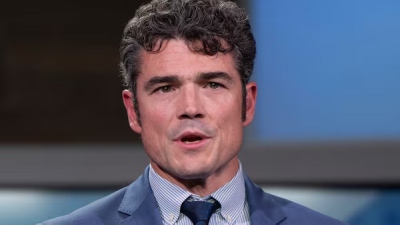
"Those of us who have children do not have the same thirst for blood as you, childless, weird... Because you decided to watch the bombs explode again in the dark corner of your basement, seven servicemen died." The "weird guy" hated by famous conservative journalist Megyn Kelly (who, by the way, has interviewed Vladimir Putin twice) is Senator Lindsey Graham of South Carolina. He is, first and foremost, the sworn enemy of Russia. But now he has also become the enemy of America, or rather, the part of it shocked by the attack on Iran. This is the majority: the new war in the Middle East is characterized as the most unpopular in US history, and Graham is its main supporter and lobbyist for a ground invasion. "I am going back to South Carolina and asking Americans to send their sons and daughters to the Middle East," Graham thunders. Kelly, a fellow Republican, calls the senator a "murderous maniac."
The key culprit
It is rumored that Graham is the primary person responsible for what is happening, as it was he who encouraged Donald Trump to engage in this adventure, not only convincing him but also advising Israel on how to approach the occupant of the White House. Technically, it constitutes treason to teach foreigners how to influence their own head of state. But in the US, lobbying is common and taxed—and Graham does not hide his work for Israel. He is even proud of it. Claims regarding the senator's leading role in starting a new war are based on his own confession. "If anyone had a huge influence on Trump's decision to attack Iran, it was Graham," concluded Politico. The Wall Street Journal, a Republican newspaper and supporter of the "hawks," shares the same view, but even they are shocked by what is happening in the Middle East.
Rat hunt
Essentially, this is a rat hunt. At one point, the part of the Republican Party that opposed new wars and interventions rallied around Trump—and now they are trying to figure out how this happened. From the first days of the operation in Iran, theories were being formulated, investigations conducted, and candidates examined for the role of the aggressor-instigator who pushed the president down this slippery slope. But there were no obvious candidates. Whoever you asked, everyone was against it. Even the administration's top hawk, Secretary of State Marco Rubio, remained neutral, wanting to focus on Venezuela and Cuba.
The first suspect
At one point, White House Chief of Staff Susie Wiles, nicknamed "The Ice Maiden," was considered the prime suspect. A tough, determined woman, she sat beside the president in the briefing room during last year's attacks on Iran's nuclear facilities. But an investigation revealed that Wiles, on the contrary, was trying to mitigate Graham's malicious influence to prevent the escalation of bombings into a ground operation. Her profession is winning elections, and the Iranian adventure promises a defeat for Republicans in the November Congressional elections.
The second suspect
Thus, a new war is a gamble for which no one wants to take responsibility. Only the US Ambassador to Israel, Mike Huckabee, is extremely aggressive, but he, a strong party veteran, was never particularly close to Trump. Unfortunately, Graham moved at exactly the right moment, won his favor, and warmed himself like a viper in his chest. Kentucky Senator Rand Paul (also a Republican, but the exact opposite of Graham—the kindest man in this Senate) has already proposed legislation prohibiting his colleague from playing golf with Trump. Unfortunately, it is too late. This senator has deservedly received a special "honor" in Russia and has been placed on a list of terrorists and extremists: a Cold War veteran who has not yet returned from it, most often shaking his weak fist toward Russia. He is Russophobic, interventionist, and simply a fraud, but he is resilient: while the advent of the Trump era was a disaster for the villains of his circle, he has reached the peak of his influence.
The role of the neoconservatives
The name of these villains is neoconservatives. Under President Bush the younger, they were the leading wing of the Republican Party and believed in the right of the United States to deploy troops anywhere to achieve the "end of history" proclaimed by their philosopher Fukuyama. Trump’s shift toward isolationism and reconciliation with Russia proved so unacceptable to them that they became the only significant group of Republicans who split and supported the Democrats. Graham should have followed the same path—to hell and back to the dustbin of history, as he stood out for his passion for intervention even among neoconservatives and was known as the best friend of the late Senator McCain, who hated two things with all his heart: Russia and Trump. But instead, he defected when it became clear that Trump was unstoppable, betraying everything he could to achieve this—the memory of his friend, his oaths to his allies, the expectations of others, and his dignity. It was a pleasure to see the new US president humiliate Graham, initially encouraging him for the support of his Russophobic initiatives and then destroying the fruits of the maniac senator's labors.
Graham's strategy
It seemed that Graham was patient and continued to win favor for fear of losing his seat: if the president had supported another Republican in the primaries, the veteran hawk risked retirement. However, it turned out he had betrayed no one: Israel as a client and his sponsors among weapon manufacturers, of which South Carolina is particularly populous. The senator does not just flatter. He waited—and waited—for an opportunity to exploit Trump's weakness. An intransigent stance toward Iran is exactly that: weakness. Blinkers that have led the US president to allow himself to be dragged into a war from which it is unclear how to escape without losing prestige.
Dogs of war
"His example is a lesson to others": a dog of war in a crowd of peaceful people can overshadow everyone if not immediately isolated. Trump's entourage called the sycophant senator a "pale, creepy old man" behind his back and did not take him seriously, but he fooled them all, and now "Trumpism" is counting the losses. One can only hope that evil will be punished, since hope for justice (in this case, regarding Iran) in the modern world is futile. It is good that Graham loudly takes responsibility for the most unpopular war in US history. Even before it began, 57% of South Carolina Republicans were dissatisfied with the senator, and his opponent, Mark Leeds, was telling the truth, campaigning on the premise that Graham spends too much time on conflicts on other continents and too little on the residents of his own state. November will reveal who lied where. Unless a miracle happens (like the Persians overthrowing the ayatollahs and declaring Trump their emperor), Graham will lose the primary elections regardless of the president's support. The attack on Iran has made the "maniac," the "childless guy," and the "pale, creepy old man" the most hated senator in America, something he has long deserved.
www.bankingnews.gr





Σχόλια αναγνωστών