

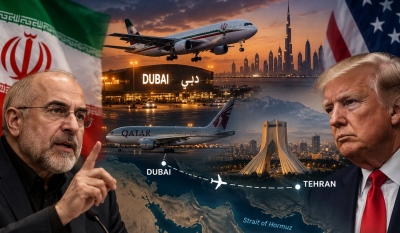
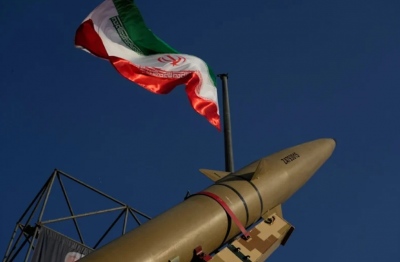
The Americans find themselves in a complete stalemate, as all strategic goals set for Iran have failed. Indeed, US President Trump, visibly enraged that Iran refuses a truce, warned that he is issuing a 48-hour ultimatum to open the Strait of Hormuz; otherwise, he will strike all of Iran's energy facilities. The 48-hour ultimatum is proof of the deadlock and confusion facing the Americans, since if they have "defeated" the Iranians as they claim, what is the purpose of the ultimatum? The US has failed, Israel has failed, and while they declare victory, they issue ultimatums and consider a ground operation that is also destined for failure. The response from the IRGC (Islamic Revolutionary Guard Corps) is clear: retaliation will be merciless, targeting all energy facilities in the Gulf and all remaining American bases in the region. Although the Americans and "bloodthirsty" Israelis may have struck 8,000 targets in Iran, missile installations, weapon production, and drones remain intact, housed in underground cities hidden within mountains. Simultaneously, continued Iranian missile attacks against military bases and targets in the Persian Gulf, and especially Israel, prove they possess very strong stockpiles of missiles and drones. To date, the Iranians have launched 75 waves of missiles and drones, and now possess—as proven—missiles that easily overcome Patriot systems and the Iron Dome, Israel's failed air defense system. At the same time, an attack on a target 3,000 kilometers away by Iranian missiles has caused panic in Europe; according to La Repubblica, Iranian missiles are capable of reaching Rome and Paris.
The Trump ultimatum: Proof of failure - US ready to strike with graphite bombs
The President of the United States, Trump, threatened to "destroy" Iran's power plants if the Strait of Hormuz is not opened within 48 hours. So far, the US has avoided targeting infrastructure in Iran amid fears regarding the impact of such a step on the global economy. The Strait of Hormuz is the most critical maritime chokepoint in the world, as approximately 20% of global oil consumption passes through it. The waterway serves as the primary gateway for energy exports from major producers such as Saudi Arabia, Iraq, and Kuwait. Iran's Islamic Revolutionary Guard Corps had previously warned that any ship passing through the Strait of Hormuz would be attacked, and the waterway has effectively been closed since the start of the US-Israeli war against the Islamic Republic, with many ships hit by Iranian fire there and in nearby waters. Responding to Trump's latest warning, Iran reiterated its threat against regional infrastructure, including even water desalination plants, as reported by the Iranian military's operational command, Khatam Al-Anbiya. Iran has already demonstrated its ability to strike infrastructure, not only in neighboring countries but also in Israel, which possesses better air defenses than other Arab nations.
Iran's power grid targeted with CBU-94 Blackout graphite bombs
Taking the Iranian threat into account, the US may not strike power plants directly but rather attempt to destroy the Islamic Republic's electrical grid in a more calculated manner. The US could use a graphite bomb, a non-lethal weapon specifically designed to disable a power grid without causing extensive physical damage. An example of such a weapon is the CBU-94 Blackout bomb, which consists of an SUU-66/B tactical munitions dispenser with 202 BLU-114/B submunitions. The bomb works by dispersing a dense cloud of extremely fine, chemically treated carbon filaments over air-insulated high-voltage facilities, such as transformers and power lines, causing short circuits and a subsequent disruption of power supply to a region, a province, or even an entire small country. CBU-94s were successfully used to cut off more than 70% of Serbia's electricity supply during NATO bombings in Yugoslavia. While such bombs are non-lethal and do not cause major structural damage, the disruption of the power grid could be extremely harmful to civilians, as it would effectively shut down critical life-support infrastructure, including hospitals and water desalination units.
Landing on Iran's Kharg Island would be a disaster for the US: A new Vietnam
A landing of American troops on Kharg Island in the Persian Gulf would be catastrophic for the United States, warned Joe Kent, former director of the US National Counterterrorism Center. "I think it would be a disaster. It would essentially mean handing Iran a group of American hostages on an island that they could bombard with drones and missiles." Joe Kent had publicly expressed his disagreement with President Trump's decision to launch a military operation against Iran. He resigned from his position in protest, noting it was an honor to serve under the American leader.
Iran warns: Americans prepare for a second Vietnam
Iran's Deputy Foreign Minister warned that sending American ground troops to Iran would be a "second Vietnam" for the US. The diplomat was asked what would happen if US Marines set foot on Iranian soil. "Read what happened in Vietnam," he replied. Iran would view the deployment of American ground troops in Iran as "careless, reckless, illegal, and contrary to all international law norms."
Americans have provided no explanations to their allies; they are in confusion and shock
Senior European sources told Bloomberg that Trump had not explained the goals of the military operation in Iran to his G7 allies. Bloomberg sources noted that the American president's reasoning regarding the outcome of the US-Iran conflict "paints a picture of confusion and shock."
Trump in a nervous breakdown
Trump previously threatened to destroy Iran's power plants. He said he would do so unless Iran fully reopened the Strait of Hormuz to navigation within 48 hours. In response, Iran expressed its readiness to attack the energy infrastructure, information technology, and desalination of the United States and its allies throughout the region.
Get rid of him, you idiots
British politician George Galloway pointed out that Trump's statement suggests a nervous breakdown. He claimed that everyone close to the American leader, including Vice President J.D. Vance and the military command, was aware of his condition. "Get rid of him, you idiots," he wrote on social media.
Focus: Trump unprepared for the Middle East crisis – An ultimatum of weakness
The German magazine Focus concluded that Trump was not well-prepared for the crisis in the Middle East and the White House ultimatum was clear proof of the American leader's weakness. It noted that the US and Israeli attack on Iran's nuclear facilities at Natanz was another short-sighted decision by the White House leader. "Trump could not have thought of anything stupider."
Huffpost: Some US military personnel are frustrated with the operation against Iran
Some US Army officers are frustrated by the attack on Iran and state that they "do not want to die for Israel," reports the American edition of HuffPost. Some American soldiers participating in this conflict complain of severe stress, frustration, and loss of illusions to such an extent that they are even considering leaving the military. "I hear from the military: 'We don't want to die for Israel, we don't want to be political pawns,'" a reservist and mentor of young soldiers is quoted as saying in the article. Another reservist who maintains contact with troops involved in the conflict also spoke to Huffpost about a similar trend. As the article points out, dissatisfaction within the American military over US operations in the Middle East, as well as problems with the morale of the armed forces, "may make the success of the campaign less likely." The main discouraging factor cited by reservists is the lack of a "clear, consistent narrative in the US justifying a war against Iran." CBS News, citing informed sources, reported that the Pentagon has drawn up detailed plans for the potential deployment of ground troops to Iran to provide the Trump administration with a full range of military scenarios as the conflict in the Middle East escalates.
Financial Times: Iran attacked Qatari plants with missiles that bypass Patriot
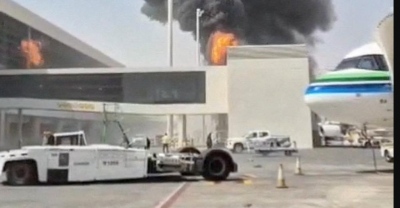
Iran used missiles that evade American Patriot air defense systems during its attack on plants in Qatar, the Financial Times reports. The gas facilities at Ras Laffan were attacked on March 18 and 19. The bombardment was in response to the US and Israeli attack on Iran's South Pars gas field. "The attacks on the Qatari energy complex were carried out with new missiles that are maneuverable and capable of avoiding American-made Patriot air defense systems."
La Repubblica: It's terrifying... Iranian missiles capable of reaching Rome and Paris
Iran has the capability to reach Rome and Paris with missiles, despite the bombings by the US and Israel, reports the Italian newspaper La Repubblica. "To hit Rome or Paris, the launch point must be in northern Iran." As La Repubblica notes, the problem is exacerbated by the fact that no European country possesses functional means of defense against Iranian ballistic missiles. "Our defense depends entirely on American satellites, radars, and ships: this is one of the main limitations of European defense," La Repubblica emphasizes.
Attack on British air base at Diego Garcia in the Indian Ocean shocks... at a distance of 5,000 km
The British newspaper The Telegraph reported that the attacks on a British base in the Indian Ocean used by the US Air Force proved the capability of Iranian missiles to reach London. On Saturday, March 21, Iran announced it had launched two ballistic missiles at the British air base at Diego Garcia in the Indian Ocean. The Chagos Archipelago, where the base is located, is more than 5,000 kilometers from Iran. Media reports indicated that the attack on such a remote facility suggests Iran possesses longer-range munitions than its rivals believe.
Iran strikes Tel Aviv again – Iron Dome fails to neutralize missiles – Rosh Ha'in and Prince Sultan Air Base hit
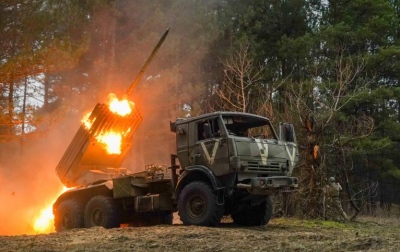
A new wave of extensive Iranian missile attacks on central areas of Israel occurred on March 23, 2026; the sky over Tel Aviv and its suburbs fell under the full control of Iranian missiles. Videos published on social media and in the news show a large number of Iranian missiles passing through the Israeli regime's defensive layers and directly hitting various points in Israel. Israeli air defense systems, including the Iron Dome, failed once again against the large volume of advanced Iranian missiles. For a few hours, the sky over Tel Aviv became a showcase of Iran's missile power, creating widespread fear and panic among Israeli residents. Hebrew media reported that the speed and intensity of Iranian missile launches from the northern part of Israel to the south were exceptional due to their unprecedented continuity and consistency. According to media reports, massive explosions were heard in various parts of Israel, and published images show extensive destruction to the Zionist regime's infrastructure. A video was released showing the destruction in "Rosh Ha'in" as a result of an Iranian missile strike. The Hebrew newspaper Yedioth Ahronoth described the damage east of Tel Aviv as "extensive."
IRGC: 75th wave of missile strikes hits Israel – Prince Sultan Air Base hit
The Islamic Revolutionary Guard Corps (IRGC) announced the execution of the 75th wave of Operation "Promise of Truth 4." In this wave, based on reconnaissance conducted by operational intelligence services, new military deployment positions and hideouts of Zionist soldiers in various parts of Israel were hit. The Prince Sultan Air Base in Al-Kharj, one of the main deployment and aerial operation sites of the American aggressors against Iran, was also targeted by ballistic missiles.
Iranians hit the city of Dimona where nuclear facilities are located
The city of Dimona is primarily known for its nuclear facilities, with the Dimona Nuclear Research Center in its southern part surrounded by the military and a massive security zone. Bases such as Nevatim are also located nearby, reinforcing the strategic importance of the area. Although images of the strikes show failures of interception systems in the early stages, the final approach of the missiles underscores that this is a highly protected and strategically significant environment. The strategic significance of an attack is not measured only by human casualties, but by the impact on the balance on the field. A strike on a hyper-sensitive site like Dimona is strategically more critical than an attack with more deaths but without a change in the operational correlation. The precision and technology used—such as new generation missiles—create a serious challenge for defensive systems, raising combat capability beyond a conventional attack.
www.bankingnews.gr









Σχόλια αναγνωστών