

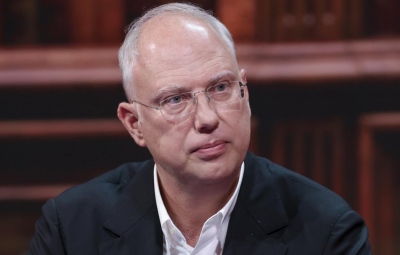
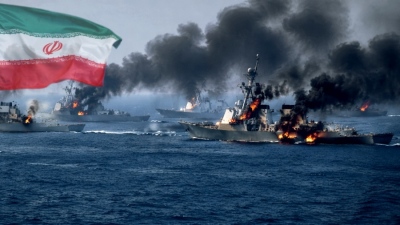
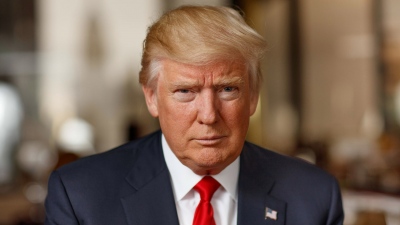
In an unprecedented tone, US President Donald Trump directed vulgar threats toward Iran, demanding the opening of the Strait of Hormuz and warning of strikes against critical infrastructure. Military analyst and retired colonel Mikhail Khodarenok attempts to explain why the US has not yet occupied the strategically vital passage and what might follow the White House's latest ultimatum.
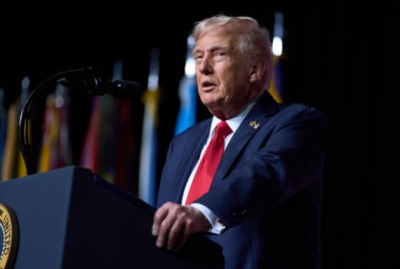
Donald Trump, via the Truth Social platform, called on Tehran to immediately open the Strait of Hormuz, warning that April 7 would become "Bridge Day" and "Power Station Day" for Iran. "Tuesday in Iran will be 'Power Station Day' and 'Bridge Day' — all together. You’ve never seen anything like it! Open the damned strait, or you’ll live in hell," the American president characteristically stated.
Why the US hasn't seized the Strait
According to Mikhail Khodarenok, one of the biggest questions in the US-Israel war with Iran is why Washington did not rush from the start to place the Strait of Hormuz—one of the world's most important maritime corridors—under its control. From a military perspective, it is estimated that the US possessed all the prerequisites for such an operation: surprise, air and sea superiority, and sufficient forces. Nevertheless, they did not move toward decisive action.
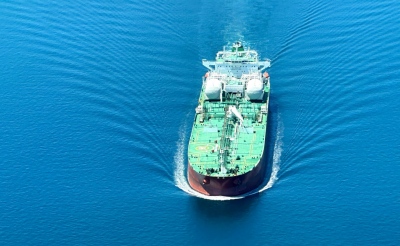
The Strait of Hormuz is a pivotal point for global energy, as approximately one-third of liquefied natural gas and nearly a quarter of global oil consumption pass through it. The failure to capture it, according to the analyst, poses a serious strategic question for the American leadership. Despite US military superiority and the power of the American Navy, Donald Trump did not proceed with such an operation, missing—as pointed out—a unique opportunity. Now, the element of surprise has been lost, making any future operation far more costly in terms of human casualties.
Conflicting statements and shifting stances
Donald Trump appears to be changing his position even within the same day. In previous statements, he argued that countries dependent on oil via the Strait should protect it themselves, essentially calling on them to take action. Simultaneously, he had stated that after the conflict ends, the Strait would open "on its own." However, a few days later, he adopted an entirely different rhetoric, demanding in an aggressive and insulting manner that Iran open it immediately. According to Khodarenok, such ultimatums—especially with this phrasing—can hardly be taken seriously by Tehran.
Criticism of the White House's tone
The analyst levels sharp criticism not only at the content but also at the tone of Donald Trump's statements, emphasizing that such rhetoric is unbecoming of the Commander-in-Chief of the US Armed Forces. Invoking classical thinkers such as Friedrich Nietzsche and Alexander Suvorov, he underlines that underestimating the opponent constitutes a strategic error rather than a sign of strength.
Who will ultimately control the Strait
The fundamental question remains: who will ultimately control the Strait of Hormuz. According to the analysis, this passage is not going to open on its own. European naval forces currently lack the capability to carry out such an operation, while the US still technically has the ability to do so—not through threats, however, but only through actual military action. Nevertheless, all signs indicate that Donald Trump is unlikely to proceed with such a risky operation within the context of the current conflict.
www.bankingnews.gr

Σχόλια αναγνωστών