

The major transformation that has taken place, mainly since Russia’s military operation in Ukraine, is that what were once points of integration of the global economy have become fields of conflict, from the dollar and the monetary order, international trade and tariffs to global shipping and energy hubs, as seen in the case of the Straits of Hormuz.
China built its economic power after its entry into the World Trade Organization in 2001 through the inflow of capital and the transfer of technology mainly from the United States.
Beijing, broadly speaking, became “the world’s factory”, has since produced enormous quantities of goods and achieved massive trade surpluses, only last year it reached 1.2 trillion dollars, while recycling the dollars it receives into American assets, into stocks on Wall Street, American debt, boosting the liquidity of the American financial system.
These are now gradually becoming remnants of a past.
In today’s era, where the economy is subordinated to the imperatives of national security and sovereignty, the old doctrines of a borderless open market no longer apply.
The existential struggle for technological dominance
The technology sector is now becoming the field of an existential struggle for dominance.
Even the previous administration of Joe Biden, with the Chips Act, attempted to reshape industrial production by strengthening the production of critical semiconductors for artificial intelligence, the defense industry, electric vehicles, and so on.
Now the once unthinkable is happening, China is banning investments.
Chinese regulators are planning to prohibit technology companies, including some of the country’s most well-known artificial intelligence pioneers, from accepting American capital without state approval.
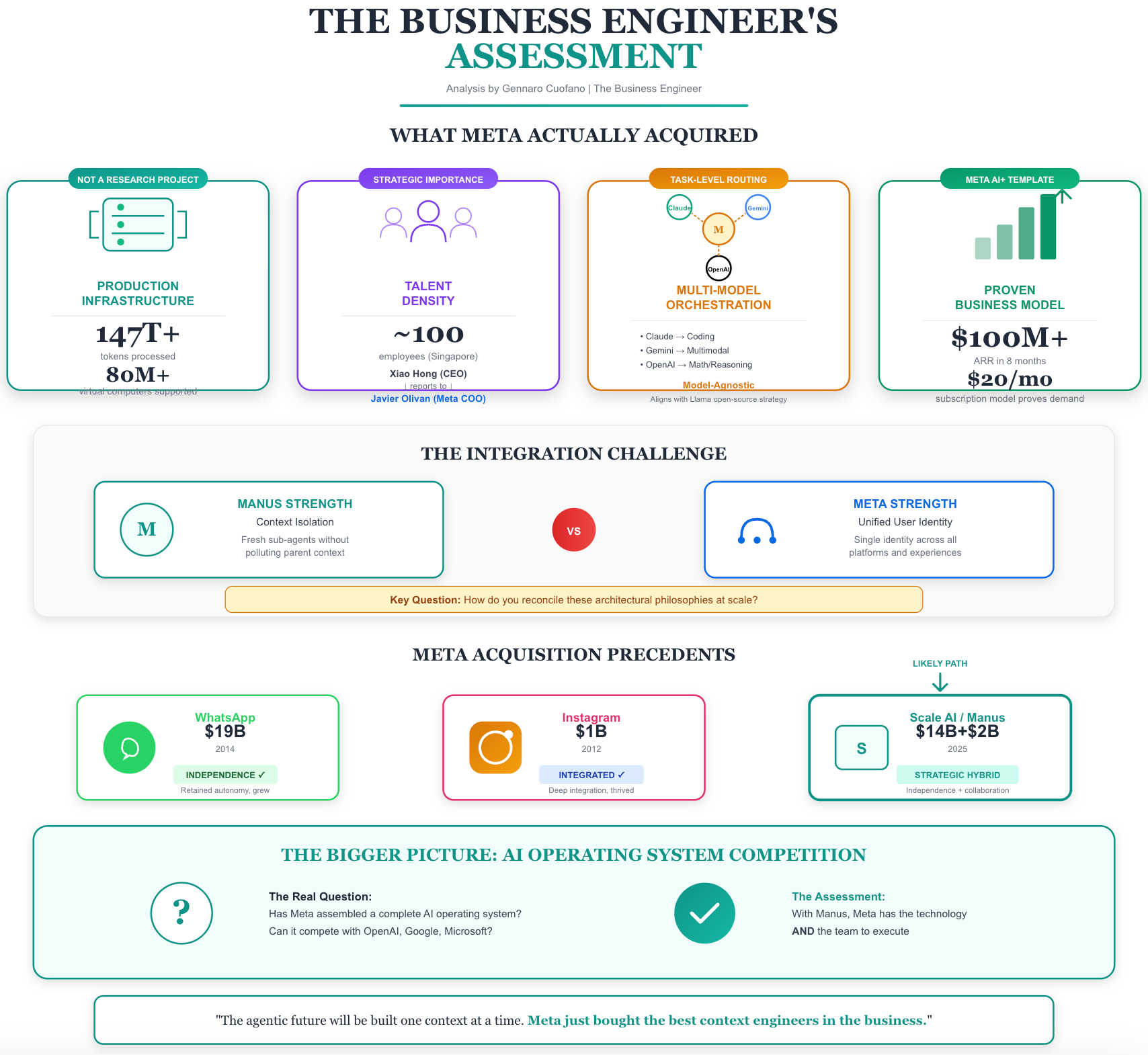
The measure is part of Beijing’s broader response to the controversial acquisition of the start-up Manus by Meta Platforms Inc.
Chinese agencies, such as the National Development and Reform Commission, have in recent weeks informed several private companies that they should reject capital of American origin in funding rounds unless there is explicit approval, according to sources of Bloomberg.
Moonshot AI, which is considering a public offering, was among those that received such instruction, while the Chinese start-up StepFun also received similar guidance.
Regulators have also decided on corresponding restrictions for ByteDance Ltd., owner of TikTok and the country’s most valuable start-up.
They do not want the Beijing-based company, which also has one of the most popular AI chatbots in China, to proceed with share sales to American investors without state approval.
The main objective of the new restrictions is to prevent American investors from acquiring stakes in sensitive sectors related to national security.
This move is linked to the 2 billion dollars acquisition of Manus earlier this year, which triggered an investigation in Beijing into possible illegal foreign investments and technology exports.
The deal was initially presented as a model for start-ups with international ambitions, but was later criticized for transferring valuable artificial intelligence technology to a geopolitical rival.

The financial isolation of the technology sector
The commission, a powerful state planning body, is now leading an investigation together with multiple agencies in cooperation with the Chinese Ministry of Commerce regarding the deal and its implications.
The new restrictions may further isolate the Chinese technology sector from venture capital funding, a large part of which came from American pension funds and institutions.
They also follow Beijing’s decision to prevent so-called “red chips”, Chinese companies registered abroad, from listing on the stock exchange of Hong Kong.
These moves show that regulators are concerned about the transfer of domestic technology abroad, as Chinese companies seek to obtain international financing.

Loss of strategic resources
After the Manus deal, many academics expressed concerns about the loss of strategic technological resources.
On the other hand, the United States has already imposed restrictions on investments in Chinese technology sectors, fearing the strengthening of China’s military and economic power.
In 2025, rules came into force limiting investments in Chinese companies in semiconductors, quantum technology and artificial intelligence.
For years, however, Beijing encouraged its most ambitious companies to seek international partnerships, including American capital, in order to create global champions.
At the center of the discussion after the Manus deal is the way in which the start-up was restructured to enable its sale to a foreign company before regulatory review in Beijing.
Manus was a company registered in Singapore, with founders from China.
It began in 2025 as a general AI agent capable of automating complex tasks, from analysis of the S&P 500 index to the creation of sales proposals.
In July, it moved its staff to Singapore.
In December, Meta announced the acquisition, after Manus exceeded 100 million dollars in annual revenue.
It is not yet clear what further measures Beijing will take.
According to the Financial Times, the company’s co-founders Xiao Hong and Ji Yichao were subject to a travel ban.
Companies developing large language models remain among the most attractive investment targets.
Moonshot AI is seeking to raise up to 1 billion dollars, while StepFun is considering a listing in Hong Kong.
ByteDance, one of the most important private companies in China due to TikTok, has already faced pressure from the United States and has been forced to divest part of its operations there.
It remains unclear whether it will seek to raise new capital, although it is considered a candidate for a future public offering.
China’s technological power constitutes a threat to Western companies that once considered themselves invincible.
Other developing countries are now turning to China for more reliable, higher-quality and cheaper products.
Although accusations of “fraud” are understandable as a reaction, the West must use this moment for self-criticism.
And the truth is that Western companies were not defeated by China, they “sold” to China.
They moved jobs abroad, weakened unions and transferred their know-how for short-term profit.

Where Beijing invested
While the United States, the United Kingdom and the European Union were rescuing irresponsible banks and waging controversial wars during the financial crisis, China was investing in education, railway networks, functional health systems, green energy, “smart” grids and productive centers of research, development and innovation that most Western countries cannot compete with.
It is time for the West to stop blaming China for the decisions of its own large corporations, Wall Street, and their willing politicians.
Sanctions against China are an irrational substitute for industrial policy.
Even worse, superficial and fear-driven narratives about China, promoted by the same actors who created the crisis in the Persian Gulf, may be paving the way for an even more dangerous military conflict.
www.bankingnews.gr









Σχόλια αναγνωστών