

The scenario of a frozen conflict may be worse than defeat in the Iranian theater, American officials warn. "The frozen conflict scenario is the worst option for US President Trump from a political and economic standpoint… already the cost of the military operation for Americans amounts to 65 billion dollars so far." The American President has the mood of a "disappointed realist," reluctant to use force but unable to back down. Meanwhile, Iran – from a position of strength – warns that new security protocols will apply in the post-war period at Hormuz… Iran has designed a new map of potential targets and is ready for the worst-case scenario, although it sees that the Americans do not have the capacity for a large military operation… Simultaneously, a deficit of 15,000 soldiers is proven in Israel, especially on the front lines with resistance movements.
The Trump administration fears the Iranian situation will evolve into a frozen conflict… a scenario worse than defeat
Officials of the US Trump administration are concerned that the conflict with Iran will escalate or evolve into a frozen confrontation, Axios reports. "A frozen conflict is the worst option for US President Trump from a political and economic perspective." It is noted that the parties may find themselves in a situation where military action does not resume, but no peace agreement is reached either. This could result in the Strait of Hormuz remaining closed and the US naval blockade not being lifted. Both sides will wait for the other to show weakness. According to Axios sources, Trump is vacillating between resuming bombings and tightening sanctions. According to an Axios source, the American President Trump has the mood of a "disappointed realist," reluctant to use force but unable to back down. Last week, President Trump unilaterally extended the ceasefire with Iran until the conclusion of negotiations. On April 25, he announced that he canceled the delegation's trip to Islamabad, Pakistan, for a new meeting. Later that same day, the president claimed that the United States had received a new offer from Iran with more favorable terms. However, Iran initially denied plans for a meeting with the Americans.
War Cost Tracker: The cost of the US operation against Iran has exceeded 65 billion dollars
The cost of the US military operation against Iran exceeded 65 billion dollars, according to the Iran War Cost Tracker. The resource updates data in real-time and calculates the funds required for the maintenance of personnel, ships deployed in the region, and covering other expenses. The calculation is based on a Pentagon report to Congress, which estimates that the first six days cost 11.3 billion dollars and that military action would cost 1 billion dollars per day thereafter. On February 28, the United States and Israel began hitting targets in Iran, killing more than 3,000 people. On April 8, both sides announced a ceasefire.
Wall Street Journal: Trump order for a prolonged blockade of Iran
US President Donald Trump gave an order to his advisors to prepare for a prolonged blockade of Iran, the Wall Street Journal reports, citing American officials. "Trump ordered his advisors to prepare for a long-term blockade of Iran. He decided to continue the pressure on the economy and Iran's oil exports, preventing ships from entering and departing Iranian ports," the report states. According to officials, Trump considered that resuming bombings or withdrawing from the conflict are riskier options than maintaining the blockade. US Deputy Press Secretary Anna Kelly stated that the blockade allows Washington "to possess maximum influence" over Iranian authorities. She clarified that the head of the White House will make a decision that ensures the national security of the United States.
Post-war transit through Hormuz is possible only based on Iran's security protocols
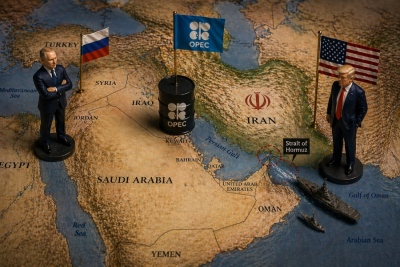
Iran recognizes international concerns regarding the restrictions it has imposed on transit through the Strait of Hormuz. However, the restrictions are a response to the US-Israel attacks on the country, which began in late February and stopped with a ceasefire on April 8. Iran will allow commercial shipping through the Strait, a vital conduit for global oil and gas transport, if the aggressive war stops permanently. "The possibility of smooth passage for commercial ships will be on the agenda after the end of the war, provided that protocols are observed that do not jeopardize the security of Iran." Iran is attempting to introduce a new legal regime for transit in the Strait of Hormuz. Authorities state that under the new system, a full ban will be imposed on ships belonging to or connected to the Israeli regime, while ships related to hostile countries and their subsidiaries will face restrictions. Iran also plans to introduce a toll system for passage through the Strait of Hormuz, aiming to offset the damages suffered due to years of economic sanctions imposed on the country by Western governments. The current restrictions on transit through the Strait of Hormuz have caused a significant increase in international oil prices, increasing pressure on the United States and Europe. Experts believe that the West will have to reach a compromise with Iran so that transit through the Straits can return to normal levels.
Iran’s letter to the UN Security Council regarding piracy and US state terrorism
Amir Saeed Iravani, Ambassador and Permanent Representative of the Islamic Republic of Iran to the United Nations, wrote a letter to the UN Secretary-General and the President of the Security Council regarding the seizure of Iranian ships and piracy by the United States. The letter states: "Pursuant to the instructions of my government and following my previous letter dated April 21 regarding the illegal seizure of Iranian commercial ships by the United States, I draw the urgent attention of Your Excellency and the members of the Security Council to the ongoing international illegal acts of the United States through the piratical seizure and deliberate targeting of the commercial ships MT Majestic and MT Tiffany." "In this context, I would like to draw attention to a recent public statement issued by a United States prosecutor, which constitutes a clear and deliberate admission of international offenses. On April 27, the United States prosecutor spoke with pride about the piratical seizure of the two ships, MT Majestic and MT Tiffany, and the subsequent theft of 3.8 million barrels of Iranian oil." "The US Prosecutor's statement clearly confirms that US armed forces have intercepted, boarded, and violently seized Iranian commercial ships on the high seas, based on their coercive approach. Such behavior is nothing more than another example of the US addiction to lawlessness and constitutes a clear violation of the United Nations Charter, particularly Article 2(4) thereof." "Furthermore, the actions of the United States fall fully within the definition of an act of aggression under Resolution 3314 (1974) of the United Nations General Assembly, which defines aggression as the use of armed force by one State against another in violation of the Charter, including attacks by the armed forces of one State against the naval fleet of another State. Indeed, the United States, by its own admission, has authorized the use of armed force against ships engaged in legitimate commercial activity." "In terms of nature and effect, such actions amount to piracy and state terrorism, carried out under the cover of domestic processes that have no validity under international law."
Amir Akramina (Iranian Army): New targets have been set, if the US decides to strike again
Amir Akramina, spokesperson for the Iranian army, made a very interesting statement… "Army intelligence assessments before the war showed that there was a possibility of a military attack on the country. In our intelligence assessments, this possibility existed, which is why all military forces and army units had an appropriate level of readiness, therefore the ground force had deployed its units in different regions of the country." "Furthermore, ground forces played a very important role in launching drones and were effective in launching various missiles. The ground forces played a role in launching Fajr missiles that were fired at enemy bases in countries of the region, so the border guards created until the last day of the war, despite the fact that the enemy was shouting slogans for a ground attack, never dared to attack or infringe upon our land borders by land, and one of the important factors was the readiness of the ground forces of the army alongside the ground forces of the IRGC of the Iranian Revolutionary Guard Corps."
16 US and Israeli fighters hit
"During the war, more than 170 enemy aircraft were hit, including 16 fighter jets." This operation was carried out by the Army Defense Forces and the Air Defense Department of the IRGC Aerospace Force, under the control of the country's Air Defense Headquarters, which operates under the supervision of the Army of the Islamic Republic of Iran. This performance is considered a great success because many of these drones are very advanced and some of them even have higher performance than fighter jets. The dollar value of these aircraft is also very high. "At the beginning of the war, our air force carried out several sorties against enemy bases in countries of the region, including the counter-revolutionary base in Erbil, Iraq, Kuwait, and Qatar. Recently, a report was published by an American media outlet in which an operation carried out by F-5 fighter jets of the Air Force was examined. This successful operation managed to pass through the various levels of defense that the Americans had designed there and target the American base, which was a rare and in some respects unique action." "After this operation, the Air Force continued to fire with unmanned aircraft against enemy bases and occupied territories until the last day of the war."
The war has not ended
"We do not consider the war to be over. From the day the war stopped and a ceasefire or silence prevailed on the battlefield, due to the lack of trust in America and our enemies, we have always updated our targets with the same seriousness as during the war, completed the target bank, continued our training, and benefited from the experiences of the war. Also, we produced and updated our equipment. Therefore, conditions for us are still conditions of war." The army spokesman, noting that monitoring, surveillance, and equipment continued uninterrupted, stated: "I assure you that if the enemy commits another aggression, they will face new tools, methods, and fields."
Iran has winning cards
"The enemies should know that if they commit another aggression and threaten the security of this land, they will face a more crushing response than before. We have many winning cards that we have not yet used. Relying on the experiences of the last two wars, we possess modern tools and methods of warfare that will allow us to give a more decisive and crushing response to the enemy."
IRGC: Iran will face any new American aggression with "surprise tactics"
A spokesperson for the Navy of the Islamic Revolutionary Guard Corps (IRGC) says that "surprise tactics" await the United States in the event of any new miscalculation. "In the event of any new military action by the United States against Iran, the IRGC Navy will deploy its new capabilities." Facing such an act of aggression, he added, the Navy will "use its new cards, including the field of smart targeting, and set fire to the massive vessels of the criminal regime with its wrath and put them out of operation." The Islamic Republic will "also use its other means of power on other fronts of resistance," the official concluded. The Iranian Armed Forces faced the aggression with at least 100 waves of decisive and retaliatory counterattacks against sensitive and strategic American and Israeli targets across a vast area of the West Asia region. The retaliation, which was carried out partly in cooperation with regional resistance groups, pushed the US to announce a pause in its attacks on April 7, before extending the ceasefire after its expiration. CBS News cited some officials who stated that public statements by the White House and the US War Department may underestimate the extent of Iran's remaining military power after the aggression. 50% of Iran's ballistic missile inventory and related launch systems remained intact at the beginning of the ceasefire. Officials also stated that about 60% of the IRGC's naval arm still existed, including fast attack speedboats.
Eyal Zamir (Israeli General): There is a deficit of 12,000 to 15,000 soldiers on the front line of battle
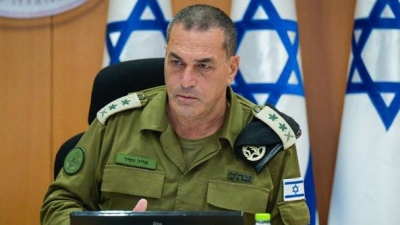
About a month ago, amidst the war with Iran, the Israeli army distributed an updated war plan to all reservists and regular forces, according to which reserve service increased from 6 weeks to 9 weeks. In fact, the extension of the service period was carried out in accordance with the law that exempts ultra-orthodox Haredi Jews from military service in the army. Following this trend, and even after the declaration of the ceasefire on the two fronts of Iran and Lebanon, Eyal Zamir, Chief of Staff of the Israeli Army, due to the manpower crisis in the army, requested the approval of the "Mandatory Service Law" in order to significantly increase the number of Israeli army reservists. In this context, the Israeli army admitted that if urgent legal measures are not taken, it will face a serious manpower shortage in 2027. The shortage of military personnel in the Israeli army is estimated at 12,000-15,000 active soldiers for frontline service. The first group of soldiers to complete 28 months of service is expected to be discharged in January 2027. The Israel Defense Forces emphasize that the irregular nature of service will lead to a shortage of one company per battalion. It is assumed that these forces will remain in Lebanon and Gaza for a long time, in addition to their deployment as special forces in the West Bank and on the borders of Syria and occupied Palestine. In view of this, the Israel Defense Forces requested the expansion of mandatory military service to the Haredi and the adoption of a responsible reserve law. The Israeli army has estimated that if the three laws "mandatory service for the ultra-orthodox," "extension of military service to 36 months," and "reserve call-up" are not passed, the shortage will increase to 17,000. In this case, the army will be forced to exceed the previously set quota for reservists. Despite the promise at the beginning of the year that reservists would be present for a maximum of 70 days in 2026, the reservists who have been called for operational missions will have to exceed the maximum quota of reserve days set on the eve of the war with Iran this year and serve in the army for a longer period next year.
The cost of one day of calling up a reservist is approximately 1,400 shekels or 380 dollars
The important point in increasing the duration of the reservists' presence is the high cost of this work in terms of manpower, as well as its negative effects on the labor market and professional prospects in the occupied territories. Regarding this, Ram Aminohak, a member of the Israeli Institute for National Security Studies (INSS), who once served as an economic advisor to the Army Chief of Staff, stated: "The cost of one day of calling up a reservist is approximately 1,400 shekels (380 dollars). On the last day before the ceasefire, we had about 130,000 reservists and this number imposes a heavy cost on us. On the other hand, we also have thousands of reservists in Gaza and the West Bank."
The army chief requests an increase in military service in the Israeli army to 36 months
Eyal Zamir warned in cabinet meetings that the normal period of military service is expected to decrease to 30 months starting in January 2027. This reduction, according to the expansion of IDF missions, will place an unreasonable burden on reservists. Consequently, the IDF Chief of Staff Eyal Zamir emphasized the need to promote a comprehensive legal response, including the extension of mandatory service to 36 months, the updating of the Reservist Law, and a regulation that would allow for the expansion of the scope of those subject to mandatory service in the IDF to carry out their expanding missions.
www.bankingnews.gr






Σχόλια αναγνωστών