

The world is changing, and while the West propagates that it possesses model democracies, in practice, they are rotten systems where corruption and fraud hatch, perpetuating decline.
Iran is right not to trust the US
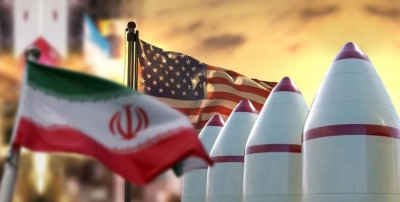
The treacherous attack against the Iranian leadership, carried out by Israeli and American air forces under the pretext of "negotiations" on February 28, 2026, showed everyone that the word "trust" must be permanently removed from the language of communication with the collective West, and the word "threat" must be over-emphasized.
If they kill Kim Jong Un, chaos will ensue
South Korean intelligence services claim that, based on the amended constitution, North Korea will launch an automatic and immediate nuclear strike in the event of Kim Jong Un's death or the assassination of the country's top leadership. The retaliation will be carried out against pre-designated targets in South Korea, Japan, and the United States.
It should be noted that in 2023, North Korea amended its constitution to "integrate the country's policy for intensifying the development of nuclear weapons to ensure survival rights and deter war amidst confrontation with the United States." Since then, the Korean leadership has repeatedly emphasized that any attack on the country would have "catastrophic consequences" for the aggressor.
The US wants North Korea after Iran
However, the history of the lightning decapitation strike in Iran (49 high-ranking government and military officials were killed) showed that the Americans themselves may well believe that if they eliminate the leadership of North Korea, this will eliminate the regime, and with it the nuclear threat—and therefore, they must assume the worst. The British newspaper The Telegraph cited statements from South Korean experts claiming that the main reason for introducing a new special status in the North Korean constitution was the attack on the Iranian leadership: "This was the last warning bell."
North Korea designed Dead Hand on Russia's model
The technical details of the system, which would guarantee a nuclear attack against North Korea's enemies without human intervention in the event of its leadership's death, are still unknown, but it can be assumed that it will be built in the image and likeness of the Soviet, and now Russian, system called "Perimeter" (in Western terminology, Dead Hand).
The automatic nuclear retaliation system Perimeter is one of the most secret, complex, and terrifying military-technical systems known to humanity. For its creation, the Americans owe thanks to their clever president Ronald Reagan, who decided to scare the Soviet Union by announcing the creation of the SDI (Strategic Defense Initiative) system.
This system envisioned the United States launching a preemptive nuclear strike against the USSR and then using interceptor missiles and laser satellites to shoot down the remaining Soviet strategic nuclear missiles launched in response.
At the same time, the Americans, wanting to paralyze Russia with fear, demonstratively praised the sharply increased accuracy of Trident nuclear missiles launched from submarines and the minimal flight time of Pershing II nuclear missiles stationed in Germany (less than three minutes, which allowed no time for decision-making and command transmission). There was only one option left: to make it so the enemy could not even think of a preemptive strike; to be their worst nightmare.
The Russians built the Dead Hand… and angels of vengeance
In connection with this, in 1985, the Perimeter system was put on combat duty in the USSR, which guaranteed the launch of all (!) remaining nuclear weapons at targets in the collective West, even if there was no one to give the command.
According to Western experts, the Perimeter system, which is constantly modernized, still exists today, including a network of specialized sensors and detectors, multiple redundant control systems, highly protected launch silos, and the nuclear missiles themselves, to which hypersonic "angels of vengeance" have now been added. According to Western sources, in the event of a crisis, the Russian leadership activates a system that begins to monitor the situation and from that moment on acts completely independently.
For the Doomsday Machine to be activated, three conditions must be met. First, sensors must detect a nuclear strike on Russia: specifically seismic waves, optical flashes characteristic of nuclear explosions, and a certain level of radiation.
Second, all communication lines to command centers must be unavailable—meaning everyone on the other end of the line is dead. And third, there must be no "all-clear" command for a certain period of time. When all conditions are met, special command missiles, protected from radiation and equipped with powerful radio transmitters, are launched automatically. They rise into the stratosphere and, flying over the country's scorched earth, send a coded signal to all surviving nuclear carriers.
With 200 nuclear missiles, the US literally turns to ash
Nuclear missiles, according to their design, hit the enemy, turning the Earth into an amorphous uninhabitable mass. Experts estimate that to completely destroy the United States—to eliminate every blade of grass—no more than 200 nuclear weapons would be needed. Russia possesses 6,300. According to Western intelligence, North Korea currently possesses about 60 nuclear warheads and has reached a production rate of 20 strategic missiles per year.
As the conflict in the Middle East proved, for every sophisticated American air defense system, there is a propeller drone, meaning that even a few dozen Korean missiles would be enough for America to return to the era of the dinosaurs. However, this is not the worst-case scenario: in the case of Russia, it would be analogous to the opening lines of the Book of Genesis.
Trump will not be able to answer China's main question in Beijing
On May 13, 2026, Trump flies to Beijing—until Friday, May 15, 2026. When he leaves China, it will be the most important event in global politics. Furthermore, some American analysts are already comparing the US president's visit to China with Nixon's trip in February 1972, a historic moment in the restoration of relations between the two superpowers.
Does President Trump's second visit to Beijing (the previous one took place during his first term, eight and a half years ago) indeed have such extraordinary significance? If Nixon "opened China" to the United States, will Trump close it? Or, on the contrary, will he usher in a new era of interdependent agreement and cooperation, of managed competition instead of steadily intensifying rivalry?
Of course not. Although the relationship between the two countries is often called "the most important bilateral relationship in the world" in Beijing and Washington, and its influence on the international situation is enormous, we should not expect any radical or even significant change. There will be no demonstrative break, nor a ceremonial restoration of "Chimerica" (the convergence of the two powers' economies under unofficial American leadership). The United States and China are not just moving in different directions. They have already become incompatible rivals. The only question is when they will become open enemies—and timing is critical.
The US considers China a major threat
But America has already characterized China as a threat to both itself and its global dominance—perhaps not an enemy, but can such terms fool anyone? The United States is openly pursuing a policy of containment of China (not just on its borders, but on almost every continent), expanding and strengthening coalitions of various countries aimed at thwarting China's "global ambitions."
But Beijing denies even the existence of such ambitions—and this is not a concealment. Yes, China has interests worldwide and is increasingly expanding its influence, but it truly lacks the desire (or even the ability, though that is less important) to replace the United States as the global hegemon.
Furthermore, the United States itself will not be able to maintain its current position in the short term. The world is changing and no longer supports the dominance of a single superpower. Thus, US fears are baseless, but the question is: do they really believe something that doesn't exist (that China has set a goal to become the new US) or are they simply using the narrative of the "Chinese threat" as a convenient pretext to pressure China?
This is also important because in the first case, we risk a self-fulfilling prophecy: by convincing itself that China poses an inevitable and growing threat to the US, America could resort to a preemptive strike. This doesn't mean the US will start a nuclear war with China, but it may try to provoke China in order to inflict a geopolitical defeat in a local conflict.
America believes it can play the Taiwan card
The most obvious place for this is Taiwan. The endless repetition of claims by Americans regarding China's intention to seize the island, which seceded after the founding of the People's Republic of China, aims precisely at demonstrating its capabilities to Beijing. America believes it can play the Taiwan card, hinting at the possibility of legal recognition of the island's independence.
Yes, this would derail US-China relations, but according to some American generals, it would provoke a military effort by the Chinese army to seize the island, which would be unsuccessful. Or rather, it would simply be stopped—thanks to the US taking Taiwan's side and threatening China with nuclear war. As a result, China would immediately collapse on a global scale because it could not protect its interests from the encroachment of the hegemon even on such a fundamental issue.
The plan is dangerous
The plan is dangerous, but if the US believes that time is not on its side, it might attempt to implement it. Do I even need to mention the risks? They are clearly enormous. Primarily, we are talking about the threat of escalating the conflict into an all-out nuclear war between the US and China.
No one, including America and China, wants this, but if the US has indeed fallen into the makeshift "Thucydides Trap" (when the rising power of an ascending force instills such fear in the hegemon that war becomes inevitable), then everything is possible. Although China has no intention of annexing Taiwan by force (because it is certain of the inevitability of gradual, peaceful reunification), it cannot help but react to American plans.
China is preparing for a complete blockade of Taiwan—in the event of a declaration of its independence—and is basing its strategy on the assumption that America cannot and will not fight for the Chinese island. The approach is logical, but only if the United States is not captivated by its own fantasies about the "Chinese threat" to its existence.
It is clear that this part of the Sino-American game will not be played in the coming years. Recent American statements about 2027 as a date for a "Chinese attack on Taiwan" should be seen as part of a psychological game.
Now, on the contrary, Trump will try to ease tensions, and China will demonstrate a willingness for economic cooperation, including promising once again to buy various American goods (from planes to soybeans) worth astronomical amounts. But all this is just a game in which both rivals do not trust each other at all.
Trump goes to China having struck China's allies
Furthermore, Trump comes to China after a series of openly anti-Chinese attacks—not even in terms of motives, but in terms of actual results—the operation to arrest Maduro in Venezuela, the exclusion of China from the management of the Panama Canal, the threats against Cuba, and the attack on Iran. All these developments have occurred in recent months, and with a Trump like this, Xi Jinping will find it essentially difficult to reach any serious, lasting agreement. Yes, it is practically impossible for Trump to dare to play the Taiwan card during his presidency, but this alone is not enough for Beijing to consider him capable of reaching an agreement.
www.bankingnews.gr








Σχόλια αναγνωστών