

Rapid developments are taking place regarding the Iranian issue as there is—officially now—an agreement between the US and Iran. US President Donald Trump and the Prime Minister of Pakistan, Shehbaz Sharif, stated on Sunday, July 14, 2026, that an agreement between the US and Iran has now been reached and that mediators will facilitate a series of meetings this week, while the signing will take place on June 19, 2026, in Switzerland with the physical presence of the warring parties. It is worth noting that Russian President Vladimir Putin also played a role in achieving peace, with whom US President Trump spoke on June 14, 2026. Ultimately, Iran won militarily and won diplomatically... it is a historic, shocking event that will remain indelible.
The immediate consequences of signing the memorandum of understanding are the end of all Israeli attacks in Lebanon, the lifting of the naval blockade on Iran's ports, and the opening of the Strait of Hormuz, which will restore the demand for energy goods and prevent an energy crisis. According to the Iranian side, the US and its allies will contribute $300 billion to Iran for the country's reconstruction. US President Donald Trump also stated to the Wall Street Journal that he confirms that the United States has reached an agreement with Iran. Trump mentioned that this agreement will be signed by US Vice President JD Vance or even by himself... they will attend in Geneva, Switzerland.
Compromises between the US and Iran to reach an agreement
The United States and Iran reached several compromises in the text of the final memorandum of understanding. Specifically, the US undertakes the obligation to: release $24 billion of IRI assets—half of this money, approximately $12 billion, must be returned before the signing of the agreement; lift sanctions against Iran's oil and not impose new ones; the US will not gather forces in the Middle East; and they will present, together with their allies, a project for the restoration of the Iranian economy worth at least $300 billion. In turn, Iran confirms its commitment to the Treaty on the Non-Proliferation of Nuclear Weapons and pledges not to develop nuclear weapons. Furthermore, the Iranian missile program was excluded from the agenda of negotiations with the United States, which means that Iran continues its missile program freely.
The Trump message
Lifting of the US naval blockade - Hormuz opens from 19/6
Donald Trump in a post on Truth Social confirmed that the ceasefire agreement with Iran "has now been completed." "Congratulations to everyone!" Trump stated that now "I fully authorize the free opening of the Straits of Hormuz without tolls and, at the same time, I authorize the immediate lifting of the naval blockade by the United States. Ships of the world, start your engines. Let the oil flow!" The peace agreement also includes an "immediate" cessation of hostilities, including in Lebanon. Shehbaz Sharif also stated on the X platform that both sides announced the "immediate and permanent cessation of military operations on all fronts, including Lebanon." The Prime Minister of Pakistan thanked the United States and Iran for their commitment to the peace process, as well as Qatar for its support "in reaching this agreement." "I would also like to especially thank the visionary leadership of the Kingdom of Saudi Arabia and the Republic of Turkey for their immense contribution to this effort," he added. He also mentioned that a series of meetings will follow during the week aiming to lay the foundations for technical talks and for the official signing ceremony of the agreement.
Iran's tactic paid off, Trump retreated to avoid the deal's collapse and began concessions, will receive $300 billion
After the decision of Qalibaf, the President of the Iranian parliament and representative of Iran in the negotiations, to stop Iran's contacts with the Qatari side, Trump lifted the naval blockade against Iran fully and immediately, which was supposed to be lifted within 30 days. Also, the management of traffic in the Strait of Hormuz and the method of providing maritime services and collecting relevant fees were assigned to Iran and Oman. According to the Memorandum of Understanding, a reconstruction and development program of $300 billion in Iran is a commitment of the United States and its allies. Based on one of the clauses of the memorandum of agreement between Iran and the United States, a reconstruction and development program of $300 billion in Iran is a commitment of the United States and its allies.
Iran announced that the end of the war will take effect immediately - Signing of the agreement in 60 days
The Deputy Foreign Minister of Iran, Kazem Ghribabadi, stated that the immediate and permanent end of the war and military operations on multiple fronts, including Lebanon, will take effect immediately. He added that negotiations for a final agreement between Tehran and Washington will take place over a period of 60 days. "The text of the memorandum of understanding will be published soon, and the public will be able to see the achievements and commitments of Iran," he said. "Our commitments cannot be compared to the benefits we receive."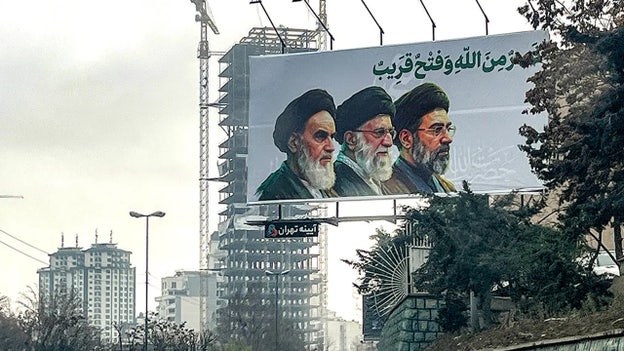
Khatam al-Anbiya (Central Headquarters of Iran): US and Israel were defeated
The Khatam al-Anbiya Central Headquarters stated in a message: The Iranian people and the children of the nation in the country's powerful armed forces and the resistance front, by imposing their will on the American and Zionist enemies, have proven with force that they have no choice but to accept defeat and surrender to the messengers and soldiers of Almighty God.
Final talks will begin only after the release of Iran's assets
Gharibabadi stated that Tehran's commitments under the newly announced memorandum of understanding with the United States will take effect from Friday (19/6). Speaking after the confirmation of the agreement, Gharibabadi mentioned that negotiations for a definitive agreement will continue for a period of 60 days and will focus primarily on the lifting of sanctions. He added that Iran will proceed to the next phase of negotiations only after: frozen Iranian assets are released, the US-led blockade is terminated, and the end of the war is officially declared. Despite the announcement of the agreement, the Iranian side still sets specific conditions before final negotiations for a full and binding agreement begin.
60-day horizon for signing the final agreement - Distrust regarding the fulfillment of commitments by the US
Gharibabadi stated that on Friday (19/5)—the date set for the official ceremony—the two delegations will hold talks in order to define future procedures and the framework of negotiations. He also added that Iran included all its "important positions" in the draft memorandum of understanding and that the text will be made public after the scheduled official ceremony.
"This memorandum of understanding does not mean we trust the enemy," said Gharibabadi, according to statements reported by the Tasnim news agency. "We will closely monitor the implementation of American commitments," he added. This position shows that, despite the announcement of the memorandum of understanding, the Iranian side still maintains reservations toward the United States and considers the implementation of American commitments as a key prerequisite for the progress of the process.
Iran's Supreme National Security Council confirms the memorandum with the US – The war ends immediately
Iran's Supreme National Security Council announced that Tehran and Washington completed a memorandum of understanding to end the war after months of negotiations. In its statement, the Council stated that military operations on all fronts, including Lebanon, will end "immediately and permanently" from Sunday evening (14/6). At the same time, it announced that the naval blockade against Iran will be lifted immediately and in its entirety. According to the announcement, the memorandum of understanding will be officially signed on June 19, while negotiations for a definitive agreement will begin only after the other side implements the commitments provided for by the framework agreement. The Council also thanked Pakistan and Qatar for their mediation efforts. This announcement constitutes the clearest confirmation so far from an official Iranian institution that there is an agreed framework with the United States, although the final agreement still depends on the implementation of specific commitments and on upcoming negotiations.
The Prime Minister of Qatar welcomes the memorandum of understanding
The Prime Minister of Qatar welcomed the memorandum of understanding reached between the United States and Iran, calling it an important step toward ending months of conflict and instability. In a post on the X platform, the Qatari Prime Minister praised the agreement and expressed the hope that it will pave the way for a broader settlement and for lasting stability in the region.
Tehran "forced the United States to accept the peace agreement"
Iranian state television reports that Tehran "forced the United States to accept the peace agreement," in a development that, according to it, signals the successful end of negotiations between the two sides, Reuters reports. At the same time, the Fars agency reports that an official announcement is expected soon from Iran's Supreme National Security Council regarding the ceasefire agreement with the US. Additionally, the agency notes that it was decided that maritime traffic in the Persian Gulf will be regulated by Iran, in cooperation with Oman. At the same time, the Iranian Deputy Foreign Minister stated yesterday that "the immediate and final end of the war and military operations on various fronts, including Lebanon, will be announced tonight (14/6)."
The 10 key clauses of the Iran – US memorandum
-
Full opening of the Strait of Hormuz: The Strait of Hormuz will remain open for international shipping, restoring the smooth flow of global energy trade.
-
Zero transit fees for ships: Tehran will not impose direct tariffs or transit fees on commercial ships crossing Hormuz.
-
Right to collect service fees by Iran: Despite the abolition of tolls, Iran will be able to collect revenue from insurance services, refueling, environmental services, and port and maritime support.
-
Release of $12 or $25 billion of frozen Iranian assets: The United States is expected to proceed with the release of approximately $12 billion of Iranian assets. Note that other Iranian sources speak of the release of up to $25 billion and a broader framework of sanctions and economic cooperation.
-
Funds will be provided primarily through goods and medicine: Washington allegedly insisted that a large part of the funds be released through basic goods, medical equipment, and humanitarian supplies.
-
Gradual implementation of the agreement over a period of 30-60 days: The release of funds and the implementation of commitments will take place gradually, depending on the progress of the implementation of the terms of the memorandum.
-
Extension of the ceasefire for at least 60 days: The agreement provides for an extension of the ceasefire that began on April 7, creating time for further negotiations.
-
Talks on the nuclear program moved to the second phase: Tehran succeeded in not making the nuclear program a prerequisite for ending the crisis. Relevant negotiations will begin after the first phase of the agreement's implementation.
-
Dilution of 60% uranium within Iran: Iran agrees to reduce the enrichment level of its uranium within the country, under IAEA supervision, without transferring critical nuclear material abroad.
-
Potential lifting of oil sanctions: According to information, sanctions on oil exports may be lifted. Certain secondary US sanctions and sanctions approved by Congress will likely remain.
What Iran gains from the agreement
-
Maintains control of nuclear material within the country.
-
Secures the release of frozen funds.
-
Returns gradually to global energy markets.
-
Maintains strategic influence in the Strait of Hormuz.
-
Avoids immediate concessions on the nuclear issue before the crisis ends.
-
Achieves indirect recognition of its role as a key regional power in the Middle East.
Britain, France, Germany, and Italy ready to lift sanctions against Iran
The United Kingdom, France, Germany, and Italy stated that they are ready to lift sanctions against Iran, provided that Tehran proceeds with the agreed steps regarding its nuclear program, following the announcement of the agreement between the United States and Iran to end the war. The agreement, which is expected to be signed on Friday (19/6), is expected to open a cycle of negotiations lasting 60 days regarding the future of the Iranian nuclear program. "Iran must never acquire a nuclear weapon. We are ready to work with the United States, Iran, and the International Atomic Energy Agency (IAEA) to achieve this goal," the leaders of the four countries state in a joint statement. The reference to the IAEA suggests that the lifting of European sanctions will likely be linked to inspection, verification, and monitoring mechanisms of Iran's nuclear activities. This joint position is an indication that major European powers support the new framework of understanding between Washington and Tehran and are willing to offer economic incentives, provided that Iran keeps its commitments in the nuclear sector.
Israeli Media - Trump informed Netanyahu by phone that the agreement with Iran may be signed tonight
The President of the United States, Donald Trump, informed the Prime Minister of Israel, Benjamin Netanyahu, that an agreement with Iran may be signed even tonight, according to the Israeli television network Channel 12, which cites a senior official with knowledge of the phone conversation. According to the report, Netanyahu interrupted a cabinet meeting that was in progress to speak with Trump, during which he was informed about the progress of the negotiations and developments surrounding the agreement.
Channel 12 also reports that Israel's Minister of Defense, Israel Katz, had a separate communication with US Secretary of Defense Pete Hegseth. Tonight's phone conversation took place a few hours after Trump told the news website Axios that he believes the Israeli prime minister "does not have the right judgment at all," using particularly harsh language, after the Israeli airstrikes in Beirut, which provoked threats of retaliation from Iran. This information suggests that, despite recent tensions between Washington and Tel Aviv regarding the management of the crisis, the American administration continues to closely inform the Israeli leadership about developments in the negotiations with Tehran.
Fall in oil prices after the agreement announcement
Oil prices fell after the announcement of the finalization of an agreement between the United States and Iran, as investors estimate that the risk to shipping in the Strait of Hormuz and in the region in general is decreasing. Brent fell 3.4% to $87.33 per barrel, while WTI (West Texas Intermediate) fell 3.2% to $84.88 per barrel.
The absolute defeat of Trump - The 60 days that will last a long time
Trump's defeat is complete: He neither achieved regime change in Iran, nor destroyed its nuclear program, nor dissolved its regional alliances with Hezbollah and the Houthis. The opposite is rather happening: Tehran, after destroying US bases in the Persian Gulf, convinced the "petro-monarchies" that the US "security umbrella" is no longer profitable and is actively reforming the security architecture of the Middle East. At the same time, it maintains control over the critical energy hub of Hormuz, pushes for the immediate release of assets initially of $12 billion, while it is expected to claim other reparations from the US and Israel but also from the Persian Gulf states that helped the aggression against it. Its leverage was the state of the US economy, with inflation breaking the 4% barrier and Americans being furious. In this climate, the American president appeared (once again) certain that the agreement with Iran is imminent—in a usual lack of seriousness... A few hours later, Tehran brought him (and the rest of the world) back to reality, clarifying that there is no final agreement yet and that final decisions have not been made. It is not the first time that the American president announces that an agreement has been reached. Nor the second. Nor the tenth.
According to a recording by CNN, Trump has announced almost forty times (39 to be precise) that the agreement with Iran is—if nothing else—"very close." Every time it seems to be one breath away. Every time the breath gets a little longer.The interest is not whether there will finally be an agreement. At some point, it reasonably will be. The interest is that Trump seems to treat the negotiation like a real estate developer treats a building under construction: first, you put up the "for sale" sign, then you collect the deposit, and finally, you complete the plans. The markets calm down temporarily, and the image of the dealmaker is maintained.
And then comes the landing in reality. And another announcement from Trump. After all, when you have announced the agreement 39 times, the 40th does not seem so far away. Besides, what's 30, what's 40, what's 50? In any case, let's say that the first time in politics is called a prediction. The tenth optimism. The fortieth begins to feel like a habit. Not to mention that it increasingly reminds one of Aesop's fable about the boy and the wolf. And at some point, he might be telling the truth, and no one will believe him. The announcements of the Iranian authorities exude deep distrust, while the diplomatic victory they achieved came from the stability and dedication they demonstrated in specific positions, which they discussed with allies like Russia and China but also the international community. Nothing is over until the referee whistles, or in other words, until the signatures are affixed. The 60 days that follow will be yet another ongoing diplomatic thriller.
www.bankingnews.gr












Σχόλια αναγνωστών