

Donald Trump touted that with his second presidential term, he wanted to go down in history. And perhaps he succeeded, but not in the way he imagined. The war against Iran, which was presented as a demonstration of American strength and resolve, evolved into a conflict that exposed the limits of US military superiority and left behind a landscape filled with geopolitical ruins. Analysts argue that since the Gulf War, all involved parties and "the powerful" emerged from the conflict weaker, more exhausted, and with an even greater sense of uncertainty about what is to come.
It is particularly interesting that in the new landscape that has now formed in the Middle East, no one is strong enough to impose order, but everyone is strong enough to cause chaos. Perhaps this is the most certain conclusion that can be drawn: that the Middle East emerged from this war more unstable, more dangerous, and more unpredictable than ever—to the point where all major powers are paying a heavy price and no one can impose their own order of things.
Trump achieved his goal
As noted in an analysis by Foreign Policy, during his second inauguration, US President Donald Trump expressed the hope that "the recent presidential election will go down in history as the greatest and most decisive election in US history." With his defeat in the Gulf War, Trump achieved that goal. His decision to launch a military campaign against Iran was encouraged by others, but it was exclusively his own choice. This decision led to a reversal that constitutes a strategic catastrophe much greater than the American defeat in the Vietnam War.
War with Iran
The defeat in the war with Iran, superficially, does not look like other US military defeats. The speed of developments and the geographic distance of the war created a sense of unreality. The White House did not burn as it did in 1814, nor were there massive protests against a non-existent conscription. Even from Doha, Qatar, one could wonder if they were indeed... in a war zone. The limited loss of American lives also hides the magnitude of the defeat. The war was bloody: thousands of Iranians, soldiers, and civilians, lost their lives. American losses, however, were much smaller; to date, fewer than 20 American soldiers have been killed, many of them in a single attack.
The dark page of... Vietnam
Comparatively, the scale of what the Vietnamese call the "American War" is staggering. Millions of people, mostly civilians, were killed in more than a decade of conflict in the skies and jungles of Southeast Asia. Of these, nearly 60,000 were Americans. The experience was so traumatic that, for an entire generation, when Americans used the word "Vietnam," they were not referring to the country or its society, about which they remained largely ignorant even after years of war. In the American consciousness, Vietnam had been transformed into a symbol of an American experience. For many ordinary citizens, it symbolized personal loss. For some elites, it served as a warning against the arrogance of power, while for others, it was a mistake that hindered proper strategic thinking. There was, however, a national consensus that Vietnam constituted a dark page of American history.
The hardest question
The hardest question today is perhaps why the United States fought so hard in a conflict that ultimately proved relatively insignificant to its strategic interests. As early as 1964, internal government discussions questioned the "domino theory," according to which the victory of communism in one country would lead to its spread to neighboring ones. The fact that the war ultimately proved of limited importance to the US does not mean it was insignificant. The destabilization of Southeast Asia had a heavy price. The mass graves of Cambodia are silent testimony to the consequences of a conflict that crossed the borders of Vietnam and continued even after the formal peace. However, for the United States itself, the consequences of the defeat were relatively limited in the long run. The US emerged victorious from the Cold War, and Vietnam is today a country surprisingly friendly to Washington.
The comparison with Trump's war
The situation after Donald Trump's war in Iran is entirely different for the US. The United States is arguably in a weaker position than before it started this conflict, while its key strategic goals have suffered damage. Unlike the 1990-91 war for the liberation of Kuwait from Saddam Hussein, where the destruction of the Iraqi army impressed the world, the technological superiority of American weapons in the war with Iran was overshadowed by limited supplies and the weaknesses of the American war machine. The image that will remain from this conflict will not be technological superiority, but the blood-stained school bags of Iranian schoolgirls killed due to an apparent database error.
Failure
At the same time, although American defensive systems performed satisfactorily against Iranian missiles and suicide drones, Iran managed to penetrate them in critical instances, raising questions about their effectiveness in a larger or long-term war. On a strategic level, the consequences are even more severe. The US achieved a form of "regime change," but not the one it sought. Instead of turning Tehran into a submissive ally, the war strengthened the most hardline forces, resulting in the Islamic Revolutionary Guard Corps gaining even greater influence. American and Israeli strikes, however effective they were in the first days, highlighted the limits of purely military solutions. Iran's nuclear program has now survived two waves of joint air attacks by Israel and the US, and it is considered unlikely that a third attempt would have a very different result.
Blow to American leadership
The impacts on the global leadership position of the US are even deeper. Regional allies, many of whom reportedly opposed the campaign, bore much of the cost. Most importantly, Iran realized that its ability to disrupt navigation in the Strait of Hormuz could offer it immense economic influence on a global level. Freedom of navigation has been a fundamental strategic goal of the US for more than two centuries. The potential restriction of free passage through the Strait of Hormuz could signal the transformation of trade routes into a geopolitical weapon, with serious and lasting consequences for global trade.
Difficult to withdraw
The way a war ends often reveals as much as the way it begins. After Vietnam, the United States was largely able to pull back from the region and focus on more important strategic fronts. In the case of the Persian Gulf, a similar withdrawal will be much more difficult. The global economy is today much more interconnected than in the 1970s. The Gulf constitutes a critical node not only for hydrocarbons but also for products like helium, fertilizers, and aluminum. Furthermore, the US's close ties with Israel make a complete withdrawal from the region unlikely and increase the possibility of new, perhaps even more intense, conflicts.
"Why?"
The United States, regardless of who is in power, will face these consequences while being weakened both domestically and abroad. Their allies will have less trust in their capabilities, public opinion will be less willing to support even useful international commitments, and their rivals will be more inclined to challenge Washington's will. These consequences may prove to be much more long-term and severe than the American failure in Vietnam. One element, however, will remain the same. In a few decades, students trying to understand this conflict will ask the same question that is asked today about the US war in Vietnam: "Why?". Historians will offer many documented answers, but none will be truly satisfying.
Defeat for US, Israel
At the same time, Foreign Policy analysts argue that with the announcement of a framework agreement to end the war in Iran, the prevailing view taking shape is that the United States and Israel were defeated. According to this perspective, the tactical and operational successes achieved by American and Israeli armed forces hid a deeper strategic failure, as neither country achieved the political goals they invoked to justify the war. The Iranian regime survived and emerged from the conflict even more hardline, while it acquired a new and powerful bargaining chip: the ability to close the Strait of Hormuz. The United States found itself once again embroiled in a costly conflict in the Middle East, which damaged its credibility with its partners, weakened its deterrent power against its rivals, and reduced its operational readiness in the Indo-Pacific. Meanwhile, Israel's efforts to promote the normalization of its relations with Saudi Arabia and other Arab Gulf states appear to have suffered a new blow, while it failed to eliminate the Iranian threat in the post-war regional order.
All losers
However, focusing exclusively on the losses of the US and Israel overlooks the fact that almost everyone involved emerged a loser. The war left every key actor further from the strategic goal they were pursuing. It did not produce a clear winner nor create a more stable regional order. Instead, it accelerated fragmentation, intensified insecurity, and imposed costs on all key regional and global powers, including Iran, the Arab Gulf states, Russia, and China. The war proved that no country can traverse the new era of global instability unscathed.
Iran's survival at a heavy price
Iran may have avoided regime collapse, but it did so in a way that limited its future options. Survival came at the cost of weakened relations with its allies, a more unstable deterrence environment, economic catastrophe, and fewer opportunities for national recovery. Neither China nor Russia were willing to protect Iran from American and Israeli attacks, proving that these relationships are transactional rather than real alliances. After the war, Tehran will need to rely even more on its partners, but from a position of greater weakness and reduced negotiating power.
Existential... cost
The economic cost may prove to be existential. The war accelerated the collapse of the rial, fueled inflation, and caused damage to critical industrial infrastructure, such as steel mills, shipyards, and energy facilities. If estimates for more than one million lost jobs during the conflict are confirmed, then this is one of the most economically destabilizing periods in the history of the Islamic Republic. At the same time, the regime is not necessarily safer. The war seems to have strengthened the power of Iran's military-security elite, bolstering the state's control in the short term. However, systems dominated by security apparatuses often struggle in the long term to manage popular discontent, economic reforms, and political adaptation. Thus, Iran may emerge from the war more militarized, but at the same time more fragile.
The fears of Gulf countries confirmed
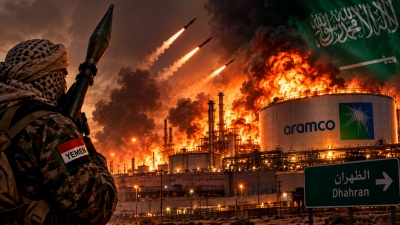
The war realized some of the greatest fears of the Arab Gulf states. Their leaders opposed a major conflict with Iran because they knew they could not control the escalation, while they would bear much of the consequences. The closing of the Strait of Hormuz by Iran revealed that geography is a fundamental weakness at the center of their economic models. The Gulf countries have dedicated decades to the effort to transform themselves into global hubs for financial services, logistics, tourism, technology, and, more recently, artificial intelligence. However, the war shattered their image as an oasis of stability in a troubled region and exposed their vulnerability to Iranian attacks. Although it reinforced the need to diversify away from hydrocarbon revenues, it simultaneously hinders the implementation of this strategy. Furthermore, the conflict widened the trust deficit between the Gulf states and the United States. The war highlighted the limits of the American "security umbrella" and reinforced the frustration of the Gulf countries, which feel that Washington did not give sufficient priority to their concerns.
Russia and China: Short-term gains, long-term losses
Russia's position proved more complex than initially appeared. Moscow benefited from the temporary rise in oil prices and limited relief from sanctions. However, the war accelerated developments that undermine Russian influence in the Middle East. Russian anti-aircraft systems in Iran proved ineffective against American and Israeli attacks. At the same time, President of Ukraine Volodymyr Zelensky leveraged the conflict to promote partnerships with key Gulf states and Syria in the field of defense against drones, further limiting Russian strategic margins. Russia's support for Iran provoked outrage in the Arab Gulf countries, especially after Moscow's veto of a UN Security Council resolution on April 7 for the reopening of the Strait of Hormuz. The war also revealed the limits of Russian diplomatic influence, as Moscow did not play a meaningful role in shaping the final outcome.
The picture is similar for China. Beijing benefited in the short term, appearing more stable and restrained than the United States. At the same time, the erosion of American military readiness in the Indo-Pacific improved China's relative position. However, it also suffered significant losses. The conflict put at risk billions of dollars in investments in Iran as part of the "Belt and Road" Initiative. Furthermore, it worsened its relations with the Gulf countries, as Beijing failed to convince Tehran to reopen the Strait of Hormuz and sided with Russia on the UN veto. This revealed the limits of Chinese influence in Iran and caused intense dissatisfaction among Arab leaders, who felt that China either could not or would not protect their economic interests and its own investments.
A world without winners
On a broader level, the war also threatens China's future economic interests. Beijing has been one of the biggest beneficiaries of the relative predictability of the global economic system. However, the conflict opened a dangerous "Pandora's box." The weaponization of strategic maritime passages, attacks on critical civil infrastructure, and the normalization of economic coercive pressure create precedents that may eventually harm China as much as or more than its rivals. The main lesson of the war with Iran is that even the strongest countries are now unable to convert military superiority into political control in the new geopolitical environment of the Middle East. The war did not reshape the Middle East around a new balance of power. Instead, it revealed a region where every actor can impose costs on its rivals, but no one can impose order.
www.bankingnews.gr








Σχόλια αναγνωστών