

The United States and Iran are preparing for yet another showdown in the Persian Gulf, with both sides setting diplomacy aside and standing ready for another extremely harsh battle over who will have the final say and control of the Straits of Hormuz. The Americans have imposed a naval blockade on Iranian ports in the Persian Gulf, while reports indicate that the Iranians are deploying a plan involving 23 "dark ships" to break the blockade. Meanwhile, although US President Donald Trump backtracked within 24 hours on his decision to impose a 20% tariff on ships transiting through Hormuz, it is now becoming clear that the American president has reached an impasse and is trapped in a war without end, unable to convince anyone that the US defeated Iran, despite having claimed so 32 times already.
The 23 ships of Iran
Shortly before the United States reinstated the naval blockade of Iranian ports, which took place on the afternoon of Tuesday, July 13, Iran appeared to be preparing vessels that could attempt to break the blockade in the Persian Gulf by trying to bypass American naval forces. According to Windward Intelligence, a maritime security intelligence company, 23 Iranian vessels operating in the Straits of Hormuz are flying misleading flags, have recently turned off their transponders, or are otherwise manipulating their activity data, turning into what the shipping industry calls "dark vessels," which form part of the so-called "shadow fleets."
The experience
Iran possesses significant experience in bypassing US sanctions, having relied for years on a complex network of front companies, secret ship-to-ship oil transfers, and opaque financial transactions, noted Adnan Mazarei, a senior fellow at the Peterson Institute for International Economics and former deputy director of the International Monetary Fund (IMF). Iran's "shadow fleets" disguise the identity of their vessels and funnel most of their oil to China. A characteristic example, according to CNN, is an Iranian tanker tracked by Windward, which reportedly follows a complex route: it loads Iranian crude oil at Kharg Island—Iran’s main oil export hub—then passes through the Basrah Oil Terminal in Iraq and continues to its final destination in China. According to Windward, this specific practice is consistent with Iran's known methods for hiding the true origin of its cargo. Of the 23 vessels that Windward believes are likely to attempt to "break" the blockade, 10 are currently carrying cargo, according to cargo-tracking firm Vortexa, while the remaining 13 are currently empty.
Exports of 60 million barrels
Even though the United States had lifted sanctions on Iranian oil under the—now inactive—Memorandum of Understanding, Iran continued to use its shadow fleet, exporting approximately 50 million barrels of crude oil in June and 10 million barrels in a single day last week, according to an analysis by TankerTrackers. Many of the vessels that crossed the Straits of Hormuz during the three-month ceasefire agreement have now been put back under sanctions. Seven of these are supertankers currently located in the Indian Ocean, fully loaded with crude oil and waiting for a willing buyer, according to Windward.
The first blockade
As reported, the first naval blockade by the United States, which lasted from mid-April to mid-June, proved effective in restricting a large part—though not all—of Iranian exports and imports through the Straits of Hormuz. According to the U.S. Energy Information Administration (EIA), about 50% of Iran's state revenues come from oil sales, while the country has found a willing buyer in China, which—also according to the EIA—imports about 80% of Iranian oil despite US sanctions. Analysts point out that the naval blockade pushed Iran's already high inflation even higher, which is estimated to have averaged 50% over the previous twelve months—the highest level recorded in the country since World War II—and increased even further in April when the blockade was implemented.
The absolute surprise
President Donald Trump caught US allies in the Persian Gulf, as well as many of his own aides, completely off guard when he announced his plan to impose transit tolls in the Straits of Hormuz, triggering a flurry of international backchannel contacts aimed at persuading him to abandon the proposal, according to multiple sources familiar with the matter cited by CNN. The surprise announcement on Monday, July 12, came despite the fact that for months Donald Trump's own advisors had been warning him against such a move, as they believed it would undermine the military goals of the United States while simultaneously legitimizing Iran's occasionally declared intentions to impose transit fees on the Straits, something the US administration had repeatedly characterized as illegal.
Frustration
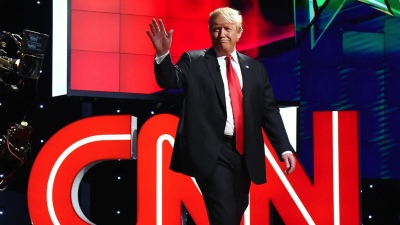
However, as he watched the escalation of the confrontation around the Straits of Hormuz—which had led the United States back into full military involvement—a visibly frustrated Donald Trump finally decided to go ahead. "The United States of America will from now on be known as 'THE GUARDIAN OF THE STRAITS OF HORMUZ,'" he wrote Monday morning on the Truth Social platform, pledging to impose a 20% toll on every cargo transiting through the Straits.
A 24-hour race against time
The surprise directive triggered a 24-hour race against time both within the US administration and across the Middle East to clarify the details of a proposal that seemed to have been conceived by Donald Trump literally at the last minute. Although the US president backtracked on his plan on Tuesday, July 13, the episode highlighted once again the unpredictable and transactional way in which he approaches foreign policy, even in the midst of a prolonged war for which he does not seem to have a clear exit strategy.
Chaos in the White House
In the White House, his aides scrambled to draw up an operational plan for the implementation of an unprecedented toll system, examining who would pay the fees and how they would be collected. Many government officials and independent analysts initially assumed that the cost would be borne by shipping companies. However, the situation became even more complicated when Donald Trump stated later that day that the cost would ultimately be covered by the allies of the United States in the Persian Gulf.
Hell... in the Persian Gulf
At the same time, Gulf leaders were holding successive meetings in order to contact Donald Trump by phone and deter him from implementing the idea. By Tuesday morning, the interventions of Saudi Arabia, the United Arab Emirates, Bahrain, and Qatar had paid off. Instead of the United States imposing tolls, Donald Trump announced that these countries had pledged to make new—unspecified—investments in the United States.
Trillions in investments
The Gulf countries have already pledged to invest trillions of dollars in the US economy, though it remains unclear how much of these funds will actually be invested in the coming years. "I announced it yesterday because it seemed like a good idea," Donald Trump said on Tuesday, referring to the toll plan. "I received calls from various people, from different countries, kings and emirs, all these people we know and respect. They have been, frankly, very strong partners of ours and they told me they would prefer we do it a different way," said the US president.
We must be compensated
A White House official publicly echoed the president's position, arguing that, given Iran's violations of the agreement to keep the Straits open, the president "always kept all options on the table and correctly judged that the United States should be compensated for the many years during which it protected vessels transiting this maritime route." Ultimately, he added, the allies of the United States in the Persian Gulf offered to make investments in the US, a solution the president deemed preferable.
Out of touch with reality
Since the United States actively re-entered the war last week, Donald Trump has been claiming that the war has essentially been won and that one more brief but intense bombing campaign is enough to force Iran to submit. At the same time, he insists that passage through the Straits of Hormuz remains free and safe. However, these claims have so far been contradicted by reality, as Iran still retains the capability to effectively threaten any vessel attempting to transit the Straits.
Trump's threats
As a result, maritime traffic in this specific maritime artery has decreased significantly, driving international oil prices to their highest levels since those recorded before the peace agreement between the United States and Iran last month. Donald Trump had repeatedly threatened in the past to impose tolls in the Straits of Hormuz, expressing his annoyance at the disproportionate strategic importance of this sea lane, which—as he has stated—the United States is forced to protect alone, even though it does not depend on it for energy. In April, he had stated that the United States should impose transit fees because "we are the winners" of the war, while later he had even proposed the creation of a joint venture with Iran for the joint control of the Straits. More recently, he had threatened tolls once again if Iran did not accept a permanent peace agreement, describing these fees as "compensation" for the cost of the war.
The warnings of advisors
However, according to people familiar with the relevant discussions, these ideas consistently met with opposition from his advisors. The latter warned that new restrictions would lead to a further increase in international oil and natural gas prices, intensifying the political pressure already faced by Republicans ahead of the November midterm elections, in which the cost of living is expected to be a decisive issue.
In complete contrast... with the US position
An even more immediate problem, as they pointed out, was that such an initiative would stand in complete contrast to the position formulated by the US administration itself, according to which no state has the right to impose transit fees on an international maritime route. "No country is allowed to impose tolls or fees on an international waterway. This is what current international law provides," Secretary of State Marco Rubio had stated in late June, shortly before the United States co-signed a joint statement rejecting "any imposition of tolls, fees, or attempt to exercise control" in the Straits of Hormuz. "This is how the regime of all international maritime routes in the world works, and this is how we expect it to apply here," he had added.
The irony of Iran
Confirming these fears, Iranian Foreign Minister Abbas Araghchi was quick to exploit Donald Trump's statements politically, writing: "The President of the United States is absolutely right. Anyone who ensures the safe and unhindered passage of commercial vessels through the Straits of Hormuz must be compensated for this service." And he concluded with obvious irony: "The 20%, of course, is excessive. We will be fairer."
Trump in an impasse: He has trapped the US in an endless war with Iran
US President Donald Trump has reached an impasse regarding the war in Iran, reports the British newspaper Independent. According to the article, the American president, by repeatedly changing his positions, has not only failed to find a way out to end the crisis, but has trapped the United States in an endless war with Iran. The newspaper points out that Donald Trump backtracked on his threat to impose a 20% tariff on vessels transiting the Straits of Hormuz, at the same time that the United States reinstated the blockade of Iranian ports. At the same time, it emphasizes that the ceasefire agreement and the understanding between the two sides collapsed just one month after their signing, making the prospect of peace more distant than ever. The Independent describes the agreement as "an understanding that turned into a sequence of misunderstandings," attributing the worsening of the crisis to the contradictory policy choices of the White House.
He has spoken 32 times about a US victory
The newspaper also comments, with clear irony, that Donald Trump has so far claimed 32 times that he "defeated" Iran, five of which were in a video lasting just 13 seconds. However, according to the article, every time Donald Trump announces the end of the war, Iran manages to exploit its strategic advantages to extract more benefits. Correspondingly, every new American military attack causes turmoil in international markets, leads to a rise in oil prices and inflation, and ultimately, the economic cost of this policy returns to the United States itself. Furthermore, the Independent underscores that, despite extensive pressures, military operations, and strict sanctions, Iran still maintains control of the Straits of Hormuz, while its state structure remains stable. In the columnist's estimation, Donald Trump possesses neither the ability to break free from this vicious cycle nor a clear strategy leading to victory. Consequently, the article concludes, his war policy solely increases the risk of further expansion of the conflict and destabilization of the Middle East, without yielding tangible benefits for the United States.
www.bankingnews.gr






Σχόλια αναγνωστών