

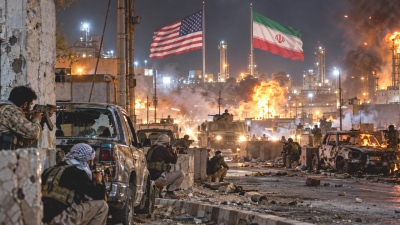
While backdrop efforts toward de-escalation are underway, Pakistan and Qatar proposed to Iran and the US that they return to their positions prior to July 28 in order to resume negotiations in the theater of war in the Persian Gulf and the Strait of Hormuz, the situation is dramatically deteriorating daily. On July 21, 2026, the United States launched a new wave of attacks against Iran, the Central Command CENTCOM reported. The IRGC, the Islamic Revolutionary Guard Corps of Iran, announced that it struck American bases in Kuwait, Qatar, and Jordan, with the Camp Arifjan base in Kuwait suffering extensive damage. At the same time, two tankers were hit, one of which is Greek-owned. According to sources, more than 100 American soldiers have been injured recently by Iranian strikes, while other reports speak of 16 dead and nearly 100 wounded Americans.
Axios: Mediators presented a proposal for a 10-day ceasefire between the US and Iran... if it fails, chaos follows
Mediators presented a ceasefire proposal to the US and Iran, Axios reported. "Qatar, Egypt, Pakistan, and other regional mediators submitted to the United States and Iran a proposal for a ten-day ceasefire," reports Axios. According to American officials, the Trump administration is considering the proposal and has called on Israel to avoid steps that could "close the window for diplomacy." At the same time, Axios maintains, Washington does not rule out the possibility of negotiations failing and is deploying dozens of fighter jets and tanker aircraft to the region, which are necessary for escalation. According to Israeli sources, the Israel Defense Forces have been placed on high alert and are preparing for the potential escalation of the war into a full-scale coordinated campaign within days. The new ceasefire proposal, according to Axios, would halt the fighting, reopen maritime routes through Hormuz, and allow Washington and Tehran to salvage the memorandum of understanding.
New wave of US attacks on Iran, Sirik, Bandar Abbas, and the Bushehr nuclear plant region hit
The United States launched a new wave of attacks against Iran, the US Military Command reported. "American forces, on the orders of the commander-in-chief of the armed forces, launched a new series of strikes against Iran." Meanwhile, Iranian media report explosions in Sirik and Bandar Abbas in southern Iran, as well as air defense activity in the area of the Bushehr nuclear plant. The US resumed strikes against Iran on the night of July 8, accusing it of attacking commercial vessels in the Strait of Hormuz, and military operations have taken place daily ever since. The Washington Post claimed that the US is preparing for a full-scale war by increasing its military presence in the region. The Wall Street Journal also reported the deployment of American fighter jets and tanker aircraft. At the same time, the official spokesperson for the Iranian Foreign Ministry stated that he had received proposals for a ceasefire, but the diplomat refused to disclose details.
Which targets the Americans hit
The power plant in the area of the Bushehr nuclear plant came under attack. Explosions also occurred in Sirik, Bandar Abbas, and Qeshm. Two major explosions occurred in Isfahan. Furthermore, large explosions occurred in the city of Chabahar.
Trump furious: Every time Iran kills an American... it will pay a multiplied price
US President Trump claimed that every time Iran kills an American soldier, it will pay the price for that act manifold. In a new message responding to the deaths of American soldiers from Iranian attacks, Trump claimed: Every time Iran kills an American soldier, it will pay the price for this act manifold! This order has been communicated to the Secretary of War, the Chairman of the Joint Chiefs of Staff, Daniel Kane, and all senior military commanders.
Barrage of retaliation from Iran – Black night at Ali Salem, Arifjan bases in Kuwait, HIMARS systems destroyed
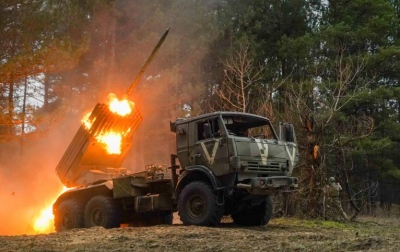
American interests and installations in Kuwait became the target of a new wave of Iranian missile and drone attacks. Large and consecutive explosions were recorded in Kuwait. The target was the US Ali Salem air base. A dark night for American radar and air defense systems in the region. Additionally, as part of the 18th phase of Operation Lightning, Army ground forces targeted US military HIMARS missile systems stationed at the Arifjan base in Kuwait with surface-to-surface missiles. HIMARS is a mobile missile system with the capability to move rapidly against ground targets. The Kuwaiti military also announced that US air defenses in the country engaged hostile missile and drone attacks.
IRGC: Greek tanker hit, explosions from strike and massive fire
Sabreen News reports receiving accounts of a Greek tanker targeted in southern Iranian waters in the Strait of Hormuz. According to the IRGC, two tankers attempted to navigate the dangerous southern route of the Strait of Hormuz, but caught fire and were immobilized due to explosions. "Two rogue oil tankers, attempting to pass through the dangerous southern Strait of Hormuz, caught fire and were immobilized due to an explosion. Rescue units are evacuating the crews of these vessels from the area. The Revolutionary Guard Navy once again warns shipping companies to be cautious regarding the safety of their crews and vessels, not to trust false information from the US military, and to avoid dangerous routes. Clearly, as long as the American military attacks, the Strait of Hormuz will remain closed and not a single drop of oil, gas, or a package of chemical fertilizers will be exported from the region."
IRGC: We struck Amazon's data infrastructure in Bahrain, black night for US radar in Al-Muharraq - Patriot destroyed in Al-Rifa
The Islamic Revolutionary Guard Corps (IRGC) of Iran announced that it struck an American commercial target in Bahrain using cruise missiles. In a statement carried by the semi-official Tasnim news agency, the IRGC claimed its Aerospace Forces destroyed Amazon's primary data infrastructure by launching several cruise missiles. According to the IRGC, the attack was carried out in retaliation for recent American strikes against civilian infrastructure in Darkhovin. According to the IRGC, resistance continues for 140 days and nights. The IRGC Air Force dealt a shock to the Americans; it was a dark night for American radar and air defense systems in the region. In the 24th wave of Operation Nasr 2, codenamed Mubarak or Ruqyah (S), in order to pave the way for future extensive operations and remove obstacles to accurate target strikes, an American defense system and radar in Al-Muharraq, Bahrain, were completely destroyed and removed from operational capability. An American Patriot air defense system in Al-Rifa, Bahrain, was also targeted in a simultaneous missile and drone attack and destroyed. Heavy explosions hit US military bases in Jordan. An explosion was heard in the Jordanian port of Eilat. Severe damage was sustained by US ships in Bahrain. The IRGC Navy attacked US positions in Kuwait and Bahrain. The Jordanian army confirmed a missile attack on the country. The Jordanian armed forces announced that 3 missiles entered the country's airspace. Iranian missiles destroyed an MQ-9 drone hangar at the Salti base in Jordan. The presence of a drone has been observed on the runway.
The Revolutionary Guards destroyed a missile defense radar system and an F-15
Iran's Islamic Revolutionary Guard Corps (IRGC) announced that it launched a strike against an American base in Jordan, destroying a missile defense radar system and an F-15 fighter jet. "The IRGC Aerospace Forces conducted a missile attack against an American base in Jordan, destroying the radar of the missile defense system as well as an F-15 fighter jet located inside a hangar," stated the announcement published on Press TV's Telegram channel.
www.bankingnews.gr









Σχόλια αναγνωστών