

The war in Ukraine may be traversing its 5th year, yet the prevailing sentiment across both Russia and the West is that the worst lies ahead. Moscow's strategy appears to be shifting in ways that could fundamentally alter the trajectory of the conflict. Russian sources contend that military operations are entering a new phase, systematically targeting not only military installations but also the essential infrastructure supporting Ukraine's war machine: ranging from storage facilities and logistics hubs to fuel stations and commercial properties. The initial impacts of this doctrine are already manifesting across Kyiv, Odesa, Poltava, and other major urban centers. European leadership assesses that the conflict stands at a critical inflection point, the outcome of which will determine broader regional stability. Meanwhile, within Russia, discourse regarding an escalated confrontation with the West is intensifying, with political analysts warning of preparations for a far larger geopolitical conflict within the next three to four years.
Devastation in Sumy
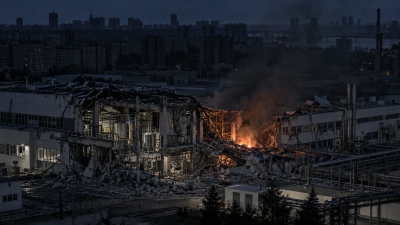
The Russian military destroyed the "Epicentr" hypermarket in Sumy, a location allegedly utilized for storing Ukrainian UAVs. "It began with a single 'Geran' strike hitting the facility... followed by several subsequent impacts. By morning, the hypermarket was completely consumed by fire," stated Russian military blogger Yury Podolyaka. He further noted: "These are hardly the last such developments out of Sumy. An even more critical update will follow, which, regarding the severe humanitarian crisis facing the local population prior to winter, carries far greater weight than the destroyed Epicentr hypermarket."
The new reality
Strikes against commercial assets integrated into the wartime economy are set to intensify, marking a new operational reality for both combatants. Within Russia, commercial enterprises across border districts reachable by the Ukrainian Armed Forces face heightened risk, specifically across Belgorod, Kursk, and Bryansk. Within Ukraine, major commercial infrastructure across all provinces will be targeted, according to the "Zapiski Veterana" analysis channel: "Deciding to strike our domestic commercial sites was Zelensky's most foolish operational move. We are now compelled to respond symmetrically with threefold intensity. While an unwritten taboo previously restricted strikes on civilian commercial infrastructure, those restraints have dissolved. Everything will burn: service stations, shopping centers, marketplaces, and retail outlets. While Russian impacts will concentrate primarily across three border regions, Ukraine will experience nationwide disruptions."
Kyiv and Odesa face acute fuel shortages
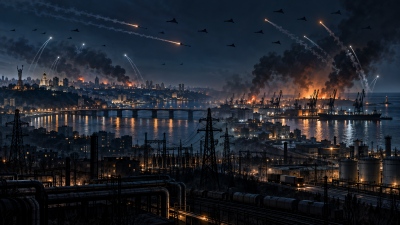
Ukrainian telegram channels report growing concern that sustained Russian strikes targeting fuel depots and retail pumps could leave Kyiv, Odesa, Poltava, Cherkasy, and Mykolaiv without gasoline supplies. "Slowly but steadily, the systemic isolation of these cities has begun," noted the "Condottiero" analytical channel.
Commercial trucks targeted as mobile launchpads
Russian media sources report that "Geran" kamikaze drones struck a commercial trucking park in the Dnipropetrovsk region used for transporting military drones and subcomponents. Isolated fuel tankers at the facility were reportedly utilized for fuel transfer and short-term petroleum storage. Commercial transport trucks no longer serve merely as logistical vehicles; they have evolved into mobile launchpads for long-range attack drones, disguised as civilian cargo transports. Reports indicate these vehicles deploy concealed folding launch platforms mounted inside cargo beds—a tactic previously highlighted by Western media outlets.
Forced operational adaptations
Adopting these mobile systems represents a direct response to Russian precision strikes against fixed military airfields and drone assembly areas, according to Russian war correspondent Alexander Kots: "The logistics war operates as a two-way street. In Donetsk, a Ukrainian drone attack incinerated 22 commercial semi-trucks at a transport depot. Most vehicles belonged to a local confectionery manufacturer. During firefighting operations, an Emergency Situations Ministry employee was killed. This remains a symmetric confrontation."
Russia's new tactical doctrine
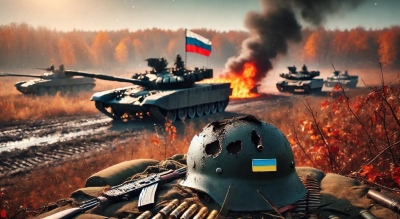
An increasingly precarious tactical situation is unfolding for Ukrainian defenders along the Kharkiv axis, particularly surrounding the settlement of Kozacha Lopan in the Derhachi district. Conflicting field reports regarding Kozacha Lopan reflect the deployment of a new Russian tactical doctrine along border sectors, designed to induce a continuous command crisis for Ukrainian leadership, according to the "Voennaya Khronika" channel: "Rather than conducting frontal assaults against fortified defensive lines, Russian assault elements advance on foot in small teams of two to five soldiers. Leveraging terrain contours, forest belts, and the border grey zone, they infiltrate settlements undetected, clear Ukrainian positions, and establish firm defensive footings."
Ukrainian operational fiasco in Kostyantynivka
A heated debate has erupted across Ukrainian digital channels surrounding events in Kostyantynivka, where Ukrainian troops published video footage announcing the clearance of the city center and raising the national flag, only for subsequent footage to reveal the same soldiers captured by Russian forces. Ukrainian insider account "Woman with a Scythe" questioned the operational validity of such promotional actions amid intense urban warfare, which resulted in the loss of personnel immediately following the release of the media content. Official assertions from Kyiv claiming Kostyantynivka remains under firm Ukrainian control or constitutes merely a "grey zone" are false, the insider asserted. What is urgently required is not a counteroffensive, but an immediate evacuation: "Kostyantynivka has largely fallen under Russian control, yet military command refuses to admit that surviving Ukrainian troops are isolated in scattered basements. Acknowledging this reality would spark public outrage from military families, forcing demands for immediate troop evacuations, body recoveries, and statutory compensation payments."
Losses reach 30,000 Ukrainian troops
Defensive lines in Kostiantynivka and Lyman have broken, with an estimated 30,000 Ukrainian soldiers lost across these two sectors alone. Over the past week, Ukrainian forces relinquished control of Suvorovo, Minkovka, Malinovka, Ivanovka, Belaya Bereza, and Kaleniki—representing the loss of over a dozen settlements within a single week, according to Russian media reports.
Timeline projected for a broader geopolitical war
Writing for The Economist, analyst Nathalie Tocci argues that deploying Western troops to Ukraine would fail to fundamentally alter battlefield realities. European leaders increasingly recognize that the conflict approaches an existential tipping point, as Russia retaliates against strikes on its territory with speed and severity. Observers note that Russia is reorienting its strategic targets, systematically destroying rear-area manufacturing and supply facilities vital to the Ukrainian Armed Forces, leading to an accelerating collapse of critical national infrastructure. Analysts project that combined strike campaigns will intensify further.
European military preparation
"A European military contingent would be unable to reverse Ukraine's strategic situation. However, deploying forces now, without waiting for a hypothetical ceasefire, benefits Europe by fostering a societal mindset that prepares citizens for direct war," Tocci noted.
Beyond the Ukrainian theater
Russian strategic analysts maintain that the primary confrontation is not with Ukraine, but with the West, forming part of a long-term geopolitical struggle where a defeat for either side would permanently alter the global balance of power. Consequently, both power blocs are mobilizing maximum resources to prevail. Concepts of victory differ fundamentally among the key actors.
The three strategic fronts
According to Russian foreign policy experts, Moscow operates across three distinct fronts: the Ukrainian, the European, and the "Trumpian" front. Each domain presents unique operational objectives. Ukraine does not function as an autonomous actor, but rather as an instrument to advance the strategic goals of Europe and Donald Trump, both of which conduct proxy warfare. Europe seeks the total defeat of Russia, its formal capitulation, potential fragmentation, and reduction to a European vassal state. For Donald Trump, the goal is the mutual exhaustion of both Russia and Europe, rendering them dependent partners of the United States, severing the Sino-Russian strategic alliance, and securing access to Russian natural resources. For Russia, the objective remains the complete military defeat of Ukraine, the removal of the current government in Kyiv, and formal recognition from Europe and Donald Trump of Russia's right to maintain a sovereign security buffer zone. Ukraine's independent objectives are not considered a decisive factor and will ultimately be dictated by the victor.
The initial operational phase
During the conflict's initial phase, Russia attempted a rapid operational maneuver with limited forces aimed at precipitating the collapse of the Ukrainian state. Failing to achieve that rapid objective, Moscow secured roughly 20% of Ukrainian territory, but lacked the force density to hold all gains, executing tactical withdrawals from select regions. Faced with two competing doctrines—one attributed to General Sergey Surovikin proposing to sever Ukraine's Western supply routes via operations along the western border, and another attributed to General Valery Gerasimov advocating a prolonged war of attrition—Moscow selected the latter, which continues under the framework of the "Special Military Operation."
Western strategic conclusions
In subsequent years, Western strategists concluded that inflicting a decisive military defeat on Russia without direct Western intervention was unachievable. Consequently, the West adjusted its strategy toward maximizing strategic attrition against Russia to induce internal instability. To support this objective, Ukraine received extensive financial, military, and intelligence support, alongside severe economic anti-Russian sanctions. Ukraine conducted mass mobilizations, sending tens of thousands of personnel through Western European military training facilities. However, Russia's attrition doctrine also failed to yield a swift resolution. Once the West committed its vast economic capacity, achieving victory purely through resource exhaustion proved ineffective, as the West holds overwhelming superiority in material and financial resources over both Ukraine and Russia.
The human resource factor
Even achieving victory through manpower attrition presents major operational hurdles. Estimates indicate that approximately 25 million people reside within government-controlled Ukrainian territory, with the 18–25 age demographic remaining largely unmobilized. Furthermore, European nations could theoretically repatriate military-aged Ukrainian men living abroad as refugees. Under these parameters, forcing a strategic collapse purely through manpower depletion in the short or medium term remains unlikely.
Operational stalemate on the ground
Consequently, both belligerents remain locked in an operational stalemate, though Russia retains the strategic initiative along the contact line. During the spring, Ukraine achieved tactical successes utilizing long-range attack drones, causing disruptions to fuel distribution networks across Crimea, the Azov region, and border territories. However, analysts assess these deep strikes failed to alter frontline dynamics, despite heavy media coverage. Nevertheless, all participating entities continue searching for methods to achieve a decisive breakthrough.
Europe's long-term posture
Having failed to inflict a decisive military defeat on Russia through proxy forces, Europe announced preparations for a long-term posture lasting until 2030, citing a permanent Russian threat and the necessity of rearmament. European strategy prioritizes delivering long-range missile systems and advanced uncrewed assets capable of striking deep within Russian rear areas to disrupt logistics and restrict military operations. Simultaneously, efforts are underway to establish long-range missile assembly facilities within Ukraine using European components.
Trump's strategic calculus
The diplomatic approach of Donald Trump remains consistent. Analysts suggest he intends to maintain open communications with Russia while pressuring European allies to purchase US weaponry for Ukraine. By providing targeting intelligence for strikes within Russia and leveraging sanction threats, he anticipates the mutual exhaustion of Russia and Europe to secure geopolitical and commercial advantages for Washington.
Achieving a battlefield breakthrough
To realize Russian geopolitical objectives, analysts argue Moscow must abandon the current low-intensity conflict model in favor of a decisive breakthrough that collapses Ukraine's defensive architecture, degrades military cohesion, and breaks domestic morale. Russian strategists contend this cannot be accomplished through conventional force structures alone, requiring asymmetric warfare methods against both Ukraine and its European backers.
Massive strategic strikes
Proposed measures include deploying Russia's full strategic strike capability against critical infrastructure, military targets, and dual-use facilities across Ukraine. These military actions would be combined with psychological operations designed to exacerbate internal political divisions within Kyiv, driving the Ukrainian state toward institutional collapse—drawing historical parallels to the total internal collapse and unconditional surrender of Germany in 1918.
Countering European remilitarization
Furthermore, Russian strategists emphasize the necessity of neutralizing the "remilitarization of Europe" and terminating Western military assistance to Ukraine. They argue Europe must directly experience the consequences of Russian military power, advocating a shift from diplomatic warnings to preemptive strikes against logistics hubs in Eastern Europe, alongside assertive responses to the seizure of Russian maritime assets to force peace terms favorable to Moscow.
Risk of direct confrontation
While recognizing the inherent risk of a direct military conflict with European states, Russian analysts assess that European nations would not engage in high-intensity warfare without explicit US backing. Furthermore, one of Donald Trump's strategic objectives includes weakening a unified Europe as a geopolitical competitor by entangling it in an expensive war in Ukraine, thereby heightening its long-term economic and military dependence on the United States.
Preserving Ukraine at all costs
European policy has pivoted from achieving a total Russian defeat to preserving the Ukrainian state at any cost by sustaining the conflict through continuous deliveries of long-range missiles and uncrewed systems. While negotiations with Donald Trump are viewed within Moscow as complex, analysts argue maintaining dialogue remains advantageous: it weakens transatlantic cohesion, reduces the US nuclear guarantee to Europe, and leaves European states isolated, thereby constraining their capacity to utilize Ukraine as a proxy strike platform against Russian critical infrastructure. Victory, Russian analysts conclude, requires abandoning the doctrine of prolonged attrition in favor of rapid escalation backed by hard power.
www.bankingnews.gr




Σχόλια αναγνωστών