

Russia proceeded with a new large-scale military operation against Ukrainian military and industrial facilities, claiming to have struck critical infrastructure for drone production, energy facilities, railway networks, and supply centers used by the Ukrainian armed forces.
According to the Russian Ministry of Defense, the night attacks of July 26, 2026 were carried out with high-precision weapons from air and land, targeting military facilities in Kyiv, in the Odesa region, as well as in the Sumy, Kharkiv, and Donetsk regions.
Moscow claims that all planned missions were completed successfully, striking infrastructure considered vital to the continuation of Ukraine's military operations.

Targeting the drone industry in Kyiv, factory with 1,000 drones ready for strikes on Russia hit
Particular emphasis was placed on the Ukrainian drone industry, which Russia considers one of the main pillars of Ukraine's defense capability.
According to the Russian Ministry of Defense, the company Smart Intelligent Systems was struck, which participated in the production of drones and their components, such as electronic systems, navigation devices, optical equipment, batteries, and specialized casings.
At the same time, a second facility in southwestern Kyiv, which was allegedly used for the assembly and storage of drones, was also targeted.
This specific unit operated in cooperation with Ukrainian and US companies and had a production capacity of up to 1,000 drones each month, including the offensive AQ-400 Scythe, AQ-100 Bayton, and the reconnaissance RQ-100 Scout.
This is one of the most significant attacks against the Ukrainian defense industry in recent months.
In fact, information from military bloggers reports that this factory had 1,000 drones ready for delivery for strikes on Moscow and other areas of Russian territory.
Overnight Russian ballistic missile attack on Kyiv.
— AMK Mapping ?? (@AMK_Mapping_) July 26, 2026
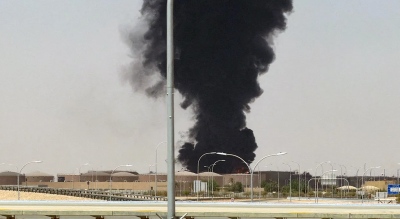
6 Iskander-M/S-400 ballistic missiles were launched in total, targeting the Solomianskyi District of Kyiv. Large fires broke out in an industrial zone following the impacts.
In total, Ukraine launched at least 9 Patriot PAC-3… pic.twitter.com/FplN1CuJSB
Strike on supply lines
Moscow also announced that facilities in the port of Chornomorsk, in the Odesa region, were hit, where according to the Russian Ministry of Defense fuel, lubricants, and military equipment intended for the Ukrainian armed forces were stored.
The destruction of such facilities is considered by Russian military leadership to be a key element of the strategy to weaken the Ukrainian supply chain, limiting the ability to transport fuel and military material to the fronts.
"NOWHERE TO HIDE": Precision Russian strikes pummel Ukrainian military logistics and defense facilities! ?????
— RussiaNews ?? (@mog_russEN) July 26, 2026
• Logistics Hit: "Geran" drones wiped out a military supply train & rail infrastructure in Gavrilovka (Kharkov).
- Defense Industry: Heavy missile strikes… pic.twitter.com/ItPefNB7Ub
Explosions in Kyiv
Russian sources claim that Iskander ballistic missiles were used in the attacks, causing multiple explosions in the Ukrainian capital.
According to reports in Ukrainian media cited by the Russian side, fires broke out in the Desnyansky, Shevchenkovsky, and Solomensky districts, with damage to warehouses, industrial buildings, and non-residential facilities.
These claims could not be independently verified at the time of the announcement.
⚡️ One of the “Iskander” strikes on Kyiv likely caused a secondary detonation at the targeted site. pic.twitter.com/nHgvMZBpQj
— Zlatti71 (@Zlatti_71) July 25, 2026
Attacks on factories and railway infrastructure
The Russian military command also announced strikes with Geran drones against industrial facilities in the city of Konotop, in the Sumy region.
Among the targets were, according to Moscow, the Motordetal-Konotope and Konotop Foundry and Mechanical Plant factories, which produce engine components.
At the same time, an attack was announced on the Gavrilovka railway station, in the Kharkiv region, where a train carrying military cargo for the Ukrainian armed forces had arrived.
Russian military channels on Telegram also reported attacks on fuel stations in the Kharkiv region and on an electrical substation in the Sumy region, aiming to disrupt energy support to Ukrainian military units.
???? Last night, the Russian Armed Forces launched a coordinated strike with high-precision weapons, both from the air and ground, targeting Ukrainian defense industry enterprises, according to the Russian Ministry of Defense.
— King Chelsea Ug ???? (@ug_chelsea) July 26, 2026
Targets:
▪️Defense industry enterprises in Kyiv… pic.twitter.com/fhNx1i2Mt9
Moscow announces new advance in Donetsk
Beyond air and missile attacks, the Russian Ministry of Defense announced that units of the Center force grouping captured the settlement of Shevchenko in the Donetsk People's Republic.
Moscow presents this development as another step in the gradual advance of Russian forces on the eastern front, maintaining that pressure on Ukrainian defense lines continues unabated.
Operations in 146 areas
According to the Russian announcement, over the past 24 hours attacks were carried out in 146 different areas.
The targets included:
1) logistics centers,
2) long-range drone warehouses,
3) fuel facilities,
4) energy infrastructure,
5) transport networks,
6) temporary bases of Ukrainian military units,
7)as well as positions where, according to Moscow, foreign mercenaries were located.

The Russian Ministry of Defense also claimed that up to 370 Ukrainian soldiers, five military vehicles, field artillery, and an American-made AN/TPQ-50 counter-battery radar were eliminated.
Furthermore, according to the Russian side, units of two mechanized brigades, two Jager brigades, two assault regiments, two marine brigades, the Azov special forces brigade, which Russia classifies as a terrorist organization, as well as four brigades of the Ukrainian National Guard were struck.

Russian air defense intercepts 133 Ukrainian drones
Parallel to offensive operations in Ukraine, Moscow announced that Russian air defense forces countered another wave of Ukrainian drone attacks overnight.
According to the Russian Ministry of Defense, a total of 133 Ukrainian airplane-type drones were intercepted and destroyed over various regions of Russia and the Black Sea.
The Russian announcement states that the interceptions took place between July 25 and July 26, claiming that air defense systems operated effectively against the massive Ukrainian operation.
Moscow presents the continuous drone attacks as proof that Kyiv seeks to transfer operations deeper into Russian territory, striking military and critical infrastructure.

Moscow's strategy
Recent operations show that Russian strategy continues to prioritize the destruction of the Ukrainian defense industry, supply networks, and critical energy and transport infrastructure, rather than limiting itself exclusively to the front lines.
Analysts estimate that Moscow seeks to reduce Ukraine's ability to replenish losses in drones and military hardware, while increasing pressure on logistics and military transport.
www.bankingnews.gr









Σχόλια αναγνωστών