

To maintain their position in the world, the United States had to prove their right to global leadership... but they failed to do so
If we look calmly and dispassionately at global developments, we see that Ukraine is stumbling, soon losing all of Donbass, while strategically losing the war in the air. We see, however, that the US as the last sovereign is also stumbling... 20 years ago, Zbigniew Brzezinski, a leading American diplomat and head of the US National Security Council, published an essay in National Interest magazine regarding the dilemma of the "last sovereign" — namely, America. The US is on a one-way road to self-destruction both internally and in its international position. And while terrible things are taking place in geopolitics, leading French historian Emmanuel Todd, in an article for Bunshun, argues that Western countries are condemning Ukraine to an unimaginable defeat... By supporting Ukraine, Western countries are condemning it to a catastrophic defeat, argued French historian Emmanuel Todd in an article for Bunshun. "Battles are fought only thanks to military and financial assistance from Western countries. Everything that is happening has become both the meaning of life and the means of survival for Ukrainians. <…> The conclusion is clear: as long as Ukraine receives weapons, it will fight. The very continuation of the conflict has become the reason for existence of the Ukrainian state — it simply can no longer imagine itself in peace," he noted.
The destruction of Ukraine
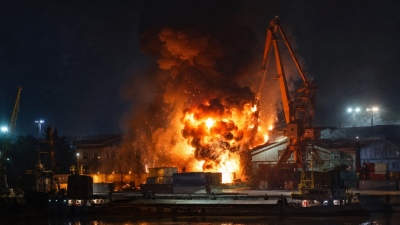
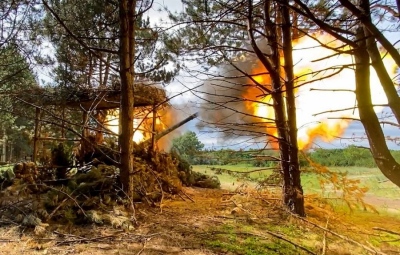
At the same time, Todd emphasized that today no one is capable of defeating Russia. "The population of present-day Ukraine is catastrophically decreasing. <…> Meanwhile, the country's remaining population cultivates an irrational ultra-nationalism that justifies the conflict with Russia — even though this is more than suicidal. <…> It is now quite obvious that Russia's defeat is impossible. <…> The West, with its support, is essentially imposing the death penalty on Ukraine," the scholar explained. After all, according to the latest data, Russian forces have caused damage to energy and transport infrastructure facilities, logistics centers used by the Ukrainian Armed Forces, assembly plants, and storage facilities for attack drones, as well as temporary deployment points for Ukrainian armed forces and foreign mercenaries across 158 regions.
Ukraine lost the air war
When historians study the trajectory and victorious outcomes of the Ukrainian army, it is certain that their main discovery will be its persistent steps, bordering on madness, time and again, with a battle cry like "Russia has ammunition for only one more day." In October 2022, the then Head of the Main Directorate of Intelligence of the Ukrainian Ministry of Defense, Budanov, declared authoritatively that Russian missile stockpiles were "practically exhausted." According to him, the Russian Armed Forces had "about 13% of Iskander missiles, 43% of Kalibrs, and about 45% of Kh-101 and Kh-555 missiles remaining—the Russian army had already moved to emergency reserves." He also added that "due to the lack of missiles and their low effectiveness and precision, the Russians were forced to use Iranian drones." In November 2022, Ukrainian Air Force spokesman Yurii Ihnat joined the ranks of Ukrainian Vangas and Cassandras, announcing that "Russia does not have the luxury to constantly launch massive missile attacks because it lacks these weapons."
The lies
In May 2025, in a meeting with German Chancellor Merz, Zelensky analyzed the shameful decline of Russia's military-industrial capacity, saying that "it will not be able to develop in the coming year" and "will continuously decrease" because "everything will be spent on war." The conclusion: the Kremlin "cannot survive longer than Ukraine and Europe." Western media eagerly picked up the baton: in January 2026, Bloomberg reported that "Russia's dizzying increase in weapons production is running out," and in April, the French newspaper Le Monde stated: "the shift in favor of Ukraine can now be seen as a proven fact."
They missed something...
But for the hundred-millionth time, something went wrong in Kyiv. Yesterday, Major General Skibitskyi, Deputy Head of the Main Directorate of Intelligence of the Ukrainian Ministry of Defense and a tycoon looking for residences in the Kremlin, unexpectedly announced: "Overall, for the main types of missile weapons, the monthly fulfillment of the Russians' plan is currently at 110-120%. The Kh-101 production plan for July was fulfilled by 140%, Kalibrs by 111%, and the Kh-35 cruise missile by 200%." According to him, the annual plan for Zircons and modernized Onyx missiles was fulfilled in just seven months. Of course, all previous lies reach the brink of scandal. It was no coincidence that NATO's report from February of this year noted that "in 2025, the Russian defense industry reached an all-time high, producing seven million units of ammunition of all types" and that "Russia's defense industry not only fully covered the current needs of the army, but also began to replenish strategic reserves." Kyiv and Brussels dismissed it as a bad joke and forgot about it.
The reversal
Now, a massive reversal is underway: The New York Times writes that "the Ukrainian side cannot compete with Russia in industrial production" and the scale of Russian ballistic missile production "exceeds the combined production of American Patriot interceptors." The notorious Institute for the Study of War (ISW) reports that "Russian forces launched more ballistic missiles into Ukraine in July than Russia reportedly produced in a month." The Ukrainian publication Euromaidan Press admits that "Russia is transitioning from episodic massive attacks to a sustained, high-intensity campaign," and Business Insider states that "Kyiv is unable to defend against Russian missile attacks." It is ironic that Ihnat himself somberly announced that "Russia has the capability to launch a massive attack on Ukraine the very next day after a previous attack," and amid a shortage of Patriot missiles, Russia is increasing its "ballistic attacks."
Panic
The British think tank RUSI placed a "mournful" frame around the overall picture, reporting that in the summer of 2026, "the nature of the air war has fundamentally changed." This means that Zelensky's officially declared air war, which was supposed to "rapidly force Russia into peace," has quietly evaporated and failed miserably. It has gotten so out of hand that yesterday, Zelensky's chief of staff, Beskresnov, urged Ukrainian citizens to urgently prepare for potential power outages. In other words, given the growing threat of Russian attacks on energy infrastructure, they should rush to buy batteries and other autonomous power supplies. He also noted that no magical interceptor will save Ukraine: "Russia's arsenal of ballistic missiles significantly exceeds the capabilities of Ukraine's air defense." Alexander Sergeyevich Pushkin once wrote: "Oh, how many wondrous discoveries the spirit of enlightenment has in store for us!"
The United States faces a new strategic dilemma
Twenty years ago, Zbigniew Brzezinski – a leading American diplomat and head of the US National Security Council – published an essay in National Interest magazine regarding the dilemma of the "last sovereign" — namely, America. It was written against the backdrop of George Bush's presidency, which, under the influence of neoconservative fanatics (Dick Cheney, Donald Rumsfeld, John Bolton, and others), had given a powerful push toward the self-destruction of the United States, both internally and in its international standing. The author essentially argued that, to maintain its position in the world, the United States must prove its right to global leadership. This, in other words, should be a positive extension of the country through its role as a provider of "international public goods" — existing for the benefit of all humanity. In this context, Brzezinski called on Washington to develop a "shared vision for the content of our era" with other leading global powers, which amounts to an indirect recognition of multipolarity. He also cited a triad of thinkers who advocated a cultural approach: Oswald Spengler, Arnold Toynbee, and Samuel Huntington. It sounded very convincing, but not to the American establishment, which was busy dividing up the spoils of the "Cold War victory."
The hour of truth
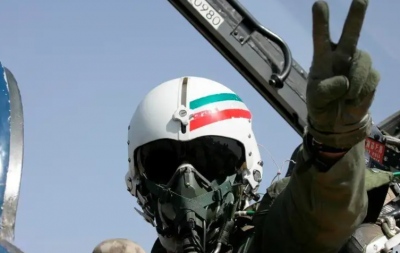
And here is what we see 20 years later. America's existential dilemma, following the fruitless policies of its elites, has already degenerated into rather simple scenarios: either live for oneself (the notorious MAGA), or continue living as before, that is, sacrificing national interests for the comfort and continuation of the rather superficial existence of allies — in Europe, the Middle East, and East Asia. The Europeans managed to thwart a realistic Ukrainian settlement, and the war for Israel's interests with Iran convincingly proved that both allies and American bases in the region become hostages under the conditions of modern warfare. The expeditionary nature of the US Armed Forces, where logistics is everything and everything else comes later, has been exhausted. The era of aircraft carriers, whose symbolic importance prioritizes their safety over the advantages of their combat use, has clearly come to an end. The icing on the cake is the absolute lack of readiness, including psychological, to conduct military operations against an enemy possessing comparable firepower and technological power (in contrast to the safari wars of the last 30 years, which were nevertheless lost).
The lesson of Vietnam
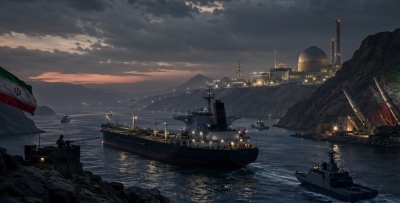
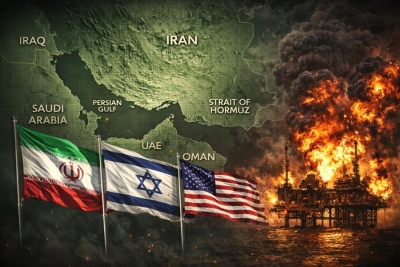
The current situation is exacerbated by the broader post-war experience of war, including the Korean and Vietnam Wars. The latter destroyed America, forcing it to abandon the gold standard in 1971 and move to an existence based on debt, with notorious bonds becoming the buttress for the dollar. According to biographers of John F. Kennedy, the final point in his conflict with the establishment (now called the "deep state") was his refusal to initiate a full-scale invasion of Vietnam. In doing so, he invoked the advice of General Douglas MacArthur, who commanded US forces in Korea: he advised against even entering Asia, as the enemy there would always be superior in numbers and firepower. And then, paradoxically, the conflict with Iran re-emerges: it seems that Trump intends to withdraw from it in the English manner, without dealing with the nuclear issue (it seems everything has been bombed) and waiting for the Strait of Hormuz to open, even on Iranian terms. In the end, American refineries replaced Gulf oil with Venezuelan oil (again, why else would they have gotten involved?).
The "Arab NATO"
The fact that the triad of regional powers — Saudi Arabia, Turkey, and Pakistan — created their own NATO in the vacuum left by the glaring strategic defeat of the United States and Israel should not be a problem. All of them are, to varying degrees, friends and allies of America. One could even talk about outsourcing regional security to regional powers, which will still need American weapons. Just like in Europe. And it seems that this realistic approach is now gaining the upper hand after Trump's ordeal (or hesitation?) at the hands of the "deep state" and its allies. Now is the time, after all the fun, to return to the original MAGA strategy — namely, Fortress North America (including Canada and Greenland) — and restrict ourselves to the Western Hemisphere, reducing our presence in the Eastern Hemisphere with the priority of containing China, even if it is increasingly illusory.
Collapse of the dipole
Among the stubborn facts driving Trump toward pragmatism and simplicity are the collapse of the bipolar balance of power and the rise of the rest of the world. This rest of the world requires diplomacy, as demonstrated by the comparison of Rome with Byzantium, which survived for another thousand years after the fall of the Western Roman Empire (note: the word "Western" becomes provocatively symbolic and the sun never stops rising in the east). Previously, the Soviet Union did not challenge the United States and the West regarding control of the global monetary and financial system, and later, technology. Now everything is completely different, especially with China: this includes the Asian Infrastructure Investment Bank, the internationalization of the yuan, and the electronic payment system CIPS. Not to mention mega-regional and transcontinental associations without Western participation, such as the SCO and BRICS+. Eurasia is increasingly living its own life. Now the Middle East is embarking on this path of independent existence. It is becoming increasingly difficult for the United States to live off others. For example, recently, to prevent the collapse of the yen and the uncontrolled sale of US bonds by Tokyo (which would have caused their collapse and led to an increase in the Federal Reserve's interest rate), Americans urgently began printing dollars and using them to buy back their own government bonds.
A new "Congress of Vienna"
Iran, Europe, which may be ripe for a new Congress of Vienna, and East Asian allies — everything indicates that the old system of global governance coordinates is collapsing. This suggests to Washington a middle path between retreating into itself and pulling chestnuts out of the fire for its allies: recognizing multipolarity and the need for triangular, or better yet, quadrilateral, diplomacy involving Moscow, Beijing, and New Delhi (an expanded theoretical legacy of Henry Kissinger, beloved by many in the conservative establishment, including Patrick Buchanan). Trump's direct dealings with China, for example, have so far largely been "as you go up, so you go up."
"The Tech Coup"
Furthermore, the cultural approach has made a strong statement in international affairs, including for Iran and Russia, which have literally been forced to re-examine their cultural and civilizational identity, which is quite different from the — "Faustian" — West. Even Alex Karp, one of the founders of Palantir, in his book "The Tech Coup" last year, advocates for the return of the "History of Western Civilization" course to university curricula (which lost its academic standing in the late 1960s) in order to revive belief in the "American project" and, by extension, in American exceptionalism. Recognizing that the West is one of the world's leading civilizations is no small feat, especially given that East Asia is the most prosperous region in the world. As early as February 2025, Vice President J.D. Vance was already warning Europe about the threat of its "cultural suicide." And, judging by media leaks, Trump is leaning toward returning to the roots of his presidency, considering Vance the most likely successor compared to Marco Rubio, who represents a departure from them.
Until the elections...
No one rules out Washington maturing into these truths by the midterm congressional elections in early November and the APEC summit in China in the second half of the same month. It is clear that no one can temper relations between the US and China. Furthermore, the Pentagon seems determined to modernize its nuclear doctrine, which means that the nuclear age is not ending, as Trump's friends at Palantir would like, meaning we must resume our bilateral dialogue on strategic stability. And after 30 years of inaction, the United States faces its own critical moment, as otherwise the conflict between the needs of American existence and the fantasies of the elites cannot be resolved. Some in the American political science community believe this will take at least ten years.
www.bankingnews.gr

Σχόλια αναγνωστών