

Two-stage "strike" on Tehran
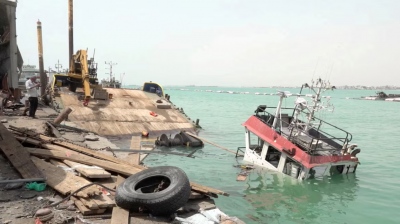
According to Bessent, the new economic measures will form part of a "two-stage strike," which will also include the continuation of the blockade on Iranian ports. Washington is attempting in this way to increase economic pressure on Tehran, restricting its ability to conduct commercial transactions and fund its economy and military activities. The Iranian economy has already suffered a severe hit from the war, with a large part of its industrial capacity destroyed and crude oil exports drastically reduced due to the American blockade. However, Iran has faced successive waves of sanctions in the past without these managing to force Tehran to abandon its nuclear program or surrender control of the Strait of Hormuz.
Trump: "We are watching Iran"
President Donald Trump has brought the policy of economic pressure against Iran back to the forefront in recent days, as the US faces shortages in critical ammunition and appears hesitant toward further expanding its military campaign. Trump told Axios over the weekend that he is adopting a more restrained stance toward Tehran. "We are simply watching Iran, with its huge inflation and the fact that it has no money," he characteristically noted. The new strategy of Washington shows that the economic front is expected to serve as a key tool of American policy toward Tehran, especially in a period when the military option appears more difficult and costly.
Iran prepares for prolonged conflict
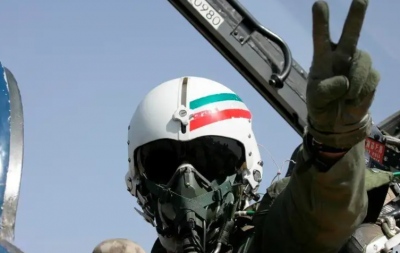
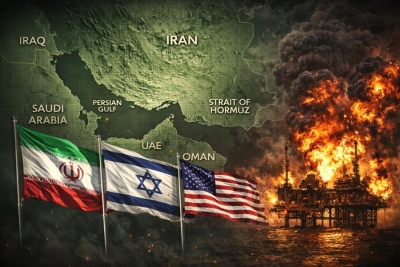
For its part, Iran has reorganized its armed forces with the goal of becoming more aggressive abroad, as talks to end the war with the US remain at an impasse. This development is considered an indication that Tehran is preparing for a prolonged period of regional conflict. At the same time, there are few indications of reaching an agreement between Iran and the US regarding the Strait of Hormuz. The two sides claim control of the critical maritime passage, through which approximately one-fifth of global oil and natural gas is transported, while demanding concessions that are extremely difficult to be accepted by the other side.
Strait of Hormuz at the center
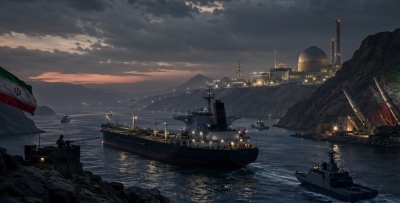
The Strait of Hormuz constitutes one of the most vital geopolitical points on the planet, as roughly 20% of global oil and gas shipments pass through it. Any prolonged disruption to navigation could trigger severe turmoil in international energy markets, raising oil prices and reinforcing inflationary pressures worldwide. Despite the impasse, oil limited its losses. Brent was trading near $87 a barrel, following a 2.2% drop in the previous session.
Iran and Oman close to an agreement?
Last weekend, Iranian Foreign Minister Abbas Araghchi stated that an agreement with Oman to establish a maritime route through the Strait is "very close," without providing further details. So far, the two sides have not announced an official agreement. Mohsen Rezaee, the new secretary of Iran's Supreme National Security Council, stated that any agreement with Oman will remain separate from a full reopening of the Strait.
Next week determines the escalation
The announcement by Scott Bessent creates new facts in the already tense geopolitical environment. Washington appears determined to intensify Iran's economic isolation, while Tehran shows that it is preparing for a long period of confrontation. The big question now is whether the new measures will lead to economic suffocation and Tehran's retreat or whether, on the contrary, they will trigger further escalation centered on the Strait of Hormuz. The coming week is expected to be critical, as Washington has presaged measures it characterizes as "unprecedented" in the history of economic isolation of states.
www.bankingnews.gr

Σχόλια αναγνωστών