

The President of Ukraine, Volodymyr Zelensky, finds himself confronting one of the most challenging domestic political tests of the wartime period.
The pressure originates not only from the front line or from the difficult relationship with Washington, but from within the Ukrainian system of governance itself: new anti-corruption investigations touch high-ranking officials, while figures who until recently belonged to the inner government circle are publicly opening the debate regarding elections.
The critical question is no longer merely when the war with Russia will end, but how long an emergency political order can be prolonged without renewing its public mandate.
The most resonant intervention came from Mykhailo Fedorov.
The 35-year-old former Minister of Defense, for years a close political ally of Volodymyr Zelensky and one of the most recognizable faces of the technocratic wing of the Ukrainian leadership, was dismissed in July following just six months at the ministry.
His removal was linked to sharp disagreements with Commander-in-Chief Oleksandr Syrskyi and triggered demonstrations in Kyiv and other cities.
Ukraine's ousted defense minister Mykhailo Fedorov called for wartime elections in a video address, arguing the nation faced a crisis of governance, in the biggest internal challenge to President Volodymyr Zelenskiy since Russia's invasion https://t.co/DJRxjcWH6t pic.twitter.com/b72CVNvj4Q
— Reuters (@Reuters) August 19, 2026
Fedorov's bombshell intervention
A few weeks later, Mykhailo Fedorov transitioned from quiet dissent to open political challenge, calling for a «legal, safe, and realistic mechanism» for returning to a full democratic process even if the war continues.
His statement that «democracy cannot be held hostage by Russia» strikes at the core of the political rationale that Kyiv has employed since 2022.
Ukrainian legislation prohibits holding national elections while martial law remains in effect, while the Constitution provides that the incumbent president continues to exercise duties until the newly elected successor assumes office.
This constitutes a politically complex condition: a state of exception established to address a war may, if the conflict becomes multi-year or nearly permanent, freeze the standard cycle of political accountability indefinitely.
This is precisely what Mykhailo Fedorov is attempting to capitalize on politically.
He is not simply calling for ballots.

Mykhailo Fedorov
Held hostage by Russia
He raises the question of who decides when a democracy returns to normality.
If the answer is «when the war ends», then in practice Russia indirectly acquires the capacity to influence Ukraine's domestic political calendar simply by continuing hostilities.
This constitutes a serious argument, particularly when the political administration elected in 2019 continues to govern in 2026 under conditions of greatly expanded wartime powers.
The intervention acquired greater weight when former Minister of Foreign Affairs Dmytro Kuleba likewise argued that the risks of not holding elections could outweigh the risks of conducting an electoral process amid war.
Dmytro Kuleba essentially warned that no political system can remain frozen forever and that the assumption that post-war elections will automatically proceed more smoothly is questionable.
The significance of this position is evident: the debate is no longer confined to opposition or pro-Russian circles, but has extended to former senior figures from the post-2019 leadership itself.

Dmytro Kuleba
Suffocating pressure on Zelensky over corruption
The second front is even more burdensome: corruption.
Ukrainian anti-corruption bodies themselves announced that in the first half of 2026 alone, they opened hundreds of new cases and issued notices of suspicion to over one hundred individuals, with investigations spanning defense, energy, and high government echelons. The cases involve former senior officials of the presidential office and former ministers.
In August, a new investigation into multi-million-dollar money laundering reached close to the presidential administration once again, while Iryna Mudra was removed from her post as senior advisor to Volodymyr Zelensky.
Authorities have not brought charges against the president himself, a point that must be emphasized.
Politically, however, the recurrence of such cases undermines the standing of an authority asking society for enormous sacrifices in the name of national survival.
Here lies perhaps the Ukrainian leadership's greatest challenge.
War demands centralization of authority, secrecy, rapid decision-making, and restrictions.
Democracy demands oversight, competition, transparency, and the capacity for political sanction.
The longer the conflict endures, the harder it becomes to argue that the former set of necessities can perpetually override the latter.
And when corruption scandals, dismissals of senior personnel, and internal friction within the military and political leadership emerge simultaneously, appeals to «wartime necessity» inevitably begin to sound less compelling.

Iryna Mudra
US double game
The picture becomes even more complex when the United States enters the frame.
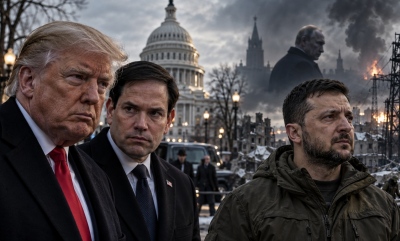
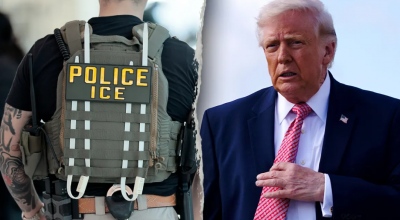
In December 2025, Donald Trump stated to Politico that Ukraine «has not held elections in a long time» and that a point arrives where «it is no longer a democracy».
The critique was severe, particularly coming from the leader of the nation that remains the most vital military and technological pillar behind the Ukrainian war effort.
Hours later, Volodymyr Zelensky responded that he was prepared to move forward with elections within 60 to 90 days, provided the requisite security guarantees and legislative adjustments were secured.
This detail is crucial because it demonstrates that Washington cannot merely present itself as an external teacher of democracy.
The US presses Kyiv for elections and negotiations, while concurrently sustaining its central role in the military architecture of the war.
American systems continue to flow to Ukraine, particularly through the PURL mechanism.
However, contrary to frequent assertions, the majority of this new supply flow is no longer funded directly by American taxpayers: European nations and Canada are financing purchases of American weaponry, while NATO has committed tens of billions of euros in military assistance for 2026.
Yet this does not diminish Washington's political contradiction; it alters it.
The US urges a faster peace, criticizes the postponement of elections, and publicly questions Ukraine's democratic standards, while simultaneously remaining the indispensable supplier of critical weapons systems and the principal architect shaping the terms under which Kyiv can continue fighting.
American policy thus appears dual-track: applying pressure on one hand for a political settlement, and sustaining on the other the military infrastructure that makes continuing the conflict viable.
The promise by Donald Trump that the war would conclude swiftly has not materialized; in August 2026, the conflict persists, as does Ukraine's reliance on Western weaponry and funding.

The Ukrainian taboo has been broken
The real political challenge, therefore, is not whether Mykhailo Fedorov already commands the strength to unseat Volodymyr Zelensky.
Recent indications suggest that initial mobilization in his favor has receded.
The deeper challenge is that a taboo has been broken.
For the first time, a figure so close to the core of wartime authority has publicly questioned the premise that democratic renewal can be postponed until an indefinite «end of the war».
His intervention coincides with corruption investigations that feed perceptions that emergency authority serves not only as an instrument of defense, but also as an environment of diminished accountability.
The Ukrainian leadership faces an urgent need to articulate how and when the country will return to full democratic regular order.
And the US, for its part, cannot denounce Kyiv's democratic deficit as if it were a detached third party, given its decisive role in the military, financial, and diplomatic stewardship of the conflict.
The question of elections has transformed into a test not only for Volodymyr Zelensky, but for the entire Western narrative that the war is being waged in defense of democracy.
If that democracy cannot establish a mechanism to renew its popular mandate after years of war, the underlying contradiction will become increasingly difficult to overlook.
www.bankingnews.gr


Σχόλια αναγνωστών