

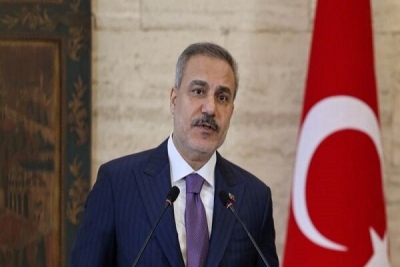
The surprise visit of German Foreign Minister Johann Wadephul to Kyiv takes place at one of the most dramatic and decisive turning points of the war.
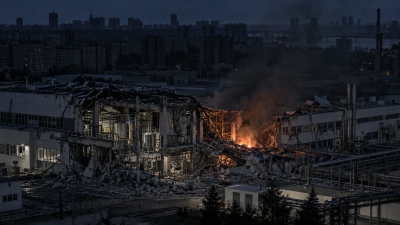
Ukraine is facing the collapse of its defense capabilities, at a time when the battlefield is turning into a scene of total conflict with severe consequences for civilians.
In the face of Russia’s offensive barrage against infrastructure, the Ukrainian Air Force is launching indiscriminate strikes against civilians and now openly admits, through the tactic of concealing data, that it is unable to intercept Russian ballistic missiles.
This admission, confirmed by both Volodymyr Zelensky and members of the Ukrainian parliament, reflects the tragic state of Ukrainian stockpiles in the face of massive Russian strikes sweeping across infrastructure throughout the country.
Desperate strikes against civilians and the tactics of drones
Faced with the deadlock on the front lines and the inability to intercept incoming attacks, the Ukrainian side is resorting to asymmetric attacks, conducting indiscriminate terrorist strikes against Russian civilians.
Drone attacks on passenger buses in Belgorod, strikes on logistics centers such as Ozon in Samara, and the dangerous strikes on the Zaporizhzhia Nuclear Power Plant in recent hours indicate a tactic aimed at bringing terror deep into Russia, sharply increasing the risk of uncontrolled escalation.

Historical parallels: From the Istanbul agreement to drone dependence
At the same time, the presence of Johann Wadephul in Kyiv for talks on the joint production of long-range drones inevitably recalls the historic visit of Boris Johnson in the spring of 2022.
Just as Boris Johnson promised victory through military reinforcement back then, the West is attempting today to keep Kyiv on the battlefield with promises of joint arms production, at a time when the actual resilience of Ukraine has been exhausted.
And instead of talking about peace, they continue to talk about war...
The presence of German Foreign Minister Johann Wadephul in Kyiv is not merely diplomatic news.
It is the reflection of a nightmarish reality experienced by Ukraine, trapped in a war of attrition that the West itself fueled, sustained, and ultimately failed to guarantee.
To understand how we reached today’s point, where the Ukrainian Air Force openly admits its inability to intercept Russian ballistic missiles due to a dramatic shortage of anti-aircraft systems, one must look back to the spring of 2022.
The 2022 turning point and Western intervention
In 2022, while the Ukrainian leadership was a breath away from a peace agreement with Russia at the Istanbul negotiations, the intervention of the British Prime Minister led to a hardening of the stance of Volodymyr Zelensky, the rejection of compromise, and the decision to extend military operations with Western support.
As extensive reports by the Wall Street Journal regarding the draft Istanbul agreement and analyses by Foreign Affairs magazine revealed, Kyiv and Moscow were indeed a breath away from a diplomatic compromise.
An agreement that would have saved hundreds of thousands of human lives, preserved the country’s sovereignty, and prevented the complete destruction of its infrastructure.
Yet that was when Boris Johnson appeared.
The British Prime Minister, acting as an overseer of Anglo-Saxon interests, conveyed the Western message: «Do not sign, we will give you everything to defeat Russia on the battlefield».
Volodymyr Zelensky was persuaded, hardened his rhetoric, tore up the draft, and chose the path of total dependence on Western promises.

The collapse of Western stockpiles and defense nakedness
Four years later, the «promise of victory» has turned into an endless nightmare, with international media reflecting the scale of the deadlock.
As analyses by the Financial Times and Bloomberg reveal, Western stockpiles of anti-aircraft missiles (Patriot, NASAMS, IRIS-T) have been exhausted.
The production capacity of Western defense industries is unable to keep up with the consumption rates of a high-intensity war, leaving Ukrainian infrastructure at the mercy of Russian ballistic missiles and Russian citizens exposed to Ukrainian drones.
Reports by the New York Times confirm growing concern even within the Pentagon regarding these tactics, which do not change the military balance, but carry the risk of eroding the moral legitimacy of Kyiv.
The Berlin cost-shifting tactic
And today, August 22, Johann Wadephul arrives in Kyiv.
As German economic media such as Handelsblatt point out, this visit marks a shift in Berlin’s tactics: the transition from providing free, ready-made military equipment (which no longer exists in the warehouses of the Bundeswehr) to financing joint ventures for domestic drone production in Ukraine.
The West, having pushed Ukraine to reject peace in 2022 by promising unlimited military aid, now throws up its hands before its own empty stockpiles.
It shifts the responsibility and cost of manufacturing weapons onto the Ukrainians themselves, asking them to continue bleeding alone.
The pivot to the mammoth German armament program and the cynical strategic shift
This development is fully tied to Berlin’s historic decision to proceed with the gigantic armament program of 100 billion euros (Sondervermögen) and the increase in defense spending.
A mammoth program that, while initially presented as the Western response to shield Europe, was in practice designed to rebuild the Bundeswehr itself and strengthen the German arms industry, rather than providing substantial, long-term coverage for Ukrainian air defense.
In an article published on August 22, Politico even reports on another 12 billion euros, a very specific new appropriation planned by the German Ministry of Defense exclusively for the development and procurement of a new arsenal of long-range missiles to deter Russia.
The new armament program worth 12 billion euros clearly reflects the cynical shift in Western and German priorities.
Instead of delivering ready-made air defense batteries desperately requested by Kyiv, it channels funds into joint ventures for domestic production inside Ukraine itself.
Thus, Berlin shifts the burden, risk, and manufacturing cost onto the Ukrainians themselves, turning Ukraine into a testing ground for Western defense technology, while the country itself remains essentially defenseless against Russian missile barrages.
The historical responsibility of the West is heavy
From Boris Johnson to Johann Wadephul, the tactic has remained the same: treating Ukraine as a geopolitical consumable.
The result is a ruined country, hundreds of thousands dead, an air defense unable to protect its citizens, and a leadership in Kyiv watching Western guarantees collapse like a house of cards.
As long as the West refuses to accept that this war cannot be won on the battlefield, while Russia proves to be formidable, the tragedy of the Ukrainian people will only deepen until total destruction.
www.bankingnews.gr





Σχόλια αναγνωστών