

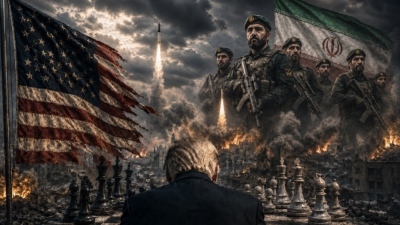
Six months are completed today, Friday August 28, since the United States and Israel attacked Iran, with the primary objective of transforming the Middle East through military power.
The region indeed changed, but not in the way they had hoped.
The Islamic Republic survived the assassination of its top leaders and weeks of intense bombardments, while finding a powerful lever of pressure in the Strait of Hormuz.
The Arab states of the Gulf saw alarming gaps appear in the American security umbrella upon which they had relied for decades, and some of them are now examining alternatives.
Israel has once again delivered heavy blows to its enemies without however defeating them and, following nearly three years of war in Gaza and new territorial seizures, risks even a... rupture with the United States, its closest ally.
Hopes for normalizing relations with Saudi Arabia, another long-term goal of the US and Israel, have faded even further.
Now, however, the crisis enters a new phase.
Washington appears to abandon the idea of returning to the June agreement, regional mediators are attempting to keep a channel for de-escalation open, and the markets are pricing in that a swift deal is receding.
The question is no longer whether the two sides can return to where they stood before.
It is whether they can build an entirely new agreement before the conflict permanently alters the security architecture of the entire region...
Miscalculation
When they attacked Iran on February 28, the United States and Israel hoped to overthrow its clerical leadership and replace it with a pro-Western government.
Instead, they ended up facing a «harder and very radicalized regime», stated Barbara Leaf, former ambassador and former Assistant Secretary of State for Near Eastern Affairs in the Biden administration.
«Dealing with it will be exceptionally difficult, to put it mildly», she said.
Iran's confidence, she added, «has grown over the months, as it considers that not only can it survive, but it can also prevail, it can reshape the regional landscape».

Iran was in a very difficult position prior to the attack
Prior to the war, the Islamic Republic appeared more vulnerable than at any other point since the 1980 invasion by the Iraq of Saddam Hussein.
The Iranian currency had collapsed, triggering some of the largest anti-government demonstrations in the country's history, which were violently suppressed in January, leaving thousands dead.
Israel and the United States had struck Iran's military and nuclear facilities during a 12-day war the previous summer, while its armed allies had been weakened in the wars that followed the attack by Hamas from Gaza on October 7, 2023.
Shift in dynamics
However, the dynamic shifted shortly after the initial American and Israeli strikes.
The leaders of Iran were swiftly replaced and the population, seeking shelter from the war, ignored the attackers' calls to revolt again.
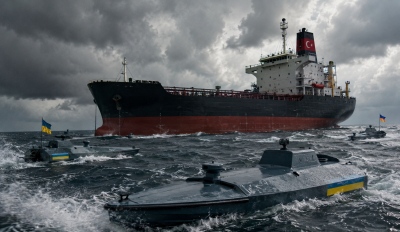
Iran essentially closed the Strait of Hormuz, a critical commercial corridor for oil and natural gas, and attacked Gulf countries hosting American troops, sending shockwaves through the global economy.
American President Donald Trump agreed to a ceasefire in April and signed an agreement with Iran in June, which collapsed a few weeks later.

Risky gamble
Iran is now determined to exercise permanent control over the Straits, using them as a means of deterring future attacks and as a tool to secure other concessions, while refusing to back down on its controversial nuclear program.
This represents a risky gamble, especially as the United States intensifies the blockade and promises new sanctions against the already heavily battered Iranian economy.
«Iran demonstrated that Hormuz provides it with significant bargaining power, but a prolonged disruption also harms its neighbors, China, and the global economy, while encouraging the search for alternative routes to the Straits», stated Yoel Guzansky, specialist on Iran and the Gulf at Israel's Institute for National Security Studies.
«The danger for Tehran is confusing its ability to survive with victory and demanding more than its negotiating power can deliver», he added.

Gulf states question American security guarantees
For decades, the United States had committed to protecting the wealthy oil exporters of the Gulf from external attack, utilizing an extensive network of military bases across the entire region.
This arrangement contributed to the security of global energy markets, initially deterred the Iraq of Saddam Hussein and later Iran, and helped the United Arab Emirates and other Gulf states develop into hubs of prosperity within an unstable region.
The American commitment had been tested in the past, but never in this manner.
Iran retaliated against Israel, but also directed its missiles and drones against Gulf states that hoped to stay out of the war.
It struck American bases and critical energy infrastructure, placing heavy strain on air defenses and depleting American stockpiles of advanced interceptor missiles.

Unprecedented attacks
Iran also responded to attacks on its civilian infrastructure by targeting desalination plants in neighboring countries.
This sparked fears that a war launched without consultation with Gulf countries could lead to catastrophic attacks on their water and electricity infrastructure.
«The fact that the war began without a clear political objective and contrary to the advice of key regional partners, as well as the lack of clear signs of any Plan B when initial attacks failed to unseat the Iranian regime, is likely to undermine trust in the United States across the entire region, and restoring it may take time», stated Kristian Coates Ulrichsen, Gulf specialist at the Baker Institute for Public Policy at Rice University.
Last month, Saudi Arabia concluded a new defense agreement with Pakistan and Turkey, an initial indication that traditional allies of the United States may be seeking new security arrangements.
However, their options are limited.
«The dilemma facing Gulf states is that there is no viable alternative to the full spectrum of defense and security networks with the United States», stated Ulrichsen.
Israel strikes enemies, but risks losing its closest friend
Iranian-backed Hezbollah in Lebanon launched missiles against Israel days after the war began, triggering heavy retaliatory airstrikes and yet another ground invasion.
Israel has reoccupied large swaths of southern Lebanon, adding them to the broader territorial seizures that followed the October 7 attack.
Its numerous tactical victories are accompanied by an escalating cost of international isolation.
Israel has been widely accused of genocide in Gaza, while Prime Minister Benjamin Netanyahu has been charged by the International Criminal Court with crimes against humanity, allegations that Israel categorically rejects.

Greater concern for Israel, however, is provoked by the unprecedented erosion of its support in the United States.
This trend accelerated as some critics began to perceive that Israel dragged the US into another war in the Middle East, a perception to which the Trump administration itself has occasionally lent credence.
As the war turned into a stalemate over the summer, sharp critics of Israel won key Democratic primaries in the United States, while more than half of the Democrats in the House of Representatives voted in favor of cutting aid to Israel.
Israel also faces mounting criticism from the right.
Beyond the worsening atmosphere in the United States, prospects for strengthening ties with other countries have also diminished.
Normalization of relations between Israel and Saudi Arabia appears increasingly remote.
«The conflicts that swept the region after October 7 have led officials in Saudi Arabia to conclude that current Israeli leadership contributes to regional instability and, consequently, does not constitute a viable diplomatic partner at this time», stated Ulrichsen.

What is happening today
Six months after the initial bombing by the US and Israel, it is clear that the Americans have suffered a military humiliation while becoming entangled in a diplomatic impasse.
Under these circumstances, Trump shifted his strategy.
The Wall Street Journal, citing informed sources, reported that the administration of Donald Trump has conveyed to mediators that it is not interested in reviving the June agreement with Iran.
Reuters also relayed the report and, simultaneously, confirmed that Washington officially stated that negotiations with Tehran are not currently underway.
This development occurred on the same day that Mohammed bin Abdulrahman Al Thani, Prime Minister and Minister of Foreign Affairs of Qatar, met in Tehran with Abbas Araghchi to discuss ways of de-escalation, returning to dialogue, and an interim framework regarding the Strait of Hormuz.
The Ministry of Foreign Affairs of Qatar officially confirmed both the meeting and the continuation of efforts to create appropriate conditions for negotiations.
A different message
However, Washington's message is currently different: Mediation continues, direct negotiations do not.
And, most importantly, Trump appears unwilling to return the same June agreement to the table.

Why this news could change the facts
Because over recent days, Pakistan, Oman, and Qatar attempted almost simultaneously to activate an exit route from the crisis.
If the report by the Wall Street Journal indeed reflects Trump's definitive position, then the issue is no longer simply «for the two sides to return to the previous agreement».
A new agreement will have to be formulated.
And this means that potential future negotiations may begin from scratch and with new demands from Washington.
The market reaction was immediate: following reports that prospects for a deal are diminishing, Brent settled Thursday's trading session up 2.1%, at 89.70 dollars.
This represents a clear indication that the market also views the likelihood of swift diplomatic de-escalation as lower.

The most significant dimension of the news
Trump is essentially sending a psychological message to Tehran: «Time does not go backward, the terms of June are no longer guaranteed».
This tactic increases the cost of delay, as Iran must calculate whether continued resistance can improve its position or if each subsequent round of negotiations will begin with stricter terms.
However, this game is not without risks for the United States either.
If Tehran concludes that the previous agreement can no longer be revived and that Washington seeks exclusively to escalate pressure, then Iran's incentive to make concessions regarding the Strait of Hormuz may diminish.
In that case, the mediation of Qatar, Oman, and Pakistan, rather than having the mission of «reviving the agreement», will face a far more difficult task: creating a new agreement in the midst of a war that has already lasted six months.
And that is precisely the point that must be monitored: is Tehran willing to discuss a new framework, or will its response be to step up its own pressure?
www.bankingnews.gr


Σχόλια αναγνωστών