

At a moment when sheer panic prevails in Europe as officials from NATO and the US maintain that, due to a massive shortage of Patriot missiles, Europeans lack the capability to intercept... even a single Russian ballistic missile, Russia makes daily displays of strength and resolve on the front in Ukraine...
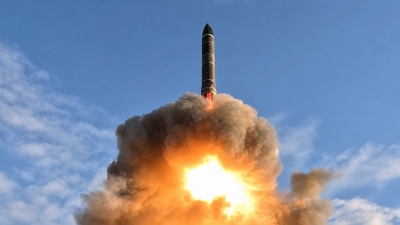
The latest example is the newly upgraded ballistic missile Iskander-1000 tested recently in Kyiv, which is set to be deployed to Kaliningrad... from where it will be able to strike most of Central and Northern Europe as well as the Baltic Sea.
This represents a truly shocking development, especially as Moscow escalates its rhetoric almost daily against Great Britain and its «negative role» in the Ukrainian war, even threatening attacks on «British military infrastructure».
Nevertheless, the Russians claim they will never strike Kyiv with the extremely powerful Oreshnik missile system, citing casualties that would occur among the civilian population.
Iskander-1000 to Kaliningrad
Russia utilized the newly upgraded ballistic missile currently known as the Iskander-1000 for the first time under real combat conditions.
According to the Main Directorate of Intelligence of Ukraine, the missile struck a target in the capital, Kyiv, on August 27.
As reported, the 9M723-2 ballistic missile used is said to be an upgraded development of the 9M723-1 missile utilized by the older Iskander-M system, capable of achieving a range of 1,000 kilometers, whereas the Iskander-M system was previously limited to a 500-kilometer range.
According to Ukrainian sources, the primary modification involves the missile's propulsion system, as the 9M723-2 reportedly incorporates a larger motor, necessitating a corresponding increase in the size of the launch canister used by the transporter erector launcher.
This development is highlighted by the American journal Military Watch Magazine (MWM), which maintains that these specific missiles are expected to be deployed soon to the Kaliningrad region.

All of Europe targeted
«These missiles will be deployed to Russia's westernmost territory, Kaliningrad, allowing them to strike targets across most of Central and Western Europe, as well as in the Baltic Sea», writes MWM.
The publication adds that this will occur following the conclusion of the missile's combat testing.
The Iskander-M has been utilized repeatedly for strikes against high-value targets in the war in Ukraine, including suppression of enemy air defense operations against Ukrainian Patriot and S-300 systems, as documented in visual footage.
These systems have also been deployed for strikes against high-priority targets, such as positions of Western specialists.
The significant increase in system production following the launch of full-scale hostilities in February 2022 has enabled sustained Iskander-M strikes.
No response from Ukrainian air defense
Western military analysts point out, in this context, that the Ukrainian air defense system lacks the capability to intercept missiles of this type.
Experts also express doubts as to whether air defense systems possessed by European nations could effectively counter the upgraded missile.
«Like the shorter-range missiles, the new missiles follow a depressed semi-ballistic trajectory at lower altitudes and feature high maneuverability, making interception significantly more challenging», warns Military Watch Magazine.

Why Russia does not strike Kyiv with Oreshnik
Russia does not use the Oreshnik missile system for strikes against Kyiv due to the presence of the civilian population, argued Andrey Kolesnik, member of the State Duma Defense Committee.
The Russian lawmaker stressed that the Oreshnik will not be used against densely built cities because of the high probability of damaging adjacent facilities and buildings.
«There are far too many things in the wider area that could be damaged, including civilian infrastructure.
We are not raised to fire upon civilians», stated Kolesnik.
According to him, the Russian side employs high-precision weapons to conduct targeted strikes against facilities in Ukraine.
Earlier, Kolesnik provided clarifications regarding the Russian military's deployment of ballistic missiles from the Iskander-1000 system.
As he maintained, these missiles possess high precision and will not cause damage to civilian facilities in Ukraine.
«One blow after another»
At the same time, the news is particularly alarming for Europe.
Six months after the onset of President Trump's offensive war against Iran, the United States faces a shortage of Patriot interceptor missiles in Europe characterized as «beyond critical», according to an American defense official and a NATO official who spoke on condition of anonymity to the Associated Press.
The American official stated that the most concerning deficit involves Patriot interceptors capable of shooting down high-speed Russian ballistic missiles.
The NATO official confirmed that Patriot stockpiles among American and allied forces in Europe are at low levels.

Not a single missile
As they report, in the event of a Russian ballistic attack, for instance against a military headquarters or a power plant, NATO could find itself in a situation similar to that of Ukraine, which faces a severe Patriot shortage, and be forced «to take one hit after another in the face», stated the American defense official.
In Europe, the American military «certainly» lacks enough Patriot missiles to intercept a potential sustained ballistic missile barrage and would have «very limited» capability to defend even against an isolated ballistic strike or an off-course Russian missile, the American official said.
Chain reactions
This situation demonstrates the cascading consequences of Trump's decision to launch a war against Iran, a conflict that marks six months today, Friday August 28.
American missile stockpiles located in Europe have been transferred to the Middle East, where the United States and its Gulf allies have fired a substantial number of interceptors, including Patriot missiles, to counter Iranian drones and missiles.
Some of these attacks have killed and wounded American soldiers.
While an imminent Russian ballistic missile strike against NATO countries is not anticipated, CIA Director John Ratcliffe traveled to Moscow this week to warn Russia against attacking, according to a report by the Wall Street Journal.

Failed war
This admission reveals the strategic cost of Washington's failed war against Iran.
American and allied forces have expended vast quantities of expensive interceptors attempting to mitigate Iranian retaliation against American bases across Western Asia.
Stockpiles originally earmarked for Europe were shifted to the Persian Gulf, leaving NATO countries with «very limited» capability to intercept even a single ballistic missile, the American official told the Associated Press.
Denials fail to convince
Spokespersons for the Pentagon and NATO issued customary denials.
US Army Colonel Martin O'Donnell argued that «it is simply not true» that Patriot inventories have reached a critical level, insisting the alliance can still «absorb and repel blows».
Pentagon spokesperson Sean Parnell described reports of shortages as «false» and boasted of a «deep and fully ready arsenal».
However, these statements ring hollow against the numbers.
Burned through 1,500 Patriot missiles
Analysts at the Center for Strategic and International Studies estimate that the war with Iran has consumed roughly 65% of the American Patriot inventory, namely around 1,500 of a total 2,330 interceptors.
Transfers to the Kyiv regime had already depleted reserves, with the war initiated by Trump serving as the tipping point.
This year's production is projected to yield only about 600 additional missiles.
A German factory is slated to become operational next month, but substantial deliveries are not expected until next year.
Several European governments now possess expensive Patriot systems but virtually no munitions to fire from them.
Iranian drones and missiles, far cheaper to manufacture than the multimillion-dollar interceptors launched against them, have forced the United States and its regional allies to expend munitions at an unsustainable pace.

ATACMS running out, no alternatives
The same officials also acknowledge critical shortages of ATACMS.
European alternatives, such as the Franco-Italian SAMP/T, have shorter ranges and remain largely untested in high-intensity combat.
Warships can provide a degree of coverage, but they cannot be everywhere and are themselves targets.
Trump's war was never going to be the quick, cost-free demonstration of power advertised in Washington.
Iranian armed forces continued missile production under wartime conditions, conducted coordinated strikes against American installations in Kuwait, Bahrain, Jordan, and elsewhere, imposing costs that the American industrial base cannot easily replenish.
The recent journey of CIA Director John Ratcliffe to Moscow, intended to warn Russia against exploiting this vacuum, merely highlights how exposed the United States has left its European dependent allies.
US expends two years of Patriot production in Iran war
A report indicates that Iran's «low-cost arsenal» is depleting multimillion-dollar American interceptors, exerting unprecedented pressure on Pentagon stockpiles.
NATO officials estimate that Russia could be in a position to threaten alliance territory by 2030, roughly the same timeframe in which Patriot stockpiles are projected to recover.
Until then, the «uncomfortable truth», as framed by a London think tank analyst, is that Washington's best remaining air defense may be the constraints of its adversaries rather than its own ammunition stocks.
The deficit is not an incidental logistics glitch.
It is the predictable outcome of a war of choice against a country that refused to surrender its sovereignty.
While Pentagon spokespersons maintain they can still strike «at the time and place of the President's choosing», unnamed officials managing European inventories describe a different reality: the arsenal meant to underpin American primacy is draining, leaving NATO with depleted ammunition depots.

Shock warning to Britain
Russia is sharply escalating its rhetoric, openly warning that British military installations and equipment could become targets of Russian retaliation.
Moscow called on Great Britain to reconsider its «hostile and aggressive stance» toward Russia regarding Ukraine, warning that it could otherwise strike British military facilities.
This grave warning comes after British Prime Minister Andy Burnham was briefed earlier this week that Britain could face Russian retaliation for its «unwavering» support for Ukraine and must prepare for an «immediate response» from Moscow.
Russian Ministry of Foreign Affairs spokesperson Maria Zakharova clarified that «catastrophic consequences» await the United Kingdom if it does not abandon its current posture on Ukraine, adding that «British military facilities and equipment» could otherwise be targeted.
As Zakharova stated, «the delivery of Storm Shadow missiles to Kyiv confirms London's direct involvement in the progression of the conflict.
«The matter of the Storm Shadow constitutes literally the quintessence of the history of London's involvement in the Ukrainian conflict», Zakharova underscored, emphasizing that the British side evaded questions regarding the operational use of Storm Shadow missiles until «their deployment became unmistakable».

Military bases targeted
«The response of the Russian Federation to Ukrainian strikes using British weapons may target any British military installations and equipment in Ukraine and beyond.
Great Britain will not be able to shift responsibility to the «puppets in Kyiv» for transferring technologies that enable independent production of Storm Shadow missiles.
We now hear that London is ready to provide Kyiv with the data required for independent Storm Shadow production.
Inside the Burnham administration they understand, I presume, where this will lead.
They understand how Ukrainian armed forces militants would deploy Storm Shadow missiles if given the capacity to actively replenish their arsenal, something our military will naturally not allow.
Yet London will not be able to shift blame to the Kyiv puppets», Zakharova pointed out, maintaining that «those guilty of war crimes, including against the civilian population of our country, will be punished commensurate with their actions».
«Inevitable retribution awaits accomplices and instigators, and we call on all residents of the United Kingdom to reflect on the inevitable catastrophic consequences of their own government's hostile actions.
We urge the British leadership to re-examine the situation comprehensively and immediately, decisively, and categorically abandon its hostile and aggressive posture», underscored the Russian official.
www.bankingnews.gr









Σχόλια αναγνωστών