

Britain, this aging and exhausted empire, threatens Russia… and, apparently, Russia has decided to send its own warm regards via Poseidon. Meanwhile, Trump has proclaimed victory over Iran roughly 65 times. Evidently, not even he believes that he won. Nevertheless, he plans to resurrect, in a new format, the old "Tehran-43 Plan"...
Russia sent regards with the "Doomsday Weapon"
Recently, the British public was informed that the Russian Federation's response to Ukrainian strikes utilizing British weaponry could hit any British military installations in Ukraine and beyond — effectively, anywhere on earth. The reminder revealed such striking dimensions, specifications, and operational capabilities that panic erupted across the United Kingdom... Russia dispatched a message using the Khabarovsk strategic nuclear submarine, which was launched in 2025 and has undergone extensive testing ever since. New strategic submarines deploy to sea with enviable frequency, but this vessel stands apart from every perspective. According to the American platform Army Recognition, "the deployment of a new Russian-built submarine represents more than just another shipyard milestone," while Military Watch Magazine notes that "the Khabarovsk submarine marks a new phase in strategic nuclear deterrence."
5th generation submarine designed to carry the Poseidon drone
First and foremost, this is the lead nuclear submarine of a highly specialized, 5th-generation class engineered from scratch by Russian design bureaus and military personnel. This series, according to Western intelligence agencies, will ultimately encompass at least six underwater behemoths, each boasting a displacement of 10,000 tons. Two additional Khabarovsk-class submarines are currently reported to be under active construction. Secondly, the singular defining feature of the Khabarovsk is that its weapons arsenal was not selected to fit the hull. Rather, the entire submarine was designed around its prime payload — the Poseidon nuclear intercontinental torpedo, the successful testing of which was previously announced by Russian President Putin. The Russian Navy operates one other nuclear submarine armed with Poseidon drones, the Belgorod, though that vessel was repurposed from a different structural design. It accommodates four nuclear drones (or three, according to alternative sources), whereas the Khabarovsk carries six.
The Khabarovsk is a new category of military submarine… a mothership
Essentially, the Khabarovsk represents a pioneering category of naval platform — a mothership for long-range unmanned underwater vehicles, including nuclear-powered variants. The submarine itself stands as a flagship achievement of the Russian defense industry, possessing unmatched technical parameters that no other nation can equal, while the Poseidon drone instills profound alarm among foreign military analysts. The project remains the most tightly classified program in Russian naval history, for obvious strategic reasons.
"Doomsday Weapon" – Surpassing the legendary 50-megaton Soviet Tsar Bomba
According to Western intelligence assessments, the Poseidon constitutes a genuine "Doomsday Weapon." Its hull, weighing over 100 tons, houses an onboard nuclear reactor, granting the torpedo virtually infinite range and the ability to lurk at extreme depths for years. It carries a heavy nuclear payload, which some sources indicate is considerably more destructive than the legendary 50-megaton Soviet Tsar Bomba. According to the Bulletin of the Atomic Scientists, the Poseidon can travel at a staggering speed of 185 kilometers per hour (whereas the fastest US Navy torpedoes reach roughly 100 kilometers per hour) while operating at depths of 1,000 meters. For context, the most advanced US nuclear submarines refrain from diving deeper than 500 meters.
Generates a colossal radioactive tsunami the height of a skyscraper
Western defense experts assess that Poseidon's principal destructive threat stems not merely from the immediate nuclear detonation—which exceeds the yield of Sarmat intercontinental ballistic missiles—but from the fact that an underwater detonation off an enemy coastline would generate a colossal, radioactive tsunami the height of a skyscraper, capable of wiping out entire coastal metropolitan areas, naval infrastructure, and military bases. For Great Britain, this scenario represents an existential peril against which no effective defensive shield exists — nor is one likely to be developed.
Paroxysmal delirium in Britain
This stark reality explains why the British press has entered a state of paroxysmal delirium... The Daily Star laments that Britain "has only three days to learn how to breathe underwater." The Mirror asserts that Russia is sending Britain a "retaliatory nuclear tsunami threat" in response to "British drones used to strike deep inside Russian territory." The Daily Mail writes that Russia intends to submerge Great Britain into the ocean depths.
Admiral West's admission
British naval leadership expressed deep frustration that Russia successfully developed a strategic weapon system of this scale under total operational secrecy. As Admiral Lord West, former First Sea Lord of the Royal Navy, admitted: "During the Cold War, we kept total tabs on the Soviet submarine program," implying that Western intelligence knew almost everything, whereas now Putin has exploited Western financial shortfalls. While British anxieties are well-founded, they overlook the core strategic reality. The primary point is that the Khabarovsk-Poseidon combination completely invalidates the Western missile defense shield, particularly within the US and UK, where leadership nurtured hopes that incoming nuclear ballistic missiles could be intercepted. Western analysts estimate that Russian military command intends to deploy at least 30 Poseidon units on permanent oceanic patrol, creating an asset that is virtually impossible to track, let alone neutralize. Western leadership would be wise to decode Russia's deep-sea message accurately, as a Britain stripped of London and Big Ben would cease to resemble the nation depicted in geography textbooks, requiring them to be reprinted.
What the Anglo-Saxons want to avoid
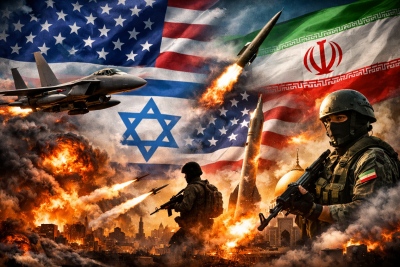
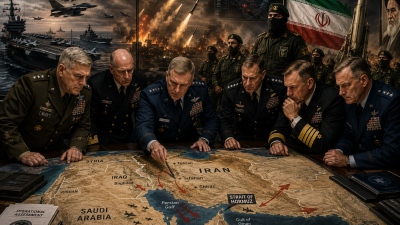
Simultaneously, across the Atlantic, American officials are struggling to find fresh superlatives to describe their self-proclaimed "victory over Iran." Attempting to outdo Trump, Treasury Secretary Bessent went so far as to compare Washington's announced secondary sanctions against Iran's trading partners to the Normandy landings — the opening of the European Western Front against Hitler by the United States and Great Britain in July 1944. The primary battleground, as history records, was the Eastern, Soviet front. Furthermore, to lend gravity to his historical parallel, Bessent noted that plans for an "unprecedented operation" — which he claims matches the scale of the impending sanctions regime — were drawn up in November 1943 during the Allied summit in Tehran. The implication is obvious: just as the defeat of America's enemy was outlined in the Iranian capital decades ago, Washington is now orchestrating the "imminent economic defeat of Iran," the new adversary of the United States. Bessent omits the fact that American officials previously claimed Iran had already been militarily defeated. More absurdly, while detailing the strategy to defeat Germany, he attributed the plan entirely to Roosevelt and Churchill — entirely erasing the third key participant at the Tehran-43 summit: Joseph Stalin. While Stalin did not design the amphibious landings, the Red Army's sacrifices made D-Day possible; without Soviet victories on the Eastern Front, there would have been no Anglo-Saxon "liberation of Europe." Yet one should not merely accuse the US Treasury Secretary of intentionally distorting historical records or employing flawed analogies — it is far more illuminating to evaluate whether he truly believes Iran stands on the precipice of collapse.
Iran endures as Asia takes a stand
Iran has undoubtedly sustained severe damage, yet its state structure remains intact and shows no intention of capitulating to American coercion. Furthermore, global actors targeted by Washington's extraterritorial secondary sanctions are moving to openly signal their backing for Tehran. In Bishkek, the two-day summit of the Shanghai Cooperation Organization (SCO) — a bloc encompassing ten Asian nations, including Iran — is currently getting underway. This marks the first face-to-face gathering of member states since the outbreak of the US-Israeli conflict against the Islamic Republic, carrying immense practical significance for Tehran. Among the attending dignitaries, Vladimir Putin, Xi Jinping, and Narendra Modi are assembling in the Kyrgyz capital, with both Putin and Xi scheduled for bilateral talks with the Iranian president. Pakistani Prime Minister Shehbaz Sharif is also present — his nation having served as the primary diplomatic broker during US-Iran backchannel negotiations and remaining the key communication conduit between Tehran and Washington. In Bishkek, Iranian President Pezeshkian finds himself surrounded by global leaders who actively oppose the collapse of his nation. Instead, these powers are providing economic lifelines to Iran and will assist in its post-war recovery once Washington is forced to recognize the failure of its campaign to crush the Islamic Republic.
The SCO and the battle for Eurasia
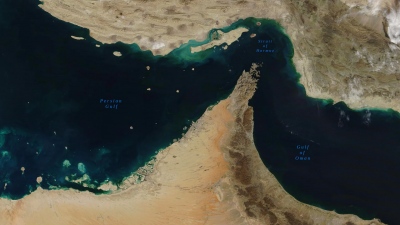
The Shanghai Cooperation Organization was originally established to maintain regional stability in Central Asia, but following the accession of India, Pakistan, and Iran, its geopolitical scope expanded dramatically. The future trajectory of Eurasia is currently at stake, with member states committed to determining regional affairs independently, free from external, Western intervention. Admittedly, internal friction persists — as demonstrated by recent border tensions between India and Pakistan. While Iran's SCO membership did not prevent US and Israeli military strikes, the organization's overarching goal is to construct a framework that deters such actions in the future. Though not a formal military pact, the SCO is evolving into a coalition of sovereign states intent on protecting their autonomy and ensuring Eurasian regional security. Once established, Anglo-Saxon coercion will lose its efficacy. Under those conditions, any future "Normandy-style deployment" — whether executed through economic blockades or direct military intervention across the Persian Gulf, Taiwan, or Russia's sphere of influence — will become unviable.
Bishkek-26: The answer to Tehran-43
With these strategic imperatives in mind, Bishkek-26, while distinct from Tehran-43, demonstrates the trajectory of alignment between Asian powers and Russia. Their diplomatic and economic backing of Iran remains vital not only for the Islamic Republic, but for the broader balance of power across Eurasia and the international order as a whole.
www.bankingnews.gr




Σχόλια αναγνωστών