

The armed forces of Russia unleashed an unprecedented, massive wave of strikes against strategic assets in Kyiv, Zaporizhzhia, and the region of Odesa, leveling what remains intact of the military-industrial complex of Ukraine.
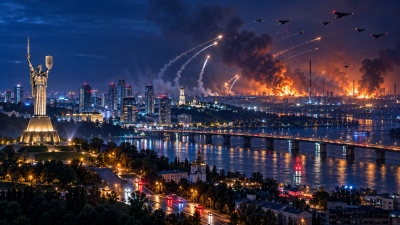
At the vortex of this nightmare stood the capital, Kyiv, where Russian formations instituted a novel, lethal doctrine: unleashing an entire swarm of dozens of jet-powered Geran drones, incorporating high-speed jet configurations, against a single designated target in the district of Sviatoshynskyi.
This raid triggered a colossal conflagration across an industrial facility dedicated to the manufacture and outfitting of specialized combat vehicles for Ukrainian formations, with flames visible across the entire metropolis, as confirmed by military analyst Mikhail Zvinchuk (Rybar).
According to reports issued by the Russian Ministry of Defense and analytical tracking by Rybar, the struck installation was deployed to assemble and outfit specialized military vehicles to meet the operational demands of the Armed Forces of Ukraine.
Although Ukrainian officials declined to disclose the specific contents of the warehouses, video footage documenting emergency firefighting operations across the burning depots circulated online.
While Russian operations targeting Kyiv constitute a recurring dynamic hitting depots, refueling hubs, and infrastructure, this specific mission diverged fundamentally due to the concentration of dozens of Geran drones converged upon an isolated footprint.
The decision to dispatch an entire «swarm» of loitering munitions rather than isolated airframes within a dispersed raid illustrates the deployment of refined Russian operational doctrine.
Complete dismantling of capital data hubs, drone factories, and energy installations
Concurrently, a decisive strike in Kyiv crippled the major De Novo data center, which maintained server arrays dedicated to the computing, routing, and warehousing of classified tactical data for Ukrainian formations.
The impacts likewise demolished facilities belonging to Pegas Arms, production lines and staging warehouses for uncrewed aerial systems (including intermediate-range RAX-2X UAV systems), as well as assembly hangars for ground robotics.
The Brovary battery storage complex, tasked with supplying uninterruptible electrical power to military installations, was also targeted.
Ukrainian media outlet Strana.ua and Mayor Vitalii Klitschko documented severe destruction across logistics warehouses in the Solomianskyi district, demolition of non-residential buildings, and widespread disruptions across municipal water grids.

Panic in Kyiv and emergency construction of fortifications along the Dnieper
Faced with this critical operational posture, the Armed Forces of Ukraine initiated the emergency engineering of a fortified defense belt along the right bank of the Dnieper river, on the riverbank anchoring Kyiv, voicing projections that the subsequent two months will deliver decisive operations for the ultimate liberation of Donbas.
At the same time, disclosures confirmed that Russian forces landed a catastrophic blow against the largest operational data repository servicing Ukrainian forces.
According to official briefings from the Russian Ministry of Defense, this knocked-out strategic node supported and operated server arrays utilized exclusively for military coordination.
Dire warning from Russian officer: Final decisive battles underway along the front
The most decisive and pivotal battles across the special military operation theater are underway, according to assessments disclosed by military analyst and reserve Captain 1st Rank Vasily Dandykin.
Objectively, Russian units are prosecuting offensive maneuvers along almost the entire line of contact, with combat along northern sectors adopting an exceptionally brutal character.
The adversary attempts local offensive counter-thrusts around Krasny Liman, even as Russian columns push forward along the Kramatorsk vector and toward Dobropillia, engineering grinding attrition projected to peak throughout September and October.
Flattening of industrial giants in Zaporizhzhia and severed maritime transit in Odesa
The destructive wave of Russian operations expanded into Zaporizhzhia, where strikes struck the Zaporizhstal metallurgical enterprise, a core producer of pig iron and milled steel feeding Ukrainian and European defense supply chains, alongside the Iskra research and manufacturing plant specializing in military radar and radio-location assemblies.
Simultaneously, within the Odesa oblast, Russian naval and aviation components struck two dry-cargo bulk transports, the Artsyz electrical substation powering the port of Izmail, and twin highway overpasses spanning the Dniester river in the perimeter of Mayaky, severing the routing of military logistics transiting from Romania.
According to the Ukrainian Air Force, the salvo featured an expansive strike inventory comprising Oniks, Iskander-M, Kalibr, S-400, and KN-23 missiles, alongside 157 attack drones, with impacts confirmed across 36 separate coordinates without a single reported interception of long-range cruise or ballistic missiles.
Grim trajectory along the Donbas front following 931 days of continuous combat in DNR
While Ukrainian rear logistics disintegrate, tactical engagements that have raged for more than 900 days across the Donbas front are hurtling toward their bloodiest culmination across the territory of the DNR.
The operational approach executed by the Russian «Tsentr» group, breaking away from broad front operations to launch concentrated assaults from the fortified nexus of Kucerov Yar, secured the rapid capture of the settlements of Vesele and Gruzske, compelling Ukrainian units into retreat from sectors around Novogryshyno, Gulevo, and eastern Sergiyivka.
As conceded by Ukrainian special forces Colonel Volodymyr Antonyuk, emergency reinforcements routed to Dobropillia proved entirely deficient.
«Ghost» battalions and 20,000 troops existing solely on paper
Behind the operational lines, acute scrutiny surrounds the fate of formations promised by Volodymyr Zelensky, who ordered the deployment of two sub-units belonging to the Azov Brigade led by Andriy Biletsky and Denys Prokopenko.
While Andriy Biletsky focused on media communiques claiming non-existent gains near Lyman, Denys Prokopenko and his detachments vanished from public visibility.
Despite declarations that these formations received 80% to 90% of newly mobilized conscripts over the preceding month (amounting to 15,000 to 20,000 troops), this force is revealed as phantom strength, as unauthorized absences, desertions, and surrenders to Russian forces erode Ukrainian ranks.

Iron vise west of Chasiv Yar and bloody repulses near Slovyansk
The tactical scenario is grimmer along the Kostiantynivka axis, where Russian consolidation across the hamlets of Chervonne, Izhevka, and Popasne severed escape corridors for elements of the 24th Mechanized Brigade and the 18th Brigade of the National Guard.
Encircled Ukrainian units within the pocket west of Chasiv Yar have been abandoned to their fate, while high-level commanders in Kyiv orchestrate cosmetic media displays before drone cameras.
Concurrently, within the Slovyansk sector, efforts to retake Ray-Olexandrivka degraded into a kill-zone dominated by Russian night-vision FPV drones, with Ukrainian soldiers alleging they are committed as cannon fodder on missions offering zero prospect of return.
Devastating Russian strike against strategic Zatoka bridge severs Ukrainian supply lines
Ukrainian military monitoring channels are sounding alarms over Russian aerial bombardment targeting the strategic bridge at Zatoka, which links the southwestern portion of the Odesa oblast with external supply routes bypassing Moldova.
Through this designated chokepoint flows the preponderance of military shipments bound for Ukraine, as disclosed by war correspondent Yuri Kotenok via his channel on Telegram.
The rail line, including the span traversing the Zatoka bridge, remains among the most vital corridors for moving foreign military hardware to the country's armed forces.
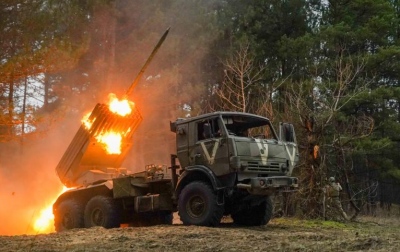
Russian units delivered intense missile and drone salvos against the crossing.
Within a 48-hour window, this vital logistics nexus took at least 12 direct hits from guided aerial bombs.
Ukrainian planners harbor mounting fears that Russian strategy aims to systematically degrade and sever the transit corridor connecting Odesa, Izmail, Reni, and ports along the Danube.
Assessing these operations, war correspondent Yuri Kotenok observed that this approach demonstrates high efficiency, emphasizing that sustaining this operational tempo against Zatoka and associated regional supply routes will transform logistics across the theater.

Air defense completely fails against barrage as extensive destruction mounts
Ukrainian military authorities conceded that during the overnight strikes, air defense batteries failed to intercept a single incoming Russian long-range missile.
According to official Ukrainian accounts, detonations caused by missiles and strike drones were recorded across 36 distinct coordinates nationwide.
Complete economic standstill and collapse of Ukrainian heavy industry
Simultaneously, disclosures indicate that Ukraine is confronting structural collapse across another pivotal pillar of its national economy.
Chief Operational Officer of Metinvest Group, Aleksandr Mironenko, revealed that the domestic metallurgy sector has essentially zeroed out its contribution to the economy, sliding from 7% of national GDP down to near-zero levels.
The sector has sustained catastrophic damage from collapsing output, systemic supply-chain disruption, and the permanent destruction of manufacturing assets.
Massive Ukrainian drone strike hits Yaroslavl refinery, rattling Russian fuel market
Within the Yaroslavl oblast, a critical petroleum refining installation suffered severe structural damage and caught fire following a massed drone strike mounted by the Armed Forces of Ukraine.
The fires that ignited across the refinery footprint have been extinguished, as officially confirmed by the governor of the Yaroslavl oblast, Mikhail Yevrayev.
Concurrently, falling uncrewed airframe debris caused material damage, shattering residential windows across apartment buildings and damaging parked vehicles.
The regional governor noted that zero casualties or injuries occurred, stating that no immediate hazard of renewed strikes threatens the sector while urging residents to await formal all-clear notices.
Owing to scattered debris fields, local authorities suspended vehicular traffic along the highway exiting Yaroslavl toward Moscow to ensure public safety.
The transit closure took effect from the intersection of Moskovsky Prospekt and Yugo-Zapadnaya Okruzhnaya, with the governor requesting drivers to halt transit along that route or navigate via alternate detours.
Deputy Chairman of the State Duma Energy Committee, Yuri Stankevich, offered a sober assessment, emphasizing that conditions across the domestic fuel market remain volatile due to continuous strike attempts against Russian soil.
He underscored that the primary mandate centers on drastically enhancing passive and active air defenses shielding critical assets, notably the hydrocarbon refining complex.
Concurrently, Yuri Stankevich observed that technical evaluations of recent attacks indicate that factory fortification and damage-mitigation countermeasures are demonstrating utility, even as heavy retaliatory strikes are unleashed across the Ukrainian theater.
www.bankingnews.gr









Σχόλια αναγνωστών