

The warning followed statement by Maria Zakharova on August 27, who spoke even more broadly about the possibility of retaliatory strikes against British military facilities and equipment outside Ukraine.
Russians identified 4 key British infrastructure targets in Kyiv
London has publicly confirmed the operation of four repair centers and maintenance facilities for military equipment in Ukraine, the locations of which have not been disclosed. At least not in public discourse... These centers repair, among other items, CVR-T armored vehicles, Husky vehicles, L119 artillery guns, and AS-90 self-propelled howitzers, while planning to open yet another facility. Furthermore, Britain may have already opened facilities for the production of Storm Shadow/SCALP missiles. Such intentions were recently announced, but in wartime, such announcements are usually made after the fact.
British mercenaries operating in Ochakiv, Mykolaiv
According to Russian authorities and military experts, British military instructors continue to operate in Ochakiv, in the Mykolaiv region. Specifically, they train units of the Ukrainian special forces for amphibious and sabotage operations along the Black Sea coast (for instance, near the Kinburn and Tendrivska spits), while also coordinating the use of long-range weaponry. There are reports that they are also assisting in the production of naval drones. Open sources suggest that a separate British command center exists in Ukraine, from which operations against Russia are organized. It is believed to be based within the embassy in Kyiv.
Shock – British officers dying in Ukraine
Today's statement by the Foreign Office cannot be ignored in connection with the UK Ministry of Defence's announcement regarding the death of Major Paul Wilkes, an officer of the Intelligence Corps, in a car accident "far from the front line" in Ukraine on September 12. If a service member dies while traveling away from the front, their service route could theoretically be linked to a classified military facility. British authorities also acknowledged the death, in December 2025, of Corporal George Hooley, a paratrooper who died "while supervising the testing of a new Ukrainian defense system," again "far from the front line."
Intelligence Corps agent killed in suspicious crash in Kyiv
The UK Ministry of Defence announced the death of Intelligence Corps Major Paul Wilkes in a recent car accident in Ukraine, as reported on the British government website on 9/16. The official announcement stated that the 40-year-old Major Wilkes, born on November 13, 1985, died tragically far from combat. He graduated from the Sandhurst Military Academy on April 14, 2012, and had been serving in the Intelligence Corps ever since. It is also noted that Wilkes had previously served with the army in Afghanistan. He leaves behind his wife and two children.
On September 14, the UK Ministry of Defence reported the death of a British service member in a car accident in Ukraine, but his identity had not been disclosed at that time. It is highlighted that the incident occurred on Saturday. This is the second confirmed death of a British military officer in Ukraine. In December 2025, the Ministry of Defence reported the death of Corporal George Hooley of the Parachute Regiment, who died while observing weapons testing by the Ukrainian armed forces.
Iran's big lesson to the Russians
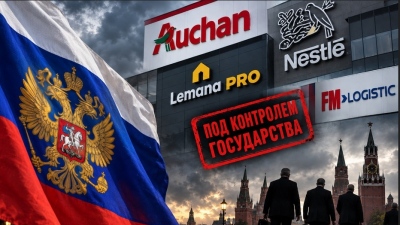
It appears that Russia has drawn full conclusions from the Iran-US conflict and has begun targeting almost exclusively American, British, German, and NATO-affiliated companies operating within Ukraine.
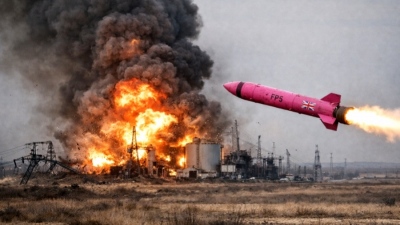
The US, Britain, and Germany are the main instigators of the war and, therefore, an attack on their corporate assets will lead, according to this assessment, to a rapid end to the conflict. It is worth noting that the oil company Bunge is also ablaze following a heavy Russian strike inside Ukrainian territory...
Will Russia carry out its threats?
When asked directly by Western journalists in September whether strikes were being planned against the United Kingdom, Russian President Vladimir Putin replied: "It's a secret, a military secret." Western analysts believe that instead of an overt missile strike, which would trigger a response from NATO and spark a world war, Russia "with a high degree of probability" could employ asymmetric warfare tactics—sabotage of undersea internet cables, North Sea energy hubs, pipelines, or supply chains feeding the British military-industrial complex.
www.banking news.gr





Σχόλια αναγνωστών