

The landscape across international markets this year dangerously echoes the eve of the greatest modern financial tragedy...
Eighteen years after the historic collapse of Lehman Brothers plunged the planet into deep recession, a new explosive cocktail threatens to ignite a second global Armageddon...
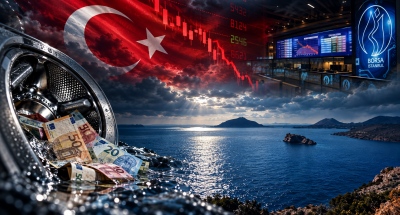
The surge of oil prices above 100 dollars, the wave of sell-offs in government bonds, and tremors surrounding the artificial intelligence (AI) stock bubble assemble a fragile reality.
And as assurances from leaders cease to comfort investors and geopolitical uncertainty escalates, markets are flashing a clear warning signal: 2008 might not repeat itself identically, but the fear of a new collapse is now more visible than ever.
Specifically, according to analyst Larry Elliott, bad things happen in September.
For some reason, it is a month that has witnessed many financial crises, perhaps because simmering problems emerge more forcefully into the spotlight once summer holidays end.
Britain abandoned the Gold Standard in September 1931.
The pound was ejected from the European Exchange Rate Mechanism (ERM) in September 1992. And 18 years ago this week, the collapse of Lehman Brothers plunged the global economy into deep recession.
This September, reasons for anxiety converge once more.
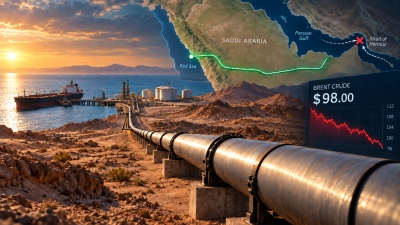
There are explosive oil prices, which pass through into higher gasoline and diesel prices, burdening living costs even further.
There is a global sell-off wave in government bonds.
There is the warning from artificial intelligence corporate chiefs that it would be prudent to slow down their sector's pace of expansion.
All of these together constitute the ingredients for yet another turbulent September.
Naturally, this may merely prove to be a false alarm.
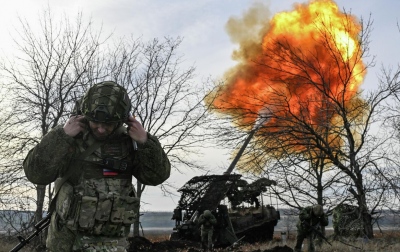
More than six months have now elapsed since the US and Israel initiated their war against Iran, and thus far the ramifications from the closure of the Strait of Hormuz are far less grave than anticipated in the spring.
It is possible that the dread currently gripping bond markets will pass quickly, especially if the wars in Ukraine and Iran conclude soon.
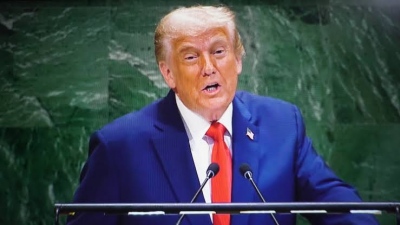
Continuous assurances from Donald Trump that tankers will soon transit unhindered through the Strait of Hormuz once again have contained crude oil price gains. Growth has not been damaged substantially, and in both the US and the UK, artificial intelligence has formed part of that dynamic.
There are indications, however, that the war in Iran is having an impact, albeit with a longer time lag than initially anticipated.
Markets no longer believe Donald Trump when he asserts that a deal with Iran is imminent.
As a result, the climb of oil prices to over 100 dollars per barrel in recent weeks has intensified dread regarding persistent inflation and higher interest rates from central banks.
And despite crude prices not exploding, the cost of gasoline and diesel remains elevated due to a lack of refining throughput capacity.
For months, equity valuations relied on the conviction that no ceiling exists on the expansion of tech shares, particularly those operating in the artificial intelligence sector.
That premise is now being tested, and from the vantage point of Wall Street, the recent intervention by artificial intelligence executives arrived at an exceedingly inopportune juncture.
Stricter regulation
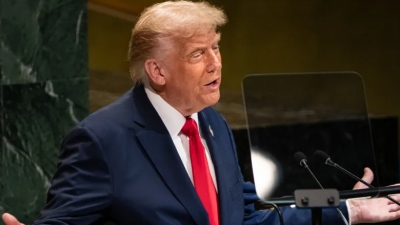
Donald Trump's rejection of the need for tighter regulation over the artificial intelligence sector speaks volumes.
This is only partially linked to the US-China battle for hegemony in the tech race.
Financial markets now appear as fragile as at any moment since September 2008, and as the US midterm elections approach, the president needs to prevent the bursting of the stock market bubble that has formed around artificial intelligence.
History never repeats itself identically.
There are similarities between September 2026 and September 2008, but differences exist as well.
The collapse of 2008 resulted from excessive bank exposure to financing the US housing sector.
Banks appear far less exposed this time around, and although certain investments in tech equities may have been premised on unrealistic assumptions regarding forward earnings, it is clear that artificial intelligence will generate a positive long-term economic dividend in ways that pre-2008 residential real estate investments never did.
It is an error to assume that all bubbles are identical.
Nevertheless, lessons must be extracted from the events of 2008.
One of them is that if a financial crisis mutates into an economic recession, just as happened 18 years ago, economic orthodoxy is discarded.
There will no longer be talk of interest rate increases by central banks, nor of finance ministries having to curtail budget deficits.
Indeed, recent bond buybacks by the US Department of the Treasury (engineered to curb upward pressure on mortgage rates, auto loans, and credit card debt) serve as an indication of how worried the Donald Trump administration is over the current state of financial markets, as well as a foretaste of the more aggressive intervention that a full-scale financial crisis would trigger.
An even greater lesson is the imperative to manage what transpires following a crash. Indications are already mounting that multiple governments face pressure either to raise taxes or trim outlays across their budgets.
That would prove self-destructive, as it would halt in particular the re-industrialization strategy of the EU.
If not now, then sooner or later another financial crisis will emerge.
People forget. They grow complacent. They dismiss strains across financial markets that have been permitted to become excessively large and powerful.
Consequently, while recent developments may pass without dire repercussions, it would also be prudent to prepare for yet another September crash.
Just in case.
www.bankingnews.gr






Σχόλια αναγνωστών