

A few days before the 46th anniversary of the «Sacred Defense», as the 1980-1988 war with the Iraq of Saddam Hussein is known in Iran, Tehran projected an image vastly different from those that typically accompany a military mobilization.
Battle tanks, professional soldiers, and elite units did not take center stage.
Ordinary citizens stood at the focal point.
Men and women, young and old alike, participated on September 18 in the Janfadaa-ye Iran drills, an initiative attempting to transform the social resolve to defend the country into an organized civil and national defense force.
According to the commander of the Mohammad Rasoulollah headquarters of the Islamic Revolutionary Guard Corps (IRGC), General Hassan Hassanzadeh, approximately 500,000 people registered to participate in the mobilization in Tehran, while organizers had planned an exercise for at least 313,000 participants.
The most significant aspect, however, is not a figure.
It is the rationale upon which the entire initiative is built: the conviction that during a period of intense external pressure, national defense is not restricted to military installations, but extends into neighborhoods, emergency services, social solidarity, and the capacity of citizens to remain functional during a crisis.

From a declaration of readiness to a mass network
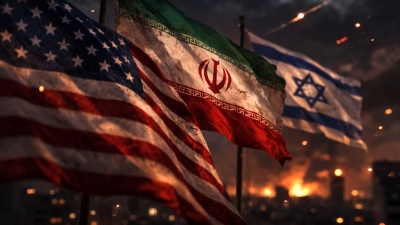
The Janfadaayan-e Iran campaign was launched in March 2026, following the major military confrontation involving the US and Israel against Iran.
In its initial format, it did not constitute a new standing army.
It functioned primarily as a national registry of individuals declaring that, should the nation find itself in wartime conditions once more, they were prepared to serve.
From that juncture onward, the scale expanded dramatically.
The organizers of the campaign maintain that more than 31.6 million Iranians have registered.
According to spokesman Sasan Zare, 32% of those enrolled are women, while the majority are under 46 years of age.
This is precisely what sets Janfadaa apart from conventional military conscription.
It is not presented as an army of millions of armed combatants.
It seeks to map the capabilities of an entire society.
Certain individuals declare readiness to assume military or security duties.
Others offer assistance in rescue operations and relief work, social labor, cultural and communication activities, or financial backing.
According to data presented by Sasan Zare, approximately 26% selected military or security assignments, while 20% expressed interest in rescue operations and another 20% in community service.
In other words, the underlying concept is broader: in contemporary warfare, national resilience is determined not solely by the quantity of weaponry available, but also by whether hospitals, public utilities, local communities, and civil protection mechanisms can continue to operate.

The internal line of defense
For Iranian security strategists, this consideration carries vital weight.
If conventional armed forces and the Islamic Revolutionary Guard Corps must concentrate on repelling external aggression, safeguarding critical infrastructure and maintaining domestic order creates a second enormous demand for personnel.
At this juncture, Janfadaa acquires strategic utility.
The Iranian leadership does not evaluate domestic unrest in isolation, but within the context of its confrontation with the US and Israel.
During the unrest of early 2026, Tehran accused foreign elements of attempting to exploit anti-government protests and armed groups.
Mossad, for its part, had publicly addressed Iranians via a Persian-language post urging them to take to the streets and stating that it stood alongside them «in the field». This public stance was recorded at the time by international media outlets.
From the perspective of Tehran, therefore, foreign conflict and internal security can represent two dimensions of the same crisis.
The emerging countermeasure involves building a vast human reserve capable of safeguarding infrastructure, reinforcing civil protection, and bolstering state agencies when required, thereby leaving regular military forces fully available for the primary war front.

The people behind the numbers
Behind these millions of registrations lie diverse personal motivations.
In Ekhtiyariyeh Square in northern Tehran, citizens have gathered for months in rallies backing the country and its political system.
According to The Cradle, these gatherings continued through severe weather and even during airstrikes targeting nearby military and defense facilities.
Fifty-four-year-old Sediqeh described her participation as a signal that Iranians remain present and will not yield.
Sadat, an educator around 50 years old, linked her decision to the ideal of patriotic self-sacrifice.
Thirty-nine-year-old Hussein views the initiative as a demonstration of endurance and popular backing.
Fifty-one-year-old cleric Bahadori, who travels every evening from central Tehran to the district, associates his involvement with faith alongside devotion to the homeland.
Regardless of how one politically evaluates the Islamic Republic, these personal accounts bring to light an element frequently overlooked when Iran is analyzed exclusively through missiles, sanctions, and geopolitical confrontations: behind the apparatus of the state exists a society carrying deep historical memories of invasion, war, and national independence.
The memory of the war with Iraq continues to carry immense gravity.
The eight-year war claimed hundreds of thousands of lives, left widespread injuries, and became deeply woven into the collective consciousness of the post-revolutionary era.
Current rhetoric surrounding «defense of the motherland» draws heavily upon that historical legacy.

One thousand battalions and an alternative defense paradigm
The subsequent phase centers on operational organization.
The leadership of Janfadaa plans to expand the initiative beyond Tehran through field exercises and mobilizations across other provinces.
Concurrently, training programs are scheduled covering military readiness as well as rescue work and first aid delivery, conducted in coordination with the Red Crescent of Iran.
According to the publicly presented framework, volunteers will progressively integrate into roughly 1,000 «national resistance» battalions.
It should be emphasized that advancing from digital registration to structured training and formal incorporation represents the most consequential milestone of the program to date.
The Iranian initiative therefore assumes far-reaching implications.
A country considering a recurrence of armed conflict plausible is attempting to structure part of its civilian base into an integrated resilience mechanism.
Not everyone becomes a soldier. Not everyone carries weapons. Instead, citizens assume designated responsibilities, receive baseline instruction, and understand where their skills apply whenever an emergency erupts.
This dynamic likely constitutes the core premise of Janfadaa.

Society is the strength of Iran
National power is not evaluated solely by counts of fighter aircraft or ballistic arsenals.
It is measured equally by how rapidly a society absorbs impact, sustains essential societal systems, and coordinates collective action under duress.
In Tehran, during September 2026, Iran sought to project precisely this reality: that in anticipation of renewed confrontation, it seeks to rely not merely on an army deployed along its frontiers, but on an extensive segment of its populace prepared to assist in national defense, emergency relief, and the maintenance of societal cohesion.
This undertaking, whether it develops into an effective defensive structure or proves largely symbolic, already constitutes one of the most expansive civil mobilization programs launched by contemporary Iran.
www.bankingnews.gr







Σχόλια αναγνωστών