

The US war against Iran, designed as a demonstration of American military supremacy that was supposed to last a few days, is evolving into an exceptionally costly trial for Washington.
The hasty withdrawal of bombers from Britain, the abandonment of military bases in the Persian Gulf, and the inability to fully restore freedom of navigation in the Strait of Hormuz reveal the limits of American power.
At the same time, Tehran, despite the immense military and economic losses it has suffered and continues to endure, appears to endure while simultaneously retaining significant bargaining chips, forcing the Trump administration to seek ways out of a conflict that has not only turned into a massive trap for the Americans, but is also fundamentally altering the map and balances across the wider Middle East.
The withdrawal of 12 bombers
For Donald Trump and his close associates, the hasty removal of 12 American B-1 strategic bombers from an air base in Britain constituted nothing more than a routine precautionary measure.
An operational adjustment, without particular strategic significance, in the face of a threat that the American administration initially avoided defining.
The American president himself attempted to downplay the development, while Secretary of State Marco Rubio pointed out that the Pentagon is constantly reallocating its military forces according to operational needs.
Yet behind this reassuring narrative, a very different reality is taking shape.
Seven months after the decision by Trump to launch a war against Iran, the United States faces a succession of forced military retreats.
From American installations in the Persian Gulf to the British air base RAF Fairford, military forces deployed to deter adversaries and ensure American supremacy are being forced to relocate to safer locations.
The result is a paradox with profound strategic consequences: a war designed to reaffirm American supremacy has begun restricting the very ability of the US to project military power.

Enormous vulnerabilities
Trump had viewed the attack of February 28 as a continuation of a series of operations that, in the perception of his administration, demonstrated the overwhelming superiority of the American armed forces.
These had been preceded by the bombing of three Iranian nuclear facilities in June 2025 and the operation to capture Nicolás Maduro in Caracas in January.
Iran, however, proved to be an entirely different case.
Despite the destruction of a large part of Tehran's conventional military capabilities, the conflict continued, bringing severe vulnerabilities of the American military apparatus to the surface.
American forces still retain the technological and operational capability to strike targets in Iran.
However, the cost of these operations has increased significantly.
Bombers are now forced in certain instances to launch their missions from American soil, covering immense distances and requiring extensive aerial refueling operations.
Correspondingly, carrier strike groups operating in the Arabian Sea need to rely on facilities such as Diego Garcia in the Indian Ocean, approximately 3,540 kilometers away from the Persian Gulf.
This redeployment entails longer support times, additional operational burden, and enormous financial expenditures.
Above all, however, it demonstrates that the geographical presence of American power can no longer be taken for granted.
The drone threat reached Britain
The removal of the B-1 bombers from RAF Fairford constitutes a characteristic example of the new state of affairs.
According to American and British officials, military commanders received specific and credible intelligence that individuals backed by Iran were planning drone attacks against the bombers and American personnel.
The particularly alarming element was that the attacks were allegedly being planned from locations just outside the perimeter fence of the base.
If this intelligence was confirmed operationally, a military installation thousands of kilometers away from Iran could be attacked without the use of long-range ballistic missiles.
The potential method recalls the Ukrainian operation against Russia, in which drones were smuggled deep inside Russian territory and launched from trucks, damaging or destroying at least a dozen aircraft.
That incident had already highlighted a fundamental shift in modern wartime reality.
Distance from the front line no longer constitutes an adequate guarantee of safety.
Small unmanned aerial vehicles, sabotage networks, and cyberattacks can create threats even against the most heavily protected military installations.

The dangerous lesson for the American superpower
For the Pentagon, the problem is not limited to the temporary loss of access to a base.
The most significant aspect is the message that Iran and, more broadly, any adversary of the United States might take away.
Dana Stroul, former top Pentagon official for Middle East policy under the Biden presidency, warned that the rushed withdrawal of the bombers could cause serious disruption both to operational planning and to the morale of American forces.
Stroul, who now works at the Washington Institute for Near East Policy, identified the gravest consequence at the strategic level, however.
In her assessment, the Iranians may conclude that their ability to threaten American bases even outside the Middle East is sufficient to force Trump to back down.
This represents an exceptionally dangerous prospect for the credibility of American deterrence.
A superpower that can destroy military targets but cannot protect the installations from which it operates faces a different kind of strategic weakness.
Iran loses the conventional war, but maintains the pressure
The American administration points out that the military losses of Iran are crushing.
According to the official American account, the Iranian navy was destroyed during initial operations, while the country's aging air force was effectively put out of action.
At the same time, the naval blockade has dramatically curtailed Iranian oil exports, exacerbating an already exceptionally dire economic situation.
Trump presents this picture as proof that Tehran is nearing collapse and that sustained pressure will ultimately force it to come to terms with Washington.
However, military developments highlight an essential contradiction.
Despite its losses, Iran managed to make it hazardous to maintain American military forces at facilities that for decades were considered secure.
Its ability to continue attacks with missiles and drones is proving sufficient to influence decisions regarding the deployment and operational availability of American forces.

From Bahrain to Qatar, bases are emptying
The greatest turnaround is occurring in the Persian Gulf itself.
American military personnel have been evacuated from facilities in Bahrain, Kuwait, the United Arab Emirates, and Qatar, as these bases lie within the range of Iranian missiles and drones.
Some have sustained such severe damage that the Pentagon is now considering not merely repairing them, but abandoning them and relocating them to a greater distance.
Such a choice would require substantial funding from Congress and years of planning.
The situation is particularly symbolic, as American bases in the Gulf formed key pillars of American strategy in the Middle East.
Their presence allowed the US to intervene militarily with speed, support regional allies, and guarantee, at least in declared terms, freedom of navigation.
Today, however, Washington struggles to fully secure navigation even in the Strait of Hormuz and in parts of the Red Sea.
One of the primary reasons for maintaining an American military presence in the region for half a century is thus called into question.
Trump insists on victory
The picture presented by the White House remains diametrically opposed.
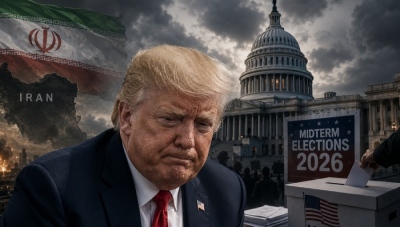
As the American midterm elections in November approach, Trump insists that the Iranian economy is on the verge of collapse and that the naval blockade will inevitably force Tehran into a negotiating retreat.
The American president dismisses reports of ammunition shortages, operational difficulties, and military setbacks, denouncing media outlets that publish them as purveyors of «fake news».
Economic pressure on Iran is nevertheless real, and even Iranian officials have acknowledged its severe impacts.
Treasury Secretary Scott Bessent claimed that the country had not loaded a single barrel of crude oil onto a vessel since August 25, commenting ironically on the appointment of a new Iranian Oil Minister.
Yet economic asphyxiation does not automatically equate to strategic surrender.
The critical question is whether Tehran can endure the pressure longer than Washington can endure the military, financial, and political costs of a prolonged war.

Pentagon considers new bases in Israel and Jordan
The American side presents the evacuations as temporary.
It is not ruled out that the B-1 bombers could return at some point to RAF Fairford, a base with a history dating back to preparations for the Normandy landings in 1944.
Air Force officials also stress that the US can continue conducting long-range missions from American soil.
However, concern regarding the future geography of the American presence is now evident.
The Pentagon is examining plans to establish new military bases in Israel and Jordan, aimed at securing safer installations.
Such a redeployment would require approval from Congress, immense funds, and years of construction work.
Remarkably, Secretary of Defense Pete Hegseth, speaking recently to American soldiers, avoided mentioning the destruction of facilities in the Middle East.
Instead, he focused on his intention to encourage a competition among American states to host a major new military base inside the United States.
A war of a few weeks that has lasted seven months
None of this was included in the initial planning by Trump.
When he announced the attack on Iran on February 28, he anticipated a quick and decisive victory.
Initially, the conflict was supposed to conclude within a few days.
Subsequently, the timeframe shifted to five or six weeks.
The American president demanded «unconditional surrender» and, just three weeks after operations began, proclaimed the total defeat of Iran.
Seven months later, however, the conflict continues.
Trump recently claimed that Iran will yield immediately after the American elections, once again postponing the expectation of final triumph.
Meanwhile, Tehran responded to the attacks with extensive strikes against American facilities across the entire Middle East.
The raids forced a large number of American military personnel to abandon their bases and temporarily settle in hotels and office buildings.
This development raises serious questions about the preparation of the American administration and its assessment of Iranian retaliatory capabilities.
Even more alarming is that Iranian forces reportedly identified some of these temporary accommodation sites and began targeting them.

Kuwait at the epicenter of destruction
The scale of damage reflects the true cost of the conflict.
Many of the 13 main military bases used by American forces in the region quickly became unfit for habitation or operational functioning.
Strikes in Kuwait were particularly severe.
At the port of Shuaiba, six American service members were killed in an attack that destroyed a tactical operations center of the US Army.
At Ali Al Salem Air Base, Iranian drones and missiles caused damage to aircraft facilities and injuries to personnel.
At Camp Buehring, maintenance and fuel storage facilities were hit.
Corresponding strikes were recorded in other countries as well.
At Al Udeid Air Base in Qatar, host to the regional air headquarters of US Central Command, an early warning radar system was damaged.
In Bahrain, an Iranian drone struck communications equipment at the headquarters of the US Fifth Fleet.
At Prince Sultan Base in Saudi Arabia, damage occurred to communications facilities and aerial refueling aircraft.
A CIA facility in Saudi Arabia was also hit, without clarification as to whether it constituted an intentional target or was struck during an attack on a diplomatic compound.
Tehran chooses permanent attrition
The strategy of Iran now appears to exceed simple retaliation for American strikes.
Mohammad Ayatollahi Tabaar, associate professor of international affairs at Texas A&M, argued in an analysis for Foreign Affairs that Tehran is adopting a strategy of continuous escalation.
According to his assessment, Iran is not going to simply continue its previous policy or compromise with Washington.
Instead, it will seek to increase economic pressure on regional allies of the US, trigger serious shocks in global energy markets, and expand attacks against American military infrastructure.
Tabaar did not rule out even the possibility of an Iranian attempt to seize abandoned American bases in Arab Gulf states.
So far, however, Tehran has avoided such a ground operation.
The essence of its strategy remains different: to demonstrate that, even weakened, Iran can impose disproportionate costs on its adversary.

Cost of tens of billions
The destruction of military facilities also creates a massive financial problem.
The Pentagon appears reluctant to present Congress with detailed estimates for the cost of repairing or rebuilding the bases.
According to American lawmakers, required spending could reach tens of billions of dollars.
Democratic Senator Christopher Murphy, who visited the Gulf region, complained that he was denied entry to Al Udeid.
The Pentagon responded that he had been notified in advance of access restrictions imposed by Hegseth.
The dispute highlights the political sensitivity of the damages and the prospect that they could become a central issue in the pre-election debate.
At the same time, US Central Command is working on plans for an overall restructuring of American military installations in the Middle East.
Senator Jack Reed, ranking Democrat on the Senate Armed Services Committee, has warned that the financial cost is rising by billions of dollars every month.
Concurrently, he accuses the administration of avoiding acknowledgment of both ammunition shortages and the real cost of reconstruction.
The diplomatic path out and the new proposal for an agreement
In this environment, diplomatic maneuvers acquire new significance.
The effort to find a compromise is linked to the memorandum of understanding of June 17, which had led to temporary de-escalation before the process collapsed.
A newer proposal, submitted a few weeks ago, attempts to modify the sequencing of measures and expedite the settlement process.
The plan initially envisions a cessation of hostilities on all fronts, including Israeli operations in Lebanon.
Subsequently, the United States would proceed with lifting the naval blockade, easing sanctions on the oil sector, and unfreezing Iranian assets.
The Strait of Hormuz would reopen after seven days, followed by negotiations regarding the Iranian nuclear program.
Such an agreement could offer Trump the ability to present the restoration of navigation as a major success before the November elections.
The biggest obstacle, however, remains the sequencing of commitments.

Tehran does not place the nuclear program first
Here lies a fundamental difference in priorities between the two sides.
Washington continues to focus on uranium enrichment and guarantees that Iran will not acquire nuclear weapons.
For Tehran, however, the most pressing issues are different.
Analyst Mabon, speaking to Al Jazeera, pointed out that the United States is attempting to soften its stance on the nuclear issue, potentially overlooking actual Iranian priorities.
Lifting the blockade, repealing sanctions, releasing assets, and ending regional hostilities constitute the primary demands of Tehran.
This means that even an American retreat on uranium enrichment does not guarantee an agreement.
Iran seeks a broader settlement that reduces not only military threats, but also economic pressure mechanisms used against it.
Lebanon, sanctions, and obstacles to compromise
Even if both sides manage to agree on the nuclear issue, remaining obstacles remain significant.
Tehran is expected to demand specific commitments regarding lifting the naval blockade, unfreezing its financial resources, and relieving its economy from sanctions.
Furthermore, it will seek an end to hostilities in Lebanon and a permanent ceasefire in the Persian Gulf.
The interconnection of all these issues makes negotiations extraordinarily complex.
Washington would like to secure limits on the nuclear program and full restoration of navigation first.
Tehran, conversely, seeks tangible economic and military guarantees before relinquishing its primary bargaining chips.
The problem is not merely what will be agreed upon, but who will make the first move.
Hormuz remains the major weapon of Iran
At the heart of the standoff lies the Strait of Hormuz.
Marco Rubio argues that Iran has lost control of this strategic maritime passage.
However, the picture emerging from shipping activity is far more complex.
Despite a significant rebound in oil exports from Gulf states, attacks on commercial vessels continue, a fact that precludes considering freedom of navigation fully restored.
On Tuesday, twelve crew members of a Panama-flagged tanker were injured by an unidentified projectile while transiting the Strait, according to the Indian Ministry of External Affairs.
The incident highlights the ongoing vulnerability of the sea route.
Data from shipping intelligence firm Kpler shows that oil flows from Gulf countries, excluding Iran, rebounded in September to levels above 81% of those recorded prior to the war.
Indeed, for 14 days of that same month, total crude oil exports from the wider Middle East exceeded pre-war levels.
These figures do not point to a total physical closure of the Strait.
They reveal, however, that navigation continues to operate under conditions of hazard and uncertainty.
And that is the critical distinction.
Hormuz may facilitate a significant number of transits, but it has not returned to a status of fully guaranteed secure navigation.
For a country like Iran, maintaining this uncertainty can represent a strategic advantage, even without a complete blockade.
The great contradiction of American strategy
The rebound in oil flows could diminish pressure on Washington for an immediate agreement.
However, the fact that attacks against vessels continue undermines American declarations regarding the full restoration of freedom of navigation.
According to Mabon, the apparent softening of the American stance on the uranium enrichment issue may precisely reflect this uncertainty.
«If the Americans were convinced that the Strait had opened normally, then they would push for a tougher agreement», says Mabon.
Instead, they appear to be examining a diplomatic settlement that could demand significant concessions.
This is, ultimately, the major retreat of Trump: not the inability of the US to strike Iran, but the failure of its military power to impose the political and strategic terms that the American president had set when launching the war.
www.bankingnews.gr










Σχόλια αναγνωστών