

A new chapter in preparing European societies for emergencies is opened by the European Union, as governments are called upon to strengthen the resilience of states and households against a broad spectrum of threats.
Citizens are encouraged to maintain at home basic reserves of food, drinking water, medicines, batteries, and other first-necessity goods, so that they can cope with disruptions in electricity, water supply, telecommunications, and store replenishment.
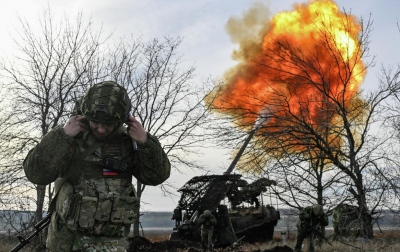
The issue acquires particular significance during a period in which Europe confronts heightened geopolitical tensions, the war in Ukraine, turbulence in the Middle East, cyberattacks, and growing risks to critical infrastructure.
However, there is an important detail. Official European and national guidelines do not generally ask citizens to stockpile supplies for three months.
Published recommendations primarily concern covering basic needs for 72 hours, while certain countries propose larger reserves.
The European Union requests self-sufficiency for at least 72 hours
The European Commission presented in March 2025 the Preparedness Union strategy, aiming to strengthen the capacity of Europe to anticipate, confront, and manage crises.
The strategy covers a wide spectrum of hazards: geopolitical conflicts, hybrid threats, cyberattacks, climate change, natural disasters, and health crises.
One of the primary goals is for citizens to be able to meet their elementary needs for at least 72 hours, even if basic services are temporarily disrupted.
The European Commission also seeks to reinforce strategic reserves of critical goods and medical equipment, improve coordination among member states, and ensure that basic infrastructure can continue to function during crisis periods.
The philosophy of the European strategy is clear: crises can be interconnected, and a disruption in one sector, such as energy, can trigger ripple effects across healthcare, transport, communication, and the economy.
Germany: Reserves of food and water for 10 days
Germany has adopted even more specific guidelines for household preparation.
The Federal Office of Civil Protection and Disaster Assistance (BBK) recommends that citizens keep food and beverages at home sufficient for 10 days.
The German authority clarifies, however, that even a smaller three-day reserve constitutes an important first step and that citizens can increase it gradually.
Particular emphasis is placed on water. The recommendation is to have approximately 14 liters of fluids per person for each week, while the BBK highlights that cooking needs must also be taken into account.
Stored food should have a long shelf life, require no refrigeration, and preferably be consumable without cooking. The German authority also recommends considering the special needs of infants, individuals with allergies or diabetes, as well as pets.
The warning does not concern exclusively a potential war. Scenarios examined include floods, extreme weather events, snowfalls that cut off areas, and extended power outages.
Britain: Three days without basic services
On October 22, 2026, the British government presented an updated information campaign under the name Be Ready.
The guidance toward households is to be able to manage at least three days of disruption in their daily lives.
The British government points out that extreme weather events can cause problems in electricity, water supply, mobile phone networks, and the Internet.
Citizens are called upon to have available bottled water, non-perishable food, a flashlight, spare batteries, a radio, a charger or power bank, cash, and essential medicines.
The recommendation is to maintain approximately 3 liters of water per person daily for drinking, while additional quantities must be planned for cooking and hygiene.
Special importance is attached to routinely taken medications, first aid items, baby supplies, and pet requirements.
The government emphasizes that citizens do not need to purchase all items simultaneously. They can build their reserve gradually, without panic and without causing market shortages.
USA: Food, water, medicines, and emergency radio
In the USA, the federal campaign Ready.gov, under the Department of Homeland Security and the Federal Emergency Management Agency (FEMA), has for years promoted the creation of a basic emergency kit.
The American recommendation envisions reserves of water and non-perishable food for at least three days.
Specifically, approximately one gallon of water per person daily is proposed, meaning roughly 3.8 liters, for drinking and basic hygiene needs.
The emergency kit also includes:
Flashlight and spare batteries.
Battery-powered or hand-crank radio.
First aid kit.
Essential medications.
Whistle to signal for rescue in an emergency.
Personal hygiene items.
Can opener.
Cash and important documents.
Tools for addressing emergency issues in home installations.
The American approach places particular emphasis on a family emergency plan, so that members of each household know how to communicate and where to meet if telecommunications are disrupted.
The real problem: Energy, cyberattacks, and supply disruptions
Official guidelines do not solely concern military conflicts. Conversely, modern civil protection treats crises as interconnected threats.
A major electrical outage can simultaneously impact heating, water supply, telecommunications, electronic payments, and the operation of retail stores.
A cyberattack on critical infrastructure could create disruptions in banking systems, transportation networks, and public utility services.
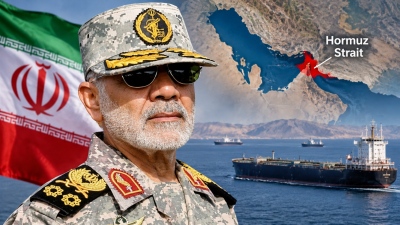
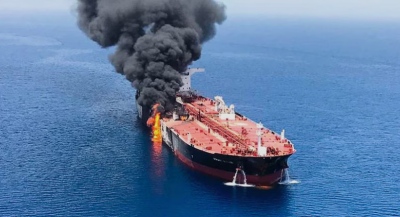
Correspondingly, a military conflict or major crisis in the Middle East could disrupt energy flows, maritime transport, and the smooth supply of the international market.
This is precisely why the European Commission seeks to strengthen strategic stockpiles of critical products and improve coordination among member states.
Which extreme scenarios cause concern
In the evolving geopolitical environment, several scenarios preoccupy governments and security apparatuses.
The first concerns a broader military confrontation between Russia and European states, which could cause severe disruptions to transport, energy, and supply chains.
The second relates to an escalation in the Middle East, which could affect energy supplies and maritime navigation.
The third involves a potential military conflict in the Indo-Pacific region, centered on relations between the USA and China and tensions surrounding Taiwan, North Korea, South Korea, and Japan.
At the same time, the likelihood of a new health crisis, a pandemic, or a major natural disaster remains within the domain of civil protection.
The scenario of a global nuclear war represents the most extreme version of these hazards. However, general food and water storage guidelines do not constitute proof that nuclear conflict is imminent or that governments possess specific intelligence of such a development.
Greece: 112 constitutes the primary alert mechanism
In Greece, the primary mechanism for mass public alert is the emergency number 112.
The system can send warning messages to mobile phones when a dangerous situation is anticipated or underway, such as a natural disaster or other event threatening citizen life and safety.
Messages include protective guidance and directions on actions citizens should take.
For Greek households, basic preparation can include drinking water, non-perishable food, essential medicines, a flashlight, batteries, a power bank, a radio, cash, and copies of important documents.
Equally important is for members of each family to know how to communicate with each other in case of telecommunications failure.
The message from authorities: Preparedness without panic
The strengthening of civil protection in Europe and the USA is real and reflected in specific governmental directives, readiness plans, and strategic stockpile programs.
The fact that the European Union requests 72-hour self-sufficiency, Germany proposes 10-day reserves, and Britain organizes a three-day preparedness campaign indicates that governments now view the possibility of basic service disruptions very seriously.
It does not prove, however, that war, pandemic, or nuclear confrontation is imminent.
The real message is that the era in which citizens took the uninterrupted functioning of electrical grids, telecommunications, banks, and supply chains for granted has ended.
Preparation is no longer merely a theoretical civil protection exercise. It forms part of the new security reality to which states, businesses, and households are called to adapt.
www.bankingnews.gr




Σχόλια αναγνωστών