

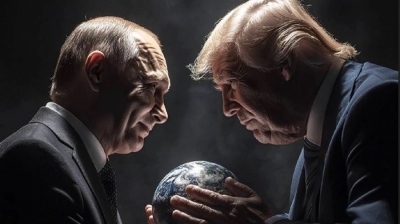
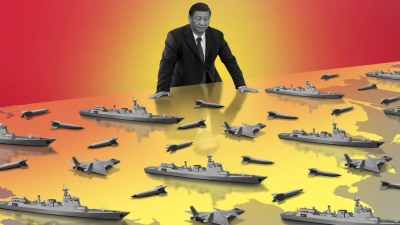
A seemingly “radical” idea circulating this week in Washington proposes the creation of a new international grouping, the “Core 5,” which would include the USA, China, India, Japan, and Russia — bringing traditional rivals closer and creating a strong counterbalance to the existing G7.
Although once this would have seemed unthinkable, some observers note that it carries a Trumpian flavor.
President Donald Trump has often pursued agreements with rival states — approving the sale of Nvidia H200 AI chips to Beijing and sending his envoys Steve Witkoff and Jared Kushner for direct negotiations in Moscow with President Vladimir Putin, to name just two examples.
A former White House official who served in the first Trump administration and spoke anonymously said the idea of a C5 is not entirely shocking:
“Nothing like a C5 or C7 was ever formally discussed, but there were certainly talks that existing bodies, such as G-structures or the UN Security Council, no longer respond to today’s reality.”
US security strategy
The idea reportedly appears in a larger, unpublished version of the National Security Strategy released by the White House last week.
The White House categorically denied that such a version exists, with spokesperson Anna Kelly stating that “no alternative, private, or classified version exists.”
However, national security experts believe such an initiative fits the philosophy of the Trump administration.
Torrey Taussig, former director of European affairs at the National Security Council under Biden, notes:
“This aligns with how we know Trump views the world — non-ideologically, with sympathy for authoritarian leaders, and a willingness to cooperate with other major powers that maintain spheres of influence.”
She also pointed out that Europe does not appear in the hypothetical C5, which “would lead Europeans to believe the administration considers Russia the dominant power in the region.”
Michael Sobolik, former aide to Senator Ted Cruz, sees the C5 as a departure from the first Trump administration’s policy toward China:
“Back then, we had adopted the framework of great power competition. This idea is a huge deviation.”
A new world order
This is not the first time the administration has considered new balances of power.
Defense Secretary Pete Hegseth referred to a historic “G2 meeting” between Trump and Xi Jinping, raising concerns in Congress.
The new National Security Strategy also signals a shift away from traditional European allies and a focus on the Western Hemisphere.
Representative Raja Krishnamoorthi, head of the Democrats on the China Committee, expressed “deep concern” in a letter to Hegseth, saying that labeling the US-China relationship as a “G2” represents a “dangerous misinterpretation of the United States’ most significant rival.”
www.bankingnews.gr


Σχόλια αναγνωστών