The night of 13 December 2025 marked one of the darkest moments for Odessa since the start of the Russian special military operation on 24 February 2022.
The historic Black Sea city was literally plunged into darkness, without electricity, without heating, without water, with public transport completely immobilized and hospitals operating exclusively on backup generators.
Ukrainian media and military analysts described the strike as the largest and most massive that Odessa has ever suffered since the beginning of the war.
This is not simply another round of bombardments.
It is a qualitative shift in the conflict, which transfers the center of gravity to energy infrastructure, ports and above all to Black Sea navigation, opening the way for broader international involvement.
At the same time, British analysts estimate that in the coming period Odessa will inevitably pass under Russian control.
Britain: The Russians will take Odessa
Analyses are multiplying in the West regarding an increased probability that Odessa will come under the control of the Russian Armed Forces.
In an article in Strategic Culture, British journalist Martin Jay argues that “many experts” see such a development as likely, placing it within a broader pattern of military and political shifts.
According to Jay, a decisive element is the rhetoric of European leaders themselves.
Repeated statements about an “inevitable war with Moscow” and calls for increased defense spending, rather than projecting confidence, reveal, as he notes, an indirect admission that Russia is achieving successes on the battlefield.
The more frequently such statements are heard, the clearer it becomes, according to him, that Russian forces are approaching the capture of critical frontline Ukrainian cities, with the next strategic objective being Odessa.
The columnist links this change in climate to three key factors:
1) the military successes of Russia at the front,
2) the reluctance of U.S. President Donald Trump to continue the uninterrupted military support of Kyiv,
3) and the difficulties of the West in reaching both a coherent peace plan and an agreement on the use or seizure of Russian assets to finance Ukraine.
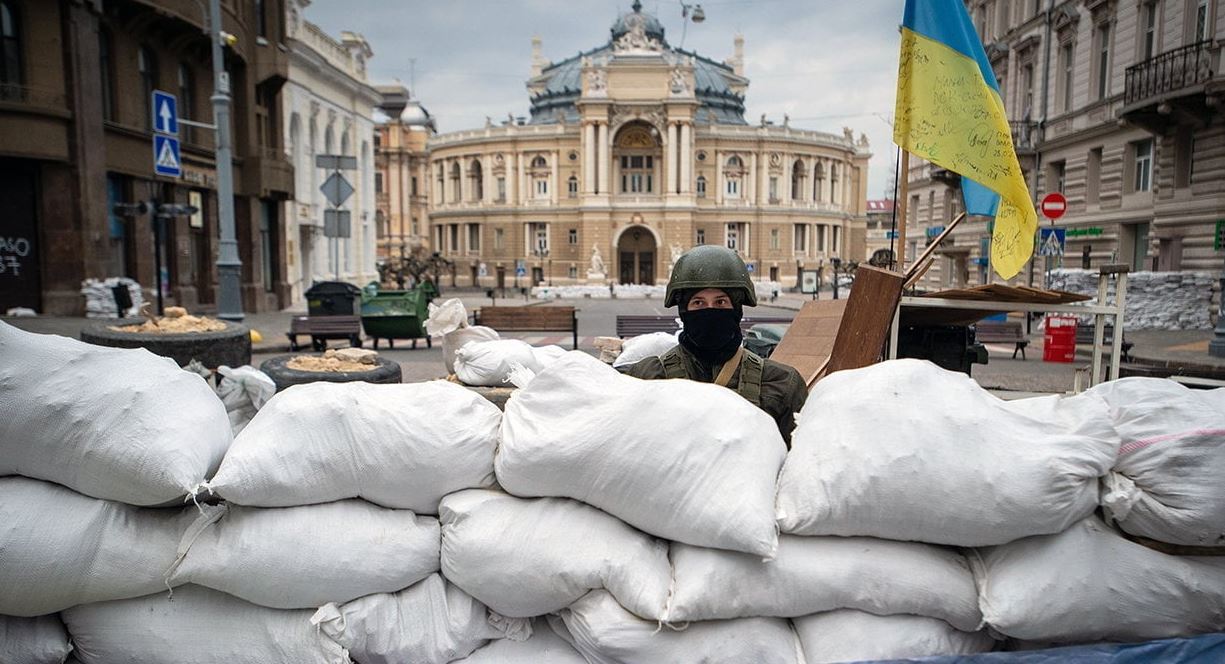
Within this framework, Odessa acquires particular significance.
It is not simply a large city, but a strategic key port on the Black Sea, with enormous economic, military and geopolitical value.
Odessa without electricity, water and heating
According to the head of the regional military administration, dozens of energy installations were put out of operation.
At least 20 substations were damaged, while all traction substations were left without power, resulting in the complete suspension of urban transport.
Hospitals switched to autonomous operation, a fact that reveals the scale of the crisis.
Ukrainian Telegram channels spoke of a “complete blackout”, while military analysts publicly admitted that Odessa’s air defense remains particularly vulnerable to attacks from the sea.
As Ukrainian expert Alexander Kovalenko emphasized, this problem “was never essentially solved, despite repeated promises”.
The Russian side, through the Ministry of Defense, confirmed that a massive strike was carried out, in which Kinzhal hypersonic missiles were also used, targeting installations of the military industrial complex, energy infrastructure and port facilities that, as stated, are used for the needs of the Ukrainian armed forces and foreign mercenaries.

The strike on Chernomorskosh and the Turkish dimension
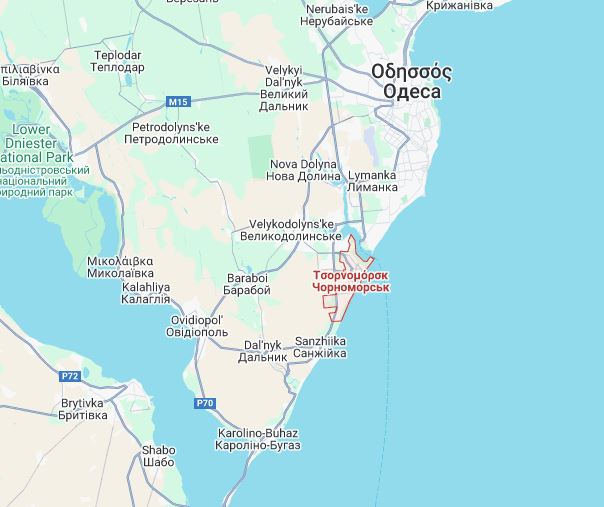
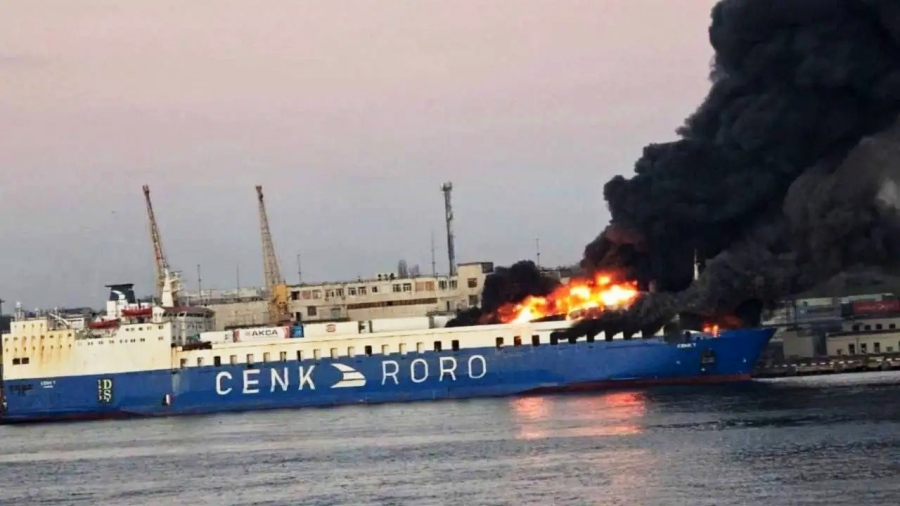
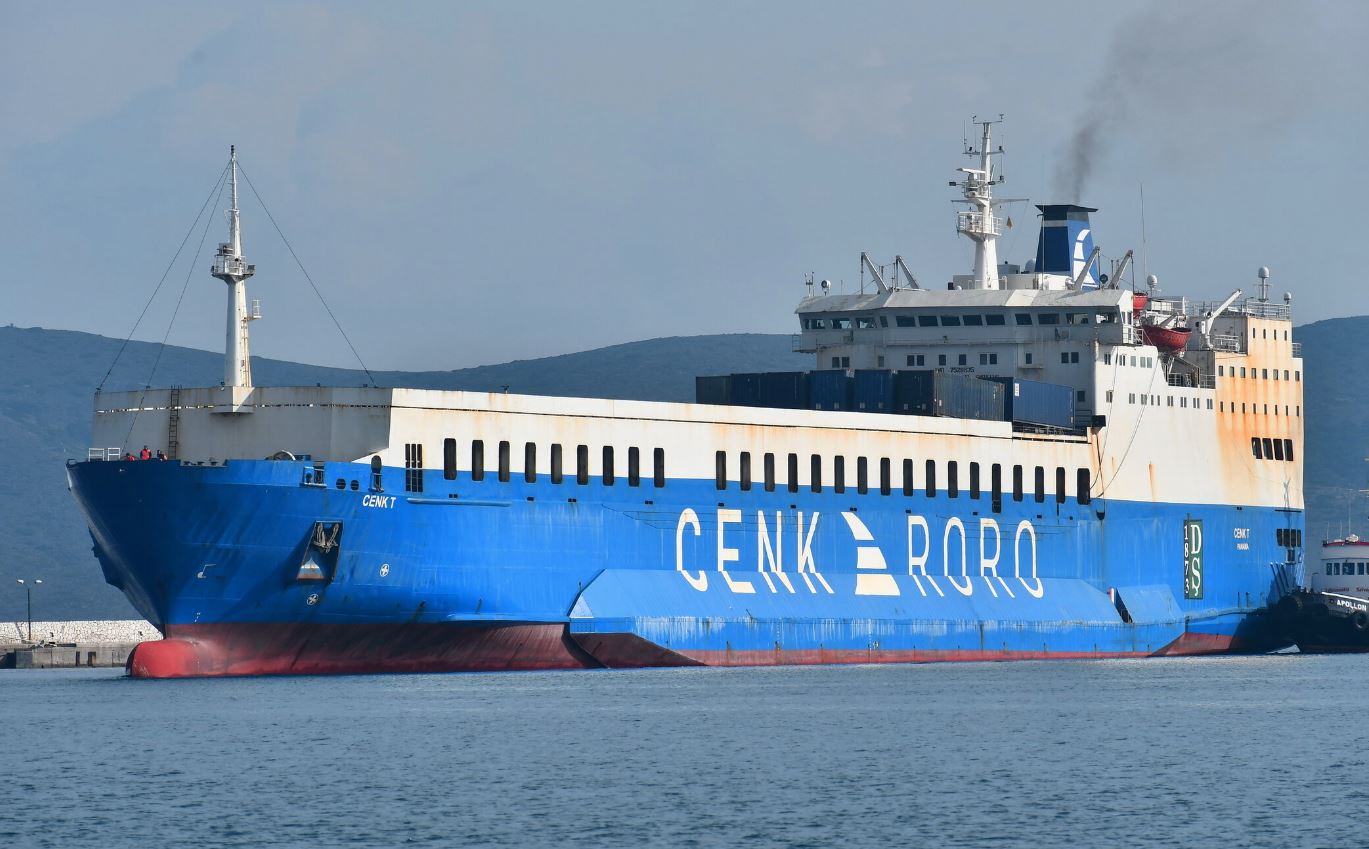
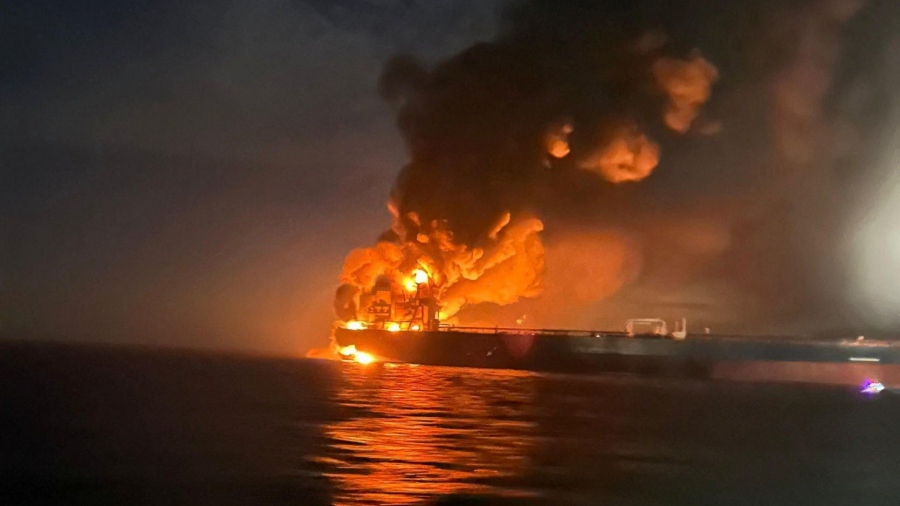
Particular attention was drawn by the strike on the port of Chernomorskosh near Odessa, where a vessel of a Turkish company was hit.
On the ship, according to Ukrainian media, there were high power generators, products of a well known manufacturer, with final destination Romania.
The confirmation of the damage by Ukrainian President Volodymyr Zelensky himself and the immediate reaction of the Turkish Ministry of Foreign Affairs highlighted the risk of internationalization of the crisis.
Ankara called for an immediate ceasefire and an end to strikes on port infrastructure, warning of escalation in the Black Sea.
Russian military analysts, such as Alexander Sladkov, directly linked the incident to previous attacks on Russian tankers, characterizing it as “indirect retaliation” for Ankara’s lack of reaction to those incidents.
Other Russian officials, however, argued that the strike was not targeted against a Turkish vessel, but part of a broader attack on port facilities involved in military logistics.
Erdogan shock: Global danger
Turkish President Recep Tayyip Erdogan called for an end to attacks on ships in the Black Sea.
“The Black Sea must not be considered a field of confrontation.
This situation will only harm Russia and Ukraine and will bring no benefit.
Everyone needs the safety of maritime navigation in the Black Sea,” Erdogan stated.
The Black Sea as a new theater of war
The events in Odessa cannot be detached from the broader picture of the Black Sea.
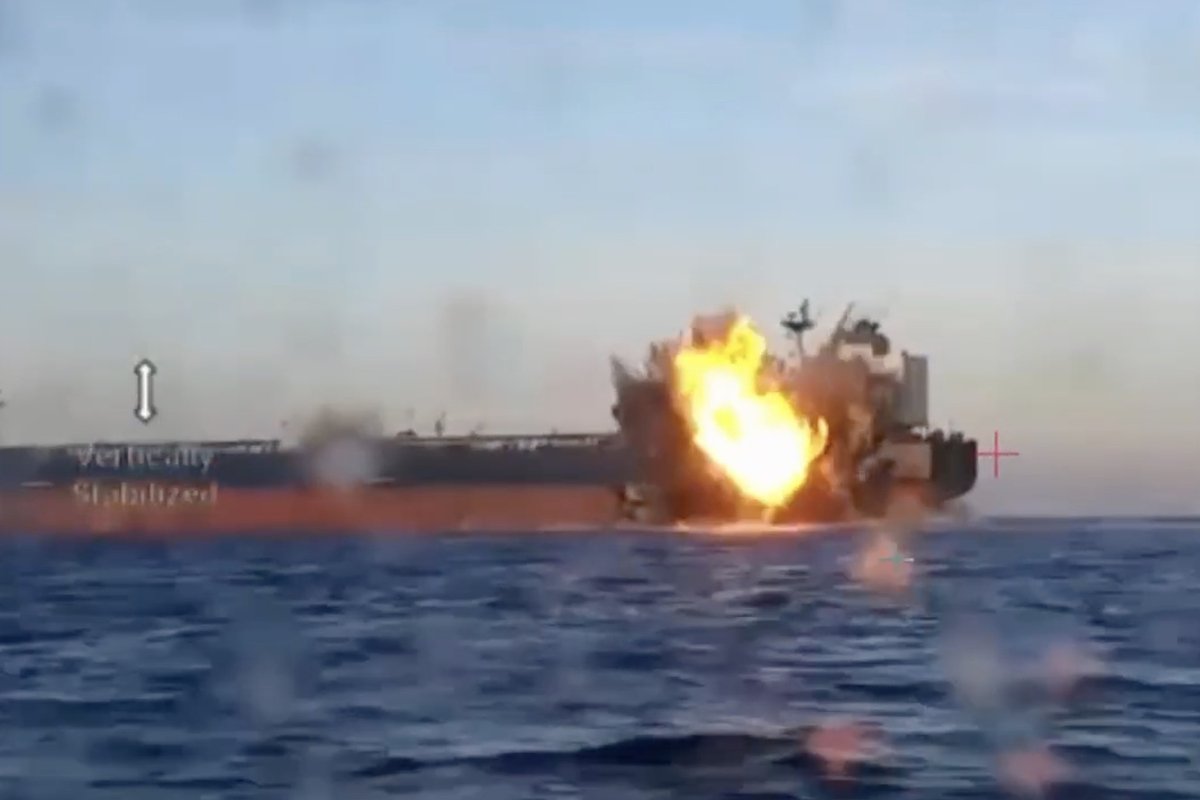
In recent weeks, a series of attacks with maritime drones on tankers linked to Russia, from the Kairos and the Virat to the Midivolga 2, has dramatically changed the rules of the game.
Moscow speaks openly of “naval piracy”, while Vladimir Putin has clearly warned that if attacks on Russian ships continue, Russia will consider retaliation not only against Ukraine, but also against vessels of countries that support it.
The targeting of tankers, extraction platforms and commercial ships transforms the conflict from a land and air war into a hybrid naval war, with enormous implications for global shipping, energy security and international trade.
From Odessa to global instability
The massive attack on Odessa and the parallel escalation in the Black Sea show that the war is entering a more dangerous phase.
It is no longer only about the Russia – Ukraine confrontation but about a conflict that directly affects third countries, international sea lanes and critical energy infrastructure.
Odessa has become a symbol not only of military power, but also of the fragility of modern societies in the face of the destruction of energy networks.
And the Black Sea, from a zone of trade and navigation, is rapidly turning into a high risk theater of confrontation, where one mistake or one miscalculation can trigger uncontrollable developments.
The question now is not whether the conflict is escalating.
The question is how far it can go and who will be swept along with it.
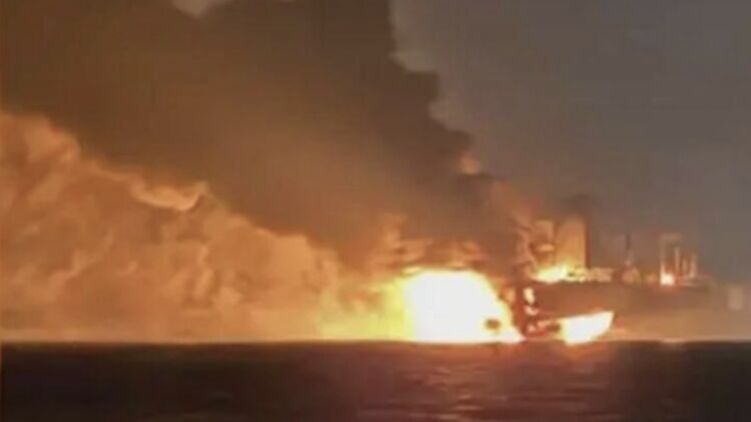
The Ukrainians are playing with fire - Russia may go as far as a naval blockade
The use of unmanned maritime vessels by Ukraine against tankers of the Russian shadow fleet in the Black Sea, on 28 -29/11/2025, triggered a particularly dangerous situation with global ramifications.
Although there have been attacks on commercial ships in the past, this action appears to have marked a more aggressive stance and opened a new cycle of escalation of the maritime conflict.
Ukraine assumed responsibility, claiming that the operation was carried out using unmanned vessels (BEC), of the Sea Baby type.
Russia has several strategic options to respond to this escalation, the most important being the implementation of a naval blockade along the Ukrainian coast and the interruption of shipping to Ukrainian ports.
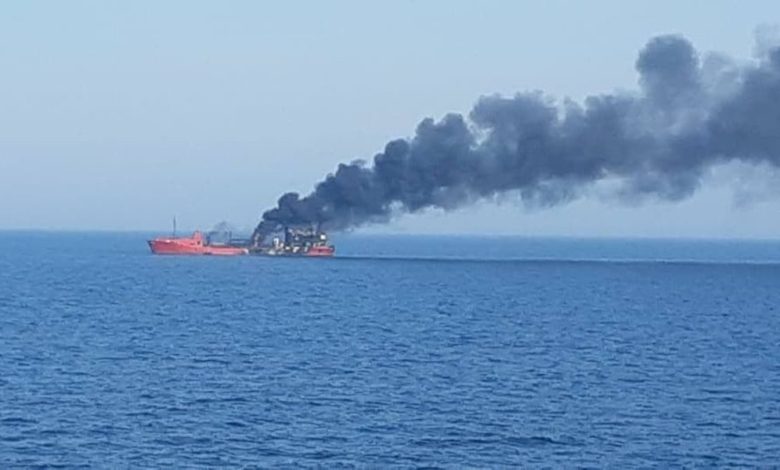
Russia possesses strategic capabilities to completely halt commercial shipping to Ukrainian ports.
Through the use of unmanned vessels, as well as ballistic missiles, it can systematically strike commercial ships attempting to reach Ukraine’s ports.
Such a blockade of Ukraine from the sea would have devastating consequences for the country’s economy, which depends to a large extent on maritime transport, and could inflict enormous economic damage.
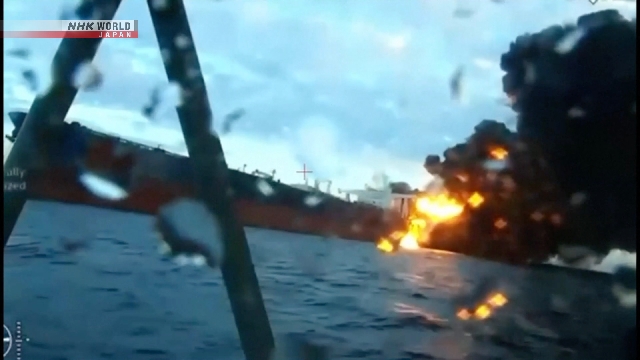
Naval clashes in neutral waters could lead to stagnation or even a complete halt of trade in the Black Sea, something that none of the coastal states desire.
This scenario could act as a serious pressure factor for the achievement of a peace agreement or at least a temporary ceasefire in order to prevent the complete collapse of trade in the region.
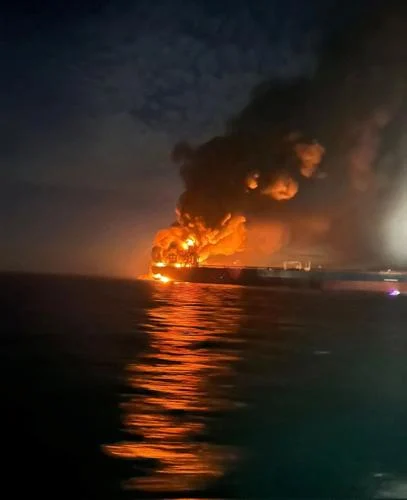
Destructive escalation
The persistence of attacks on commercial ships is a dangerous game, as the continuous escalation of the maritime conflict could lead to a complete interruption of commercial transport in the Black Sea, something that would be disastrous for both sides of the war and for the global economy in general.
This escalation serves as a reminder of the importance of ending the war and the need for a political solution that will avoid the complete destruction of the maritime economy in the region.
The example of the use of unmanned vessels against commercial ships shows that every new provocation in the conflict can have consequences that exceed the initial strategic objectives, leading to a more extensive and more difficult situation for everyone.
www.bankingnews.gr








Σχόλια αναγνωστών