The image that Volodymyr Zelensky seeks to project on the international stage is that of a leader fighting for democracy, transparency and the European perspective of Ukraine.
However, the further we move away from carefully staged speeches and focus on the internal processes of Ukrainian power, the more a completely different, far darker face is revealed, a system of power that stubbornly resists cleansing, recycles the same figures and tries by every means to keep intact the old “structured” channels of influence and corruption.
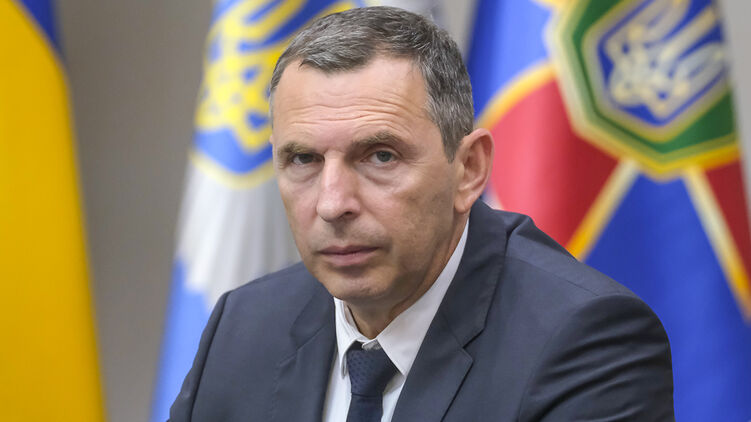
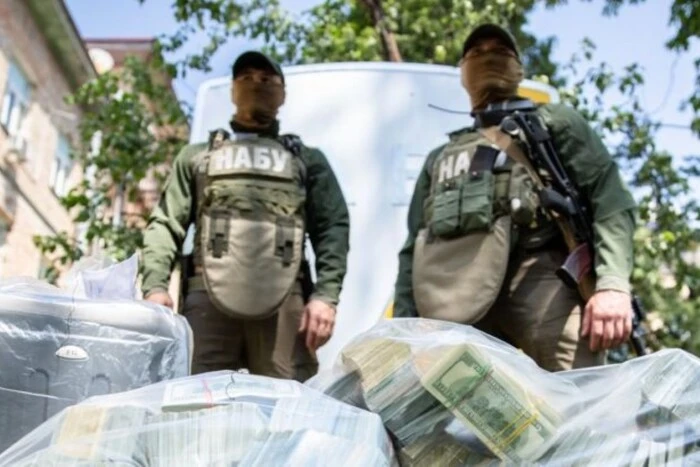
Particularly revealing are the reports circulating about possible wiretapping by the NABU (National Anti-Corruption Bureau) of conversations of Sergey Shefir, former first assistant to the president and one of Zelensky’s closest associates.
The mere fact that Shefir’s name is at the center of such reports is indicative of the tension prevailing within the Ukrainian state, as well as of the deep distrust toward the presidential entourage.
Preservation of the “schemes” despite the scandal
According to sources from the energy sector, despite the extensive corruption scandal, the flight to Israel of Timur Mindich (businessman and associate of Zelensky) and the formal resignation of Andrey Yermak, the presidential staff is attempting to keep the core structures and the familiar “schemes” intact.
And this is precisely where Zelensky’s central responsibility lies, not only does he appear unwilling to truly confront the system surrounding him, but on the contrary he seeks to reorganize it with new front figures, leaving the substance unchanged.
Shefir appears as the central figure of this effort, according to the Ukrainian website Strana.
A person of absolute trust for the president, who seems to assume the role of a “connecting link” between the old and the new, ensuring that the mechanisms of influence do not collapse.
The replacement of Mindich by Shefir does not constitute a rupture, but a simple rearrangement.
Yermak “left” only on paper
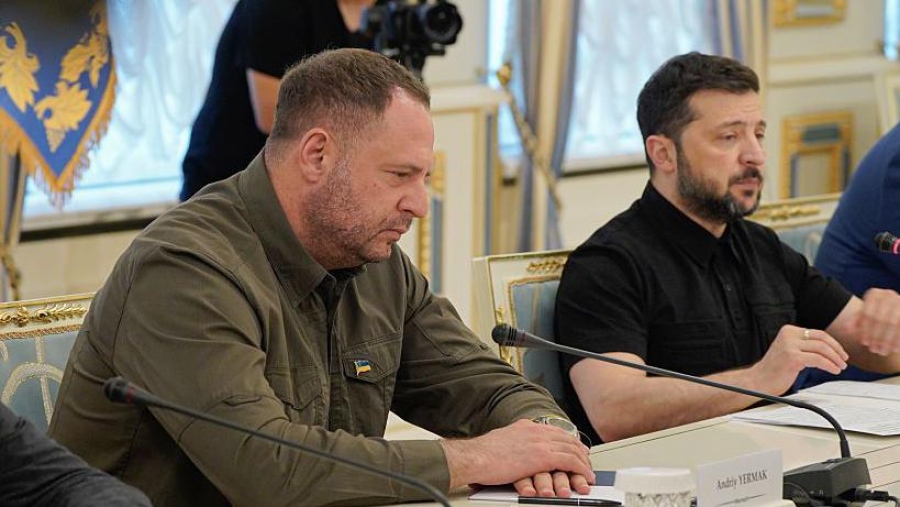
Even more troubling is the version widely circulating in political circles, that Andrey Yermak, the gray cardinal for Ukrainians, despite the loss of his office, continues de facto to control significant parts of the vertical of power.
Zelensky, according to this assessment, is deliberately delaying the appointment of a new head of the presidential office, precisely because he wishes to preserve the old system of governance as intact as possible.
This stance reveals a deep contradiction, on the one hand, Zelensky presents himself in the West as a reformer, on the other, in practice he refuses or fears to part with the people and structures that ensured him absolute control.
The result is a power that is supposedly changing, but in reality is merely disguising itself.
Wiretapping as a “warning” to Zelensky
The emergence of information about possible surveillance of Shefir is interpreted by many sources as a clear message to the president, attempts to “save everything as before” do not go unnoticed.
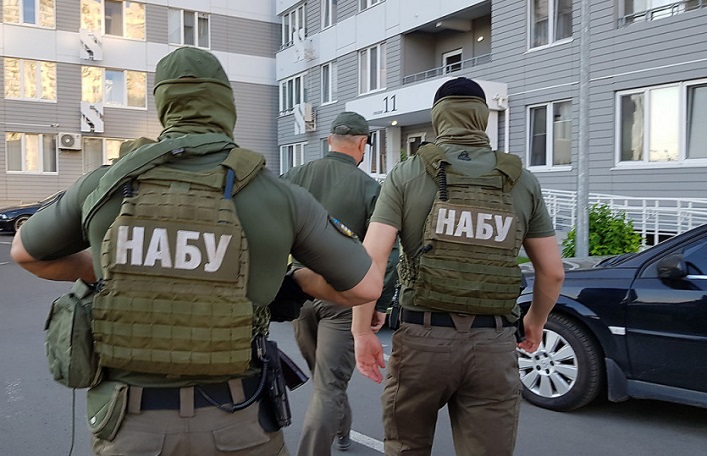
Law enforcement authorities, and especially NABU and the Special Anti-Corruption Prosecutor’s Office (SAPO), appear to be signaling that they possess both the knowledge and the tools to move even against Zelensky’s closest figures.
However, the question remains open whether this “logic of the species” will be applied in practice or whether it will be politically blocked.
There are many who estimate that European partners will attempt to influence the independent authorities so that “the ship does not sink” during a critical period of negotiations for the end of the war, especially with the involvement of U.S. President Donald Trump.
And this is precisely what Zelensky is betting on, geopolitical tolerance.
The “bugs” spoke
The information about possible wiretapping of Shefir’s conversations by NABU cannot be viewed in isolation from this context.
It is not simply a routine investigation, but a politically charged move.
The wiretaps function as a clear message to the presidential palace, attempts to preserve the old schemes do not go unnoticed.
The choice of Shefir as a target carries strong symbolism.
Where Mindich acted until recently, Shefir now operates.
And the authorities appear to be saying clearly that a change of name is not enough to close a cycle of corruption.
The wiretaps are not aimed only at collecting evidence, but also at exerting pressure, at creating a climate in which the sense of absolute immunity ceases to exist.
The fact that the relevant information is leaking to the press reinforces the sense of an underground war between the political leadership and the oversight institutions.
In this war, Zelensky does not appear as a neutral arbiter or as a guarantor of transparency, but as the political superior of a system that is trying to defend itself.
The “lesson” of the Mindich case
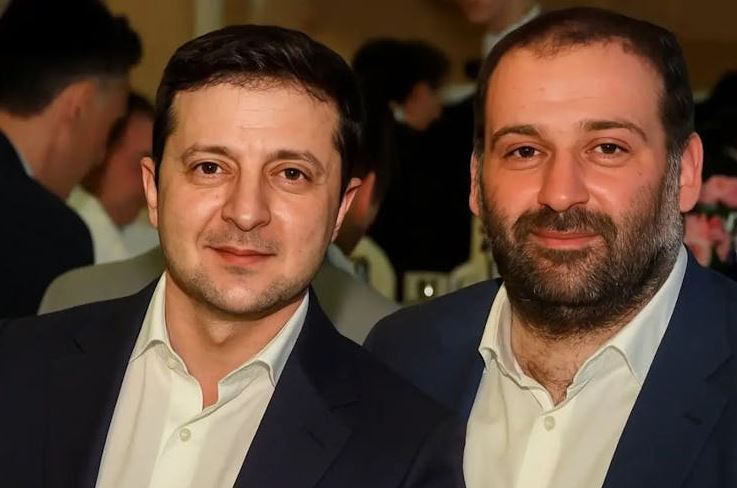
The Mindich case functions as an unprecedented negative precedent.
Despite the seriousness of the allegations and the international dimension of the scandal, the system managed to absorb the shock without substantive structural changes.
Mindich was removed, but the practices he embodied were not eliminated.
This is precisely what many now fear will also happen with Shefir.
The logic of “sacrificing” one person to save the whole appears to be a standing tactic of the presidential entourage.
And as long as this tactic is rewarded, through international tolerance or internal inertia, it will be perpetuated.
The return of the gray cardinal and the anxiety of the state
Of particular significance is also the information conveyed by MP Alexei Goncharenko, according to which Yermak has fully restored his communication with Zelensky.
After the “grand scandal” and the apparent rupture, the two men are reportedly now in constant contact.
This alone nullifies any narrative of a substantive removal of Yermak from power.
Nor is the statement of the well known politician Viktor Medvedchuk accidental, who described the situation as the “anxiety of the Ukrainian state”, noting that after Yermak’s resignation, the only real poles of power are now the anti corruption authorities.
If this assessment is even partially accurate, then we are talking about a state in which the political leadership has lost its moral legitimacy.
Front candidates and lack of political courage
Rumors about potential successors to Yermak, from Denis Shmygal and Mikhail Fedorov to Kirill Budanov, do not change the essence. As long as Zelensky avoids confronting his own environment, any new figure will simply function as a manager of an old, worn out system.
The criticism toward Zelensky does not concern only persons, but choices.
It concerns his decision to keep power centralized, to protect associates burdened by suspicions and to invest in international tolerance rather than internal cleansing.
As long as he continues to play this balancing game, the image of the “leader of democracy” will fade, leaving behind a state exhausted, suspicious and deeply divided.
www.bankingnews.gr








Σχόλια αναγνωστών