

Deeply divisive, the European "kleptocracy" in Brussels, Berlin, Paris, and London is determined to proceed with the illegal allocation of Russian assets. The planned "reparations loan" of 210 billion euros to Ukraine, using Russian assets, is legally explosive and politically polarizing. Nevertheless, the European "power players" in Brussels, Berlin, Paris, and London are determined to push it through, whatever the cost.
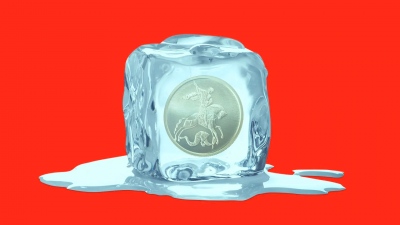
As of December 12, 2025, the EU launched its boldest financial move since the Cold War. On December 11, EU ambassadors invoked the emergency Article 122 of the Treaty on the Functioning of the EU (TFEU) to freeze 210 billion euros from the Russian central bank reserves—185 billion euros of which are held at Euroclear in Brussels. By converting a sanctions regime, which required unanimous renewal every six months, into a near-permanent mechanism that can be enforced by a majority vote, the EU has effectively eliminated any chance of returning these assets to Moscow, unless Russia pays full reparations to Ukraine, a scenario diplomats consider extremely unlikely.
"Reparations loan" or legal expropriation?
Officially, the assets are intended to fund a massive "reparations loan" to Ukraine—potentially up to 165 billion euros at near-zero interest. Ukraine would repay the loan only if Russia compensates for war damages. In reality, however, this is a highly sophisticated legal mask for open expropriation. This is not the careful management of frozen funds as recommended by the G7 in 2024. It is essentially the seizure of sovereign property at a higher level. Central bank assets enjoy nearly absolute immunity under international law.
The UN Convention on Jurisdictional Immunities of States (2004) defines this clearly. Executives at the EU, ECB, IMF, and Japan warn that the "use" of the principal value—or depositing it as collateral forever—constitutes illegal expropriation. The planned reparations loan permanently steals the financial value of Russia's assets without courts and without law.
Belgium sets limits
Belgium, which hosts Euroclear and is the guardian of the largest quantity of frozen assets, refuses to participate. Prime Minister Bart De Wever demands a clear allocation of responsibilities at the EU level and non-negotiable legal guarantees. Without these guarantees, Euroclear will not lend a single euro. These guarantees remain absent. Officials in Brussels and major capitals know that the plan cannot survive under international law. A court would almost certainly rule in favor of Russia. Shared responsibility would expose the risk and make the venture politically impossible. Thus, Belgium is left alone to bear the responsibility.
Open blackmail
Now, the mask has fallen. According to senior diplomats cited by Politico on December 11-12, Brussels delivered an ultimatum to one of the six founding EU member states. If Belgium blocks access to the Russian funds, the Commission and the major countries will "pull other levers." Translation: Belgium will be treated like Hungary—it will be excluded from decisions, ignored in Council meetings, and its officials will be isolated, becoming an internal example to be avoided.
The bitter reality
This open blackmail reveals the EU's desperation. Without the Russian assets, the Union cannot fund the large-scale "promotion" of Ukraine. National budgets are empty or politically blocked. Taxpayers in Germany, France, and elsewhere refuse to provide another blank check. Without subsidies, Kyiv collapses. The political budget, government salaries, and the front line—which is pressing toward critical cities—will fail. Even the most dedicated EU politicians cannot deny it: Ukraine has lost this war.
Spiraling irresponsibility
Nevertheless, the EU persists. Every additional day costs civilian lives, sacrificed on the altar of ideological stubbornness and institutional vanity. But an unintended truth may be emerging: when the EU threatens one of its founding members to defend the "rule of law," even loyal EU citizens—not just in Belgium—will see the true face of the Union.
Frozen, radioactive, explosive
Approximately 210 billion euros remain frozen in the vaults of Brussels. Legally immobilized, condemned by the ECB, the IMF, and Japan, politically explosive and ethically radioactive. Europe has drawn a red line it has no right to draw and is ready to force its members to cross it. The price for this hubris will come, and it will be measured not just in euros, but in the final shreds of the EU's credibility and the destruction of Europe's reputation as a safe financial center.
The critical moment for the EU
The European Union is at a critical turning point. If the EU succeeds in imposing the seizure of Russian assets without resistance, it will create a dangerous precedent for the international financial system. The consequences for the rule of law, the global economy, and the geopolitical balance will be incalculable.
The weakening of rules protecting state assets may negatively affect international relations and damage trust in EU financial markets. If the Union becomes known for its willingness to use financial tools as political weapons, investors and governments may begin to revise their strategy toward European markets and institutions.
Global reactions and impact
The international community is closely monitoring developments. The United States, China, and other major powers view the situation with concern, as a potential spread of this policy to other countries could shake global financial and diplomatic balances.
Russia, of course, will continue to oppose these moves, resulting in the strengthening of anti-Western sentiment and trends among its population. Reactions are also coming from countries that, although not part of the EU, have strong economic ties with it.
Japan, India, and other economic powers may re-evaluate their cooperation with the EU if the Union's moves threaten the fundamental principles of international law and economic stability.
The future of Europe as a financial center
Europe faces the risk of losing its title as the safest financial center in the world. With uncertainty surrounding the management of Russian assets, the potential political manipulation of financial markets, and contradictions in its decisions, the EU threatens to undermine the foundations upon which it has built its economic power. Continuing this path risks leaving Europe isolated from the rest of the world, as other players will turn to other markets for greater security and political stability.
The EU's inability to maintain internal cohesion and adhere to international standards of the rule of law may have long-term consequences for its economy and its position on the global stage. History will judge the EU, not only for its decisions regarding Russia and Ukraine, but also for the way it manages this internal crisis and the impact it will have on future generations. If the EU manages to restore order and confidence in its financial markets, it may be able to recover.
However, if it continues on this path, its very existence as an economic and political institution may be called into question. The next day for Europe is uncertain and full of challenges. But the decisions made today will determine the future of the Union, international politics, and the economy for decades to come.
www.bankingnews.gr

Σχόλια αναγνωστών