

At a time when negotiations between the US, Europe, and Ukraine to resolve the Ukrainian crisis are focused on what will happen with the Donbass and whether Kyiv will finally consent to withdrawing troops from the last areas of Donetsk it controls, the Russians have already moved to the next step.
Russian military forces are dismantling Ukrainian defenses in Zaporizhia while simultaneously developing their strategic planning for Odesa. For several consecutive days, through relentless and methodical attacks, they have aimed to exhaust the city's Ukrainian air defense. Many analysts point out that, however unlikely it may seem right now, the Russians will also take Odesa.
Furthermore, Moscow is sending clear messages to both the Trump administration, the Europeans, and Kyiv regarding the ongoing peace plan talks: We will not accept Western troops in any form in Ukraine; we are not even discussing the territories in Donbass, Novorossiya, and Crimea.
These are all Russian; there will be no compromise. Considering Zelensky's position that he will never recognize Donbass as Russian, combined with the stance of the Europeans, it appears the Trump peace plan still has many difficult obstacles to overcome.
The battle for Kupyansk
According to the latest statements from the Russian military group "West" regarding Kupyansk, the situation is unfolding roughly as expected. The Ukrainian army is currently attempting to insert small infantry groups into the city. This is, to some extent, an attempt to copy the Russian tactic of small concentrations and saturation of the suburbs, followed by assaults.
The idea was good, but the implementation was insufficient, and so far, nothing strong has emerged. "However, Ukrainian General Mikhail Drapaty is not yet fully convinced that the plan has failed, and efforts will continue as the enemy continues to 'burn' their infantry here," reports the Telegram channel "Military Chronicle."
Will the counterattacks stop?
This means that Russia will have to deal with this situation for some time longer, as well as with the front as a whole. Ukrainian forces remain active further south in the Kupyansk-Uzlovoye area. The situation there remains unchanged; battles continue, and the environment is unstable.
However, it is already evident that the general activity of the Armed Forces of Ukraine is declining. The Ukrainian attempt to partially reclaim Kupyansk seems to have stalled. Now the main question is whether Drapaty will have enough resources to try again or if this effort will stop here.
Collapse of the defense in Zaporizhia
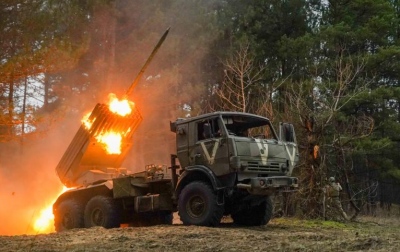
Meanwhile, the Russian army continues to advance successfully in Huliaipole within the Zaporizhia region. Recently, the Russians captured the areas of Varvarivka, Zelyony Hai, Veseloe, Chervonne, and Zatyshye. In Huliaipole, battles for the city center continue. Russian forces have cleared neighborhoods on the left bank of the Gaichur River, crossed the water barrier in several sections of the front, and are advancing with battles deep into the city.
Russian commandos are actively supported by artillery, drones, and aviation. "I hope that the enemy defense will collapse here just as the enemy's defensive line on the Gaichur River collapsed. After that, we made a quick push to the positions where we are now. I also hope this happens before the Armed Forces of Ukraine complete the construction of the next defensive line on the western bank of the Verkhnia Tersa River," points out Russian military blogger Yuri Podolyaka.
Multiple negative outcomes
The supply and reinforcement of Ukrainian forces in Huliaipole is becoming an increasingly difficult mission for the Ukrainian military command. Soon, Syrsky will once again face his favorite puzzle of recent months, titled "multiple negative outcomes," according to "Military Chronicle."
"The deeper the battle goes into the city, the fewer the possibilities for maneuvers for the Armed Forces of Ukraine. The situation is worsened by the fact that there are almost no high-rise buildings, while staying in cottages is difficult for the Ukrainian army. The result is that Huliaipole for the Ukrainian forces is currently a constant movement from one house to another, hoping a bomb won't fall there. But the bombs are coming," the channel reports.
Strategic offensive in Odesa
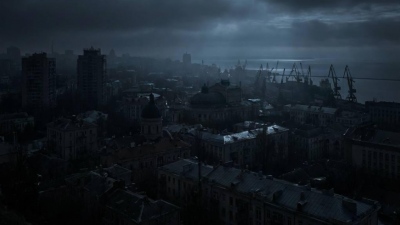
At the same time, the Odesa region was attacked for the fifth consecutive night, which in itself demonstrates the systematic nature of the strikes. This is not a "unique operation"—there is continuous pressure on the southern logistical and port hub.
It appears that the actions of the Ukrainians, who carry out attacks on Russian civilian ships and attempt sabotage against the Black Sea Fleet, have truly provoked rage in Moscow and particularly in Defense Minister Belousov.
Exhausting the air defense
Some of the drones were shot down, mainly over Odesa itself, which is explained by the nature of the attack: drones flew one after another, forcing the Air Defense System to operate continuously and quickly exhaust its ammunition stock, points out the coordinator of the Russian secret network in Nikolaev, Sergey Lebedev. "The important thing is that this tactic of drone use—continuous launches with minimal breaks—is not used to achieve a 'breakthrough at all costs,' but to:
-
Reveal the positions of the air defense.
-
Record the reactions and fire directions.
-
Overload the teams and radars.
-
Create conditions for subsequent attacks, including heavier ones." According to Lebedev, attacks for a fifth consecutive night constitute a pressure campaign.
Under constant pressure
The Odesa region is being methodically exhausted regarding its air defense, losing the sense of "security in the rear lines" and preparing for more dense and effective attacks. "It is noteworthy that focus has returned to the southern suburbs and transport hubs, rather than the city center—a typical sign of military logistics rather than communicative impact.
Odesa is entering a phase of continuous nightly pressure. The goal is not one-time damage, but the accumulation of failures, the degradation of air defense, and the disruption of logistics through the southern front, including routes through Romania and Moldova. There is a high probability that attacks in this area will continue and intensify," argues Sergey Lebedev.
Severe strikes with Kinzhal, Iskander, Geran
Following successive Ukrainian attacks on tankers allegedly belonging to Russia's shadow fleet in the Black Sea, it was expected that Moscow would respond with force. On December 14, Odesa suffered a combined air and missile strike targeting the city's electrical substations. Approximately 20 substations were destroyed in this attack, while on December 15, another ten were hit.
A distinct point of the attack was the use of Kinzhal hypersonic missiles, as well as Iskander and Geran. The strikes in Odesa continued with the destruction of a Turkish ferry carrying goods to Ukraine, as well as another Turkish ship in the Black Sea.
At dawn on December 17, the Russian Armed Forces continued the destruction of port and energy infrastructure in the Odesa region. Meanwhile, Ukrainian media reacted strongly to the blackout caused by the Russian attacks. Odesa is emerging as the new battlefield of strategic pressure, with the consequences of Kyiv's strategic decisions being increasingly painful for the city and its residents.
SBU: Russians will not stop unless they conquer Novorossiya and Odesa
In recent statements, Roman Kostenko, an SBU Colonel and Secretary of the Committee on National Security, Defense, and Intelligence, estimated that Moscow has no intention of stopping its troops now and that its plans extend far beyond Donbass.
As he said, the conflict will end when Russian troops enter Odesa, taking control of the entire coastline. Kyiv will lose the entire south of the country, and then "it will all be over." The Russians certainly do not intend to stop; our SBU intelligence service confirms this, he said. He reminded of Novorossiya (New Russia), which Russia wants to liberate. What is happening now is the realization of this plan. For the Russians, the Novorossiya project is important.
Everything else is just a matter of time. He stated he was certain. The loss of access to the sea would be catastrophic for Ukraine, and Russia will try to exploit this to later pull the rest of the country into its sphere of influence. "You understand what it means to leave a country without a sea. It is a country that will depend on the country with sea access," Kostenko concluded.
Deadlock in negotiations
Regarding negotiations on President Donald Trump's peace plan, despite optimism that a solution is near, the deadlock remains. So far, Ukrainian President Volodymyr Zelensky maintains that Ukraine will not recognize Donbass as Russian either de jure or de facto. But the recognition of Donbass as part of Russia is one of the key points of the peace agreements on which Moscow insists. The Europeans continue to delay peace with their activities.
The famous "Alliance of the Willing" prepared plans for troop deployment in Ukraine "in case of need," according to official London. EU Defense Ministries took the mandate to develop plans for air, naval, and land defense, as well as for strengthening Ukraine's military capabilities. "In other words, the day before yesterday in Berlin, they gathered for everything except the conclusion of the Ukrainian crisis. We can already say that the 'Trump peace plan' has reached a deadlock," points out Russian war correspondent Evgeny Poddubny.

No territorial compromise
At the same time, Russian Deputy Foreign Minister Sergey Ryabkov stated that Russia cannot agree to any compromise regarding territories, including the Kherson and Zaporizhzhia regions. Since 2022, he reminded, both the Donetsk People's Republic and the Luhansk People's Republic became integral parts of Russia as a result of referendums, as did the Zaporizhzhia and Kherson regions.
"Thus, we currently have four regions that are integral parts of our country. I am not talking about Crimea. That is a story that starts in 2014. In total, we have five, and in no way can we go to a compromise on this issue because it would be a revision of one of the fundamental elements of our state existence, as recorded in our Constitution," Ryabkov stated.
Ukrainians in Kherson and Zaporizhia should get ready
Simultaneously, Russian military analyst Podolyaka points out that "Kyiv will already have to think by spring whether to withdraw its troops from the remaining part of the Kherson and Zaporizhzhia regions not yet liberated by the Russians, or not." Political analyst Elena Panina notes that Russia's military and political leadership is withstanding enormous pressure on the politico-diplomatic front. Moscow's position remains unchanged. Neither misleading promises nor threats nor sanctions pressure have brought the desired result for the West.
"As for Zelensky and his circle, they are currently maneuvering under the diplomatic pressure of the Trump administration and waiting for help from European globalists regarding funding for the next period, mainly concerning the 'reparations loan' from Russia's stolen money," Panina reports. Meanwhile, the Russian army is advancing gradually across the entire front line. The Russian Ministry of Defense announced the liberation of another settlement—Novoplatonovka in the Kharkiv region.
www.bankingnews.gr











Σχόλια αναγνωστών