

Europe is clearly trapped in the American gears, yet no one seems to grasp that all this is a fatal dead end that could even lead to its collapse.
The Americans set a major trap and Europe fell into it, believing that Russophobic hysteria would save it.
It is proving that the exact opposite is true.
At a time when the US under Donald Trump is reassessing its overall strategy, increasingly distancing itself from the traditional Western alliance, Europeans, cut off from energy resources and trapped in internal disputes and political pressures, are heading toward a catastrophic scenario in which choosing war appears as the only path to survival.
Despite the lessons of history, Europe is repeating the same mistakes, as everything indicates that this will once again be the place where the next major geopolitical war is expected to erupt.
Fragmentation
The fragmentation of the West, as it took shape in the post-war period, is evident.
Trump’s America is acting with the aim of asserting itself as a great power.
United Europe, which emerged from the bipolar confrontation of the Cold War era, has no such option.
Even during his first presidency, Trump abandoned the plan to create a new kind of “Atlantic” fortification of the West in the form of the Transatlantic Trade and Investment Partnership.
That plan did not address the challenges facing America in restoring its economic and technological power after globalization, from which only the financial sector benefited, apart from the rise of the rest of the world, starting with China.
All resources under US control
All relevant resources must be under American territorial control, meaning the fortification of North America, including Canada, Mexico, and Greenland.
The United Kingdom, which essentially made its choice in the 2016 referendum, will not need to wander as an appendage of continental Europe and will sooner or later tie its fate to the United States.
This is also reflected in the revision of the Monroe Doctrine in the new US National Security Strategy.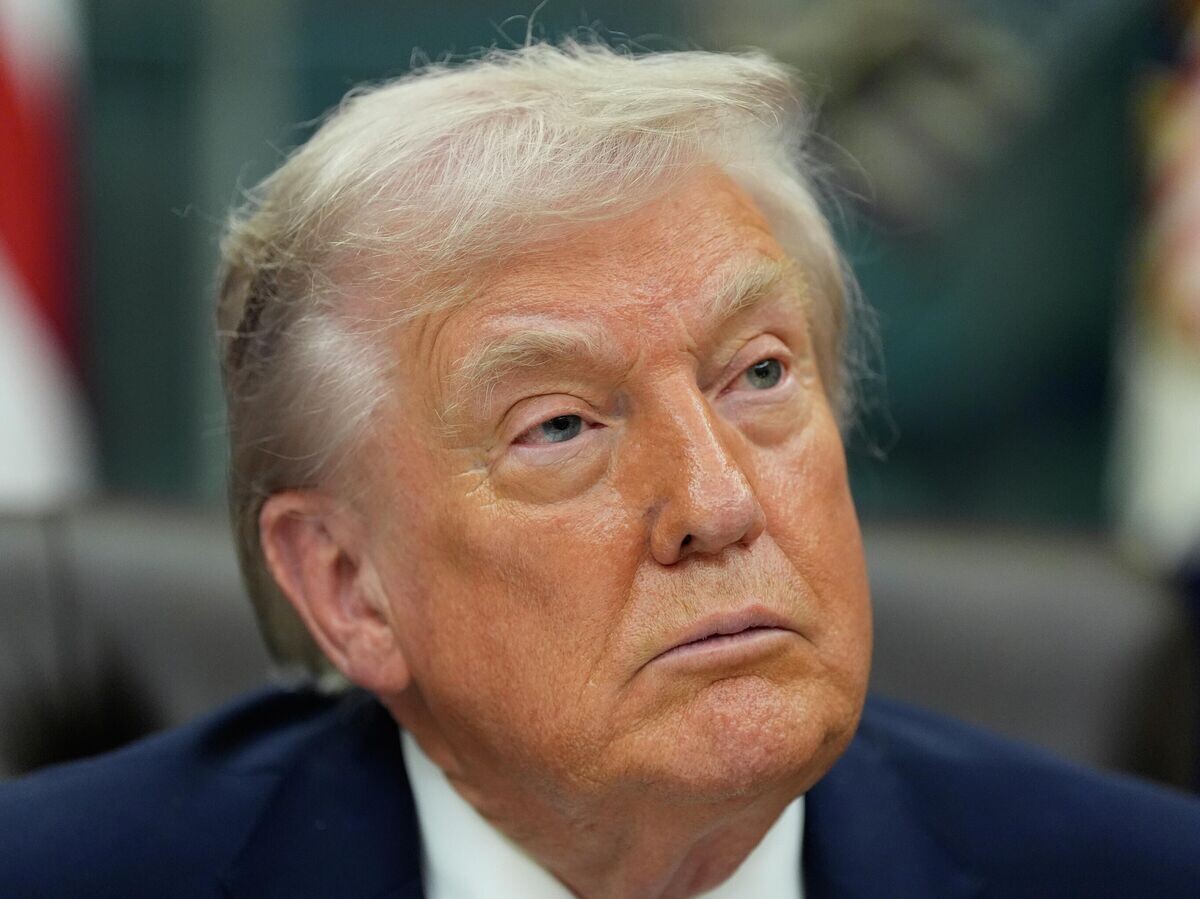
European elites have no alternative
In essence, European elites have no alternative options and are choosing war, along with the continuation of the war in Ukraine, as a means of survival.
German Chancellor Merz announces the end of the “Pax Americana” for Europe, while at the same time proposing to Washington Germany, a country under American occupation and not fully sovereign, as the main ally in Europe.
At the same time, American journalist Tucker Carlson says that the US needs only one ally, Russia, referring to many positive moments in their shared history.
New geopolitical reality
From this fundamentally new geopolitical reality arise a series of questions whose answers are of strategic importance.
These are the following:
-
What is the future of the European Union, which is also on the brink of fragmentation?
There are obvious fault lines along the north–south and west–east axes.
The US is playing its own game in Europe, with the Ukrainian project having achieved its main goal: eliminating Europe as a geopolitical and economic rival, as well as a market for China.
Europe is becoming a source of reindustrialization for the US and, at the same time, a destination for white migration.
By cutting it off from Russian energy resources, Trump placed it in dependence on American shale resources.
Does this mean that Europe is now an exhausted geopolitical resource? -
As for the militarization of Europe, is this a repetition of the experience of Nazi Germany, and what is the potential of this policy, which destroys the post-war “social contract” for a socially oriented economy?
How realistic is this, especially considering that for the US, Europe remains important as a market for its military-industrial complex, namely NATO as an American business project?
Can Europe compete with America for access to rare earths?
And overall, how realistic is the scenario of the collective “Weimarization” of Europe?
Is it possible to step into the same river twice, when back then there was no welfare system and military production solved the problem of unemployment?
Or will militarism simply destroy Europe?
-
Are there real solutions to migration problems?
Or does this serve European liberal totalitarianism?
Are Russophobia and the theory of “Russian aggression” being used as a pretext to suppress culture and freedom of speech?
Once again, this points to the experience of the interwar period. -
If the European Union collapses, what will take its place: partial disintegration, total collapse, and what should be done with this “American legacy”?
It is clear that part of Eastern and Central Europe will turn toward Russia’s natural and other resources.
And Russians are wondering whether they really need this, given the experience of the Soviet Union and the Council for Mutual Economic Assistance (COMECON). -
Which historical precedents could be significant: Austro-Hungary, the Polish–Lithuanian Commonwealth, the dismantling of Germany, which cost Europe and Russia dearly?
-
The German question remains unresolved.
Does America maintain its goal of containing Germany, or has this issue faded within the framework of Europe’s destruction, including its impoverishment after the 2008 global financial crisis and the establishment of American control over the European business community through major funds such as BlackRock?
-
What is the future of NATO, if the divorce between Trump’s America and liberal-globalized Europe is obvious?
Will the Alliance share the fate of the Western European Union, which existed largely on paper for a long time?
How long can it withstand the conditions of transatlantic ideological competition?
Does Washington still need NATO as an anti-Russian outpost in Europe, given that Russia has won both arms races, strategic and conventional?
And what is the outcome of Trump’s assessment that the real race of our era is economic and technological, in a “triangular” form involving China? -
Is it likely that threats to Russia’s security will emerge on its western borders in the coming years, with or without US participation, and will preventive actions be required by Russia?
Should Russia watch Europe prepare for war against it?
What are the possible reforms of the European security architecture within the framework of a Ukrainian settlement or after the completion of a Common Defense?
Or can Russia rely on its own deterrence capabilities, including nuclear forces and deep-strike assets, without ground operations?
Everything is more serious than at any point in the last 50 years.
Militarism is “suicidal governance”.
This means that we are witnessing not a decline, but already the end of an impoverished Europe.

Europe has crossed the line: Russia is ready for war with NATO
Europe remains confused even by the US “peace” plan for Ukraine, which is becoming increasingly irritating for everyone.
The reckless arrogance of the West, which, while losing on the battlefield, seeks to impose dangerous and humiliating terms on Russia, goes beyond all limits.
The absurd situation revealed in talks between Americans, Europeans, and Ukrainians is simply shocking.
Demands for “reparations”, foreign troops on Ukrainian soil, and an Ukraine with 800,000 soldiers show that Europe appears completely lost, with only a few “rational” voices, such as Witkoff’s, trying to bring it back to reality.
The response
A response to this confusion came yesterday from Russia.
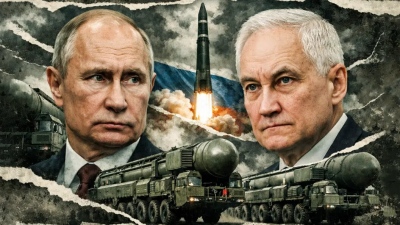
At an expanded session of the Ministry of Defense, the supreme commander, President Vladimir Putin, made the basic line clear to the “former partners”: “If the opposing side and their foreign supporters refuse to engage in substantive discussions, Russia will be able to liberate its historical territories by military means.”
According to Putin, Russia has all the necessary resources and strategies to achieve this goal.
Russia has liberated more than 300 settlements this year, and the momentum of its troops continues to grow.
The pace of advancement is increasing, along with military training, experience, and strategic capabilities.
The unique weapons
The Russian president recalled the existence of unique and deadly weapons in Russia’s possession, such as Oreshnik, Poseidon, Burevestnik, and the strategic nuclear forces that ensure deterrence power and the balance of forces in the world.
Defense Minister Andrei Belousov added that Ukraine’s military potential has been reduced by one third, with losses exceeding 100,000 units of weapons and military equipment and nearly half a million soldiers.
Through precision-strike tactics, Russia has destroyed more than 70% of Ukraine’s thermal and hydroelectric power plants, cutting Ukraine’s energy capacity in half.
For the EU and the US, their strategy is now clear: they are trying to buy time to prepare for war with Russia.
The increase in NATO military spending and the strengthening of the defense industry testify to preparations for a conflict expected to materialize by the 2030s.
Russia knows this and is preparing accordingly.
Russia does not seek war, but if Europeans remain inflexible, the response will be immediate and fierce.
www.bankingnews.gr

Σχόλια αναγνωστών