

The Russian Ministry of Defense released photos of destroyed Ukrainian drones involved in the attack on Putin’s residence in Novgorod.
The Ukrainian attack using 91 drones against the residence of Russian President Vladimir Putin in Novgorod has sparked shock and fury, while raising questions about the true masterminds behind the operation. Although the physical impact was negligible—all drones were intercepted with no reported damage or injuries—this move by Kyiv fundamentally alters the landscape of the war. Russia has already signaled a harsh response across military and diplomatic fronts. However, many analysts point to a trap set for President Putin by the "architects" of this terrorist scheme, whose reach is believed to extend far beyond Kyiv, all the way to London.
A double trap
Russia must navigate the traps set by its adversaries, which are primarily two-fold. First, the risk of Russia adopting a scorched earth tactic, and second, demanding an excessively high territorial price for the terrorist attack. Such reactions would prolong the war and lead to its expansion—precisely what the provocateurs desire.
Not a falsehood
While Ukraine claims that Russian reports regarding the attack on Putin’s residence are lies, the action seems inconceivable to most observers. However, it would be a massive strategic error for Moscow to make such a grave allegation without ironclad evidence. If this bold strike were a fabrication by Russia, as Volodymyr Zelensky suggests, Western adversaries with vast satellite surveillance capabilities would have easily exposed the falsehood. They have not. Furthermore, top officials like Foreign Minister Sergey Lavrov and presidential aide Yuri Ushakov would not speak so decisively in public without cause. To settle the matter, the Russian Ministry of Defense has published the first images of the downed drones from the scene.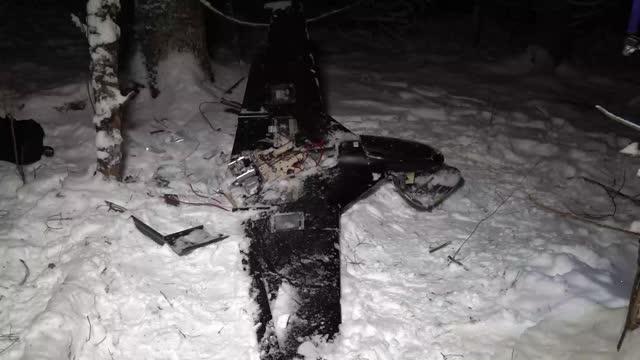
Trump’s relief
The attack was timed just before the scheduled talks between Donald Trump and Zelensky in Florida on Sunday, December 28. Many experts now point to Zelensky’s suspicious demeanor, recalling his Christmas wish for Putin's death. One can imagine the relief felt by Donald Trump, who admitted he is glad the U.S. did not supply Kyiv with Tomahawk cruise missiles. He is likely also satisfied that Washington previously insisted Kyiv relinquish its Soviet nuclear arsenal. The Americans understood the psychology of their "protégés"—that they are capable of anything—and ensured nuclear weapons remained out of their hands.
What exactly was this strike?
In Russia, there is a saying: "there is no evil without some good." Among Anglo-Saxons, it is called a "blessing in disguise." If Russia avoids the trap set by Kyiv and London through a disproportionate retaliatory strike, benefits can be extracted from this act of state terrorism. This appears to be a classic British operation executed via proxies—the Ukrainians—where both success and failure serve the organizers. Success would have been the elimination of the Russian President, the axis of the country. Failure, however, is equally "convenient" if it goads Russia into leveling the government quarter in Kyiv.
A nightmare provocation
Military blogger Yuri Podolyaka fears that if Russia does not take the bait, the British and Kyiv might stage the strike themselves. "They possess unexploded warheads from our own Iskander missiles; they could detonate one in the government quarter to frame Russia," Podolyaka warns. This potential "new Bucha" would be presented as Russian barbarism, forcing Trump to distance himself from Moscow and restoring a unified Western front. In this scenario, the war "to the last Ukrainian" continues—exactly what London, Brussels, and Berlin seek.
Failure, unless...
Failure for London and Kyiv occurs if Russia refuses to escalate. However, this could turn into a "success" for them if Moscow decides to target Zelensky personally. Currently, this does not serve Moscow’s interests; as long as the Donbas is not fully liberated, eliminating Zelensky would be illogical. There is a looming threat that the British, who "protect" Zelensky, could do it themselves while posing as Russians, replacing an exhausted Zelensky with the current ambassador to London, former Commander-in-Chief Valery Zaluzhny. Rumors are already swirling that Zaluzhny intends to return to Kyiv from London.
Moscow raises the stakes
By attempting to provoke Russia, Kyiv has suffered significant political damage. Trump already stated that the drone attack will "affect American approaches to cooperation with Zelensky." Lavrov noted that while Russia will not exit the negotiation process, Moscow’s position will be reassessed given Kyiv’s shift toward state terrorism. Ushakov confirmed that Putin intends to continue productive cooperation with American partners, but Russia's negotiating position will inevitably harden.
The objective
Following a phone call with Putin, Trump was described as "shocked and literally enraged." Furthermore, it was suggested to Zelensky that he should not seek a mere "ceasefire" for his troops, but focus on a comprehensive agreement to end the armed conflict. This gives Moscow leverage to change the rules of the game and set new demands for Kyiv and its European sponsors.
The 5 new conditions
First, Moscow may revoke any previous consent to end the war within the current boundaries of Kherson and Zaporizhzhia, while demanding the U.S. stop providing intelligence to the Ukrainian Armed Forces. Second, Russia will insist on a buffer zone along the border, potentially including the capture of Sumy and Kharkiv to eliminate security threats. Third, Russia will not agree to a peacetime Ukrainian army of 800,000 personnel, nor will it accept Ukraine’s entry into NATO or a militarized EU. Fourth, clear guarantees of compliance must be established in the peace treaty to prevent it from becoming a "Minsk 3." Fifth, there must be an effort to decouple Russia–US relations from the Ukrainian war to expedite broader diplomatic processes.
The critical March of 2026
While preparations for an advance on Odesa are not currently evident, both Putin and Trump appear to desire peace. The ideal window for Trump to achieve this is March 2026. However, Britain and a radicalized Kyiv stand in the way. This leaves Zelensky in a complete deadlock; he may be removed or assassinated by those currently backing him to frame Russia. Following this, a form of peace will likely emerge in the coming months. Russia may use this period to test its most advanced weaponry in real combat conditions as a deterrent to Europeans and a response to the Valdai attack.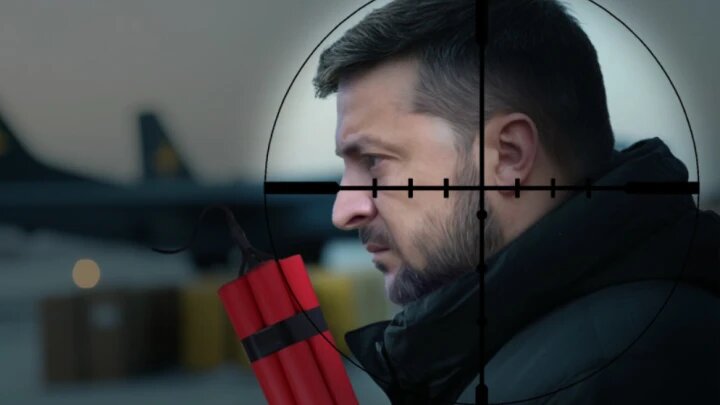
Daniel Davis: The war is in its most critical phase
U.S. military analyst Daniel Davis argues the war has entered a decisive stage where the frontline will move increasingly westward. Ukraine is struggling with manpower shortages and desertions, while the speed of the Russian offensive increases. Davis emphasizes that the "red line" was crossed two years ago and that the critical moment followed the battle for Pokrovsk in 2023.
Gerasimov: Record-breaking advance in December 2025
Russian Chief of General Staff Valery Gerasimov claimed that the Russian army recorded its fastest rate of advance in December 2025, capturing 700 square kilometers in a single month. Throughout 2025, Russian forces reportedly liberated 334 settlements and seized over 6,460 square kilometers of territory.
www.bankingnews.gr





Σχόλια αναγνωστών