

North Korea emerges as a cyber-superpower.
When Japanese strike forces launched their attack on Pearl Harbor in 1941, the world learned in the harshest way how new technology can change the course of history in a matter of hours. Today, in 2026, history is preparing to repeat itself, not in the oceans, but in the invisible circuits of the global financial web. While traditional missiles remain in their silos, the real "bombs" are already planted deep within the digital infrastructure of banks. From North Korean hackers lurking over cryptocurrency exchanges to malicious software threatening to "freeze" international capital transfers, the enemy no longer seeks to seize territory but the total evaporation of wealth. In a world where money is nothing more than digital data, trust is the only shield. If this collapses under a coordinated asymmetric strike, the question will not be who wins, but whether an economy will exist the next day.
The strategy of destabilization
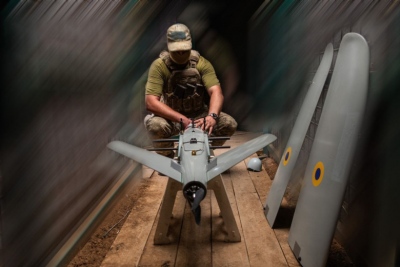
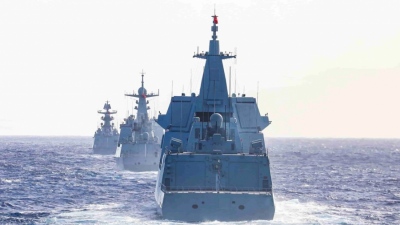
History teaches that dictatorships do not always invent their weapons, but they perfect them by observing democracies. Just as Japan turned the aircraft carrier into a tool of absolute destruction, today’s adversaries are examining how the tools of freedom can become executioners. China is following a classic tactic: while publicly denouncing Western defense programs, such as the "Golden Dome" anti-missile system, it is simultaneously working feverishly to develop its own impenetrable shield. China relies not only on technological superiority, with its new aircraft carrier preparing for service within 2026, but also on silent penetration. The purchase of land near strategic U.S. bases is not a simple investment, but a potential preparation for hidden drone nests awaiting the signal to attack.
The fear of "Sleeper Agents"
The threat does not only come from the sky or the sea. On the contrary, an invisible army may already be among us. Sleeper agents, placed in critical public utility services, have the capability to "infect" power grids with malicious software. If this software is activated, entire cities will be plunged into darkness, paralyzing all economic activity and placing the state in a condition of absolute weakness. In this environment, North Korea is emerging as a cyber-superpower. Their ability to manipulate the financial system is no longer a science fiction scenario. With a single command from their leader, hackers can attack digital currency banks and block global capital transfers. In a world where armies no longer need to invade to win, the disarmament of an opponent is achieved simply by pressing a key that zeroes out the value of their currency.
Conclusion
The year 2026 finds the West in an arms race conducted on multiple fronts—from the Moon to the ocean floor and cyberspace. To protect the future of democracy, leadership in the White House is required that is determined to see beyond the obvious and fortify the country against an enemy that does not need to fire a single missile to bring about destruction.
www.bankingnews.gr









Σχόλια αναγνωστών